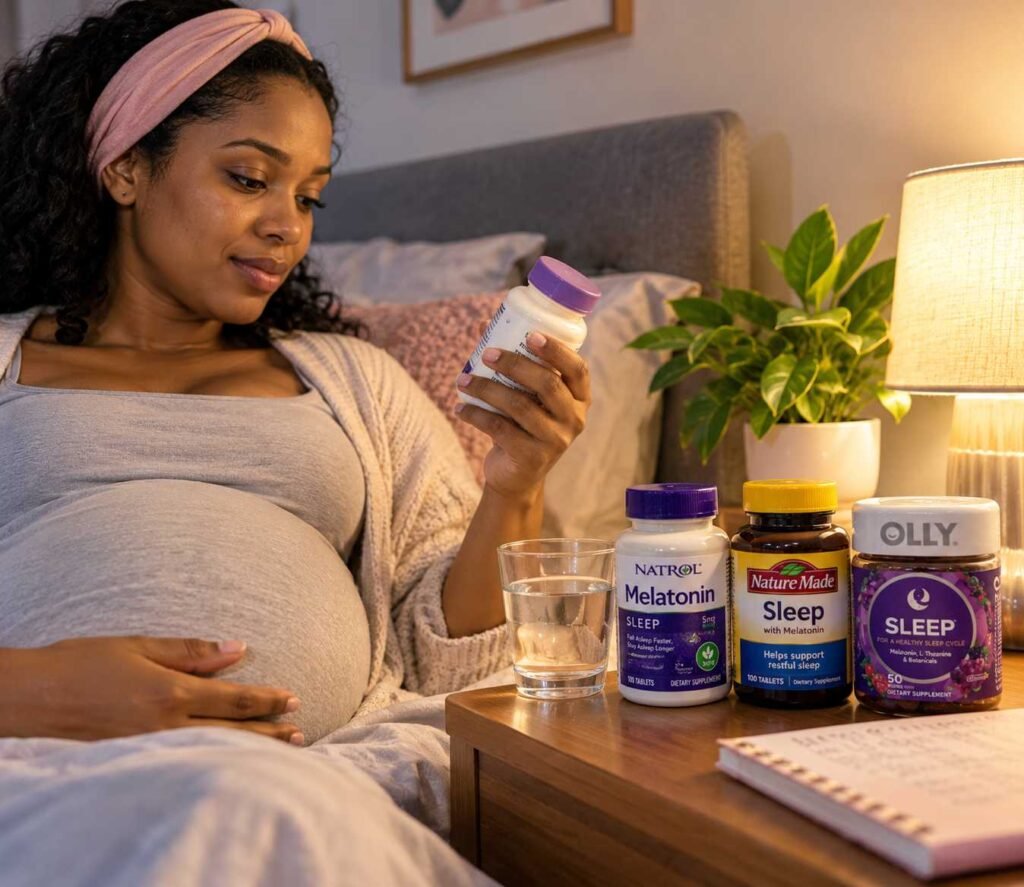
If you’re pregnant and staring at the ceiling at 2 a.m., you are far from alone. Studies consistently show that a majority of pregnant women report disrupted sleep at some point, and the problem tends to get worse as the weeks go by. Between the nausea, the bathroom trips, the heartburn, the restless legs and a baby who seems to throw a party the moment you lie down, a full night’s rest can feel like a distant memory.
So it’s natural to wonder whether a supplement could help. Maybe you’ve seen a bottle of melatonin in the pharmacy aisle, a friend swears by a magnesium powder, or an herbal tea promises “calm and relaxation.” Before you buy anything, though, you need to know that pregnancy changes the rules. Many ingredients that are perfectly fine for the general population simply haven’t been studied well enough in pregnant women, and a few are best avoided entirely.
This guide walks through the sleep supplement options people ask about most, what the evidence says, what to avoid, and which non-supplement strategies tend to work better than most pills and powders. It is general information, not medical advice, and your OB-GYN or midwife should always have the final say on anything you put in your body while pregnant.
Why Sleep Gets So Hard During Pregnancy
Understanding why you can’t sleep makes it easier to pick a solution that actually targets the problem. Pregnancy sleep trouble has several overlapping causes, and they shift from trimester to trimester.
First Trimester: Hormones, Nausea and Constant Fatigue
In the early weeks, progesterone rises sharply. It makes you sleepy during the day, yet it also fragments your sleep at night. Add morning sickness (which, despite the name, can strike at any hour), frequent urination and breast tenderness, and you get a recipe for light, broken sleep. Many women feel exhausted and wired at the same time.
Second Trimester: A Brief Window of Relief
For many women, the middle months bring a short improvement. Nausea often eases and energy returns. Even so, vivid dreams, heartburn and the first twinges of leg cramps can start to creep in. This is also when your growing belly begins to limit your favorite sleeping positions.
Third Trimester: The Perfect Storm
By the last stretch, almost everything works against you. The baby presses on your bladder, so you’re up several times a night. Your diaphragm has less room, so lying flat can leave you short of breath. Heartburn flares up when you recline. Restless legs syndrome becomes more common, back and hip pain make every position uncomfortable, and anxiety about labor and parenthood can keep your mind racing.
Some of these issues, such as heartburn, reflux, iron deficiency and sleep-disordered breathing, are medical problems that a supplement won’t fix. That’s a good reason to talk with your care provider before assuming a sleep aid is the answer.
The Golden Rule: Check With Your Doctor Before Taking Anything
This can’t be overstated. Supplements aren’t regulated like prescription drugs, so product quality, dosage accuracy and ingredient purity can vary widely. During pregnancy, there’s an added problem: ethical research on pregnant women is limited, which means many popular sleep ingredients have little or no solid safety data for this group.
When there isn’t enough evidence, the standard medical approach is caution. “Natural” does not automatically mean “safe for pregnancy.” Several herbs that appear in relaxation blends, for example, have traditional uses that are specifically discouraged during pregnancy.
When you talk to your provider, bring the actual product label. Ask about each ingredient, the dose per serving, and how often you’d be taking it. Also mention every other supplement and medication you take, including your prenatal vitamin, since overlap can push you past safe limits for certain nutrients.
Sleep Supplements and Ingredients Commonly Discussed in Pregnancy
Here’s a rundown of the ingredients that come up most often, along with where the evidence stands. Think of this as a conversation starter for your next prenatal appointment, not a shopping list.
Magnesium
Magnesium is probably the most talked-about mineral for pregnancy sleep. It plays a role in muscle relaxation and nerve function, and some pregnant women use it to help with leg cramps, which are a common cause of night waking. Research on magnesium for pregnancy leg cramps has produced mixed results, with some studies suggesting a benefit and others finding little difference from placebo.
Pregnant women do have higher magnesium needs, and many prenatal vitamins contain some. The key points to discuss with your provider are the form of magnesium (glycinate and citrate are common; citrate can loosen stools), the total amount you’re getting from all sources, and whether your kidney function and other health factors make extra supplementation appropriate. Too much magnesium can cause diarrhea and, in rare cases, more serious problems, so don’t stack multiple products without guidance.
Melatonin
Melatonin is the sleep supplement most people reach for first, and it’s also one of the most uncertain in pregnancy. Your body makes melatonin naturally, and it does cross the placenta. Because of limited human safety data on supplemental doses, many doctors advise against routine use during pregnancy unless there’s a specific reason and medical supervision.
Another wrinkle is that over-the-counter melatonin products can contain far more or far less than the label states, which makes self-dosing even riskier. If you’ve already been taking melatonin and then discover you’re pregnant, don’t panic, but do call your provider and ask what they recommend.
Valerian Root
Valerian is a popular herbal sleep aid, but there simply isn’t enough research to call it safe during pregnancy. Most pregnancy health resources recommend avoiding it or using it only if your provider specifically approves. It’s often combined with other herbs in “nighttime” blends, so reading labels carefully is essential.
Chamomile and Other Herbal Teas
A warm cup of tea is a lovely bedtime ritual, and moderate amounts of chamomile are considered acceptable by many practitioners. Others suggest caution because of limited data and a theoretical link to uterine effects at high intake. The safest approach is to ask your provider, keep the amount modest, and choose a single-ingredient tea rather than a mystery blend. Teas that list “proprietary relaxation herbs” without naming them aren’t a good idea during pregnancy.
Kava, Passionflower, Skullcap and Similar Herbs
Kava has been linked to liver concerns and is widely advised against in pregnancy. Passionflower, skullcap and similar calming herbs lack reliable safety data for expectant mothers. If a product contains any of these, it’s best to set it aside and talk with a professional.
L-Theanine and Glycine
L-theanine (found in tea) and glycine (an amino acid) both appear in modern sleep formulas, and in the general population they’re considered relatively gentle. Still, supplement-level doses haven’t been well studied in pregnancy, so “gentle” isn’t the same as “proven safe here.” Treat them like any other ingredient: ask first.
Vitamin B6 and Doxylamine
Vitamin B6, sometimes combined with doxylamine, is a well-known first-line option for pregnancy nausea. Doxylamine is also an ingredient in some over-the-counter sleep aids, and doctors occasionally recommend short-term use for sleep. This is a medication-style decision that belongs with your provider, who can advise on dosage and duration. Don’t self-prescribe based on a label.
Iron (If You’re Deficient)
Here’s one that surprises many women. Restless legs syndrome, a major cause of pregnancy insomnia, is strongly associated with low iron stores. If your legs feel twitchy or crawly at bedtime, ask your provider to check your ferritin level. Correcting a deficiency can sometimes help far more than any “sleep” supplement. But iron should only be taken when needed and at an appropriate dose, since too much can cause constipation and other problems.
Tart Cherry and Other Food-Based Options
Tart cherry juice is often mentioned because cherries contain small amounts of natural melatonin. The research in pregnancy is thin, and the juice carries sugar, which matters if you have gestational diabetes or are watching your glucose. A small serving of whole fruit, a banana, or a bit of yogurt before bed is usually a gentler choice.
Try Yu Sleep risk free today (backed by a 60-day money-back guarantee)
Where a Product Like Yu Sleep Fits In (and Where It Doesn’t)
Because this article is about pregnancy, I want to be upfront about something. Most mainstream sleep supplements, including popular nighttime formulas, are not designed or tested specifically for pregnant women. That includes Yu Sleep. It’s a general adult sleep-support product, not a prenatal formula, and the manufacturer isn’t claiming it’s cleared for use during pregnancy.
If you’re currently pregnant, the responsible move is to bring the full ingredient list to your doctor or midwife and let them decide whether any of it is appropriate for you. Don’t start any new sleep supplement, Yu Sleep or otherwise, on your own while you’re expecting.
That said, there are a few situations where a product like this becomes relevant to a pregnancy-adjacent reader:
- Your partner: Sleepless nights hit the whole household. A partner who is anxious about the baby or woken repeatedly by your tossing and turning might look into a sleep aid for themselves.
- Postpartum: After delivery, sleep deprivation is a different challenge. If you’re not breastfeeding, or if your provider says a particular product is compatible with your situation, your options may open up.
- Trying to conceive or planning ahead: Some women want to build healthy sleep routines before pregnancy and discuss supplement choices with their doctors at that stage.
- Grandparents and family helpers: Many family members pitch in during the newborn weeks and suffer their own sleep disruption.
If you’d like to understand what’s actually inside this product and how real users rate it, I’ve put together an in-depth look in my Yu Sleep review covering ingredients, complaints and pricing. You can use it to prepare your questions before talking to a healthcare provider.
Try Yu Sleep risk free today (backed by a 60-day money-back guarantee)
Natural Strategies That Often Work Better Than Supplements
Here’s the good news. Some of the most effective tools for pregnancy sleep have no ingredient list at all. Doctors often recommend starting with these because they carry little to no risk to the baby.
Find Your Best Sleeping Position
Doctors commonly recommend sleeping on your side, particularly the left side, during the later part of pregnancy. Research has linked back sleeping in late pregnancy with a higher risk of certain complications, so it’s worth training yourself to settle on your side. Don’t stress if you wake up on your back; simply roll over.
A pregnancy pillow can make an enormous difference. A full-length body pillow or a wedge placed under the belly and between the knees keeps your hips aligned and takes pressure off your lower back. If neck and shoulder pain are part of your problem, a supportive contoured pillow can help too, and my guide on the benefits of a contoured sleep pillow explains what to look for.
Build a Wind-Down Routine
Your brain needs a signal that the day is over. Try a consistent 30 to 60 minute routine: dim the lights, put your phone away, take a warm (not hot) shower, do gentle stretches, and read something calming. Overheating is a common pregnancy problem, so keep the bedroom cool and use breathable bedding.
Manage Heartburn Before Bed
Reflux can wreck a night’s sleep. Eat your last large meal at least two to three hours before lying down, skip spicy and greasy foods in the evening, and prop your upper body with an extra pillow or a wedge. If heartburn is severe, ask your provider about pregnancy-safe antacids.
Time Your Fluids Wisely
You still need plenty of water during pregnancy, so don’t cut back overall. Instead, drink more earlier in the day and taper off in the evening so you make fewer bathroom trips at night. Leaning forward while you urinate can help empty your bladder more completely.
Move Your Body (With Approval)
Regular, moderate exercise such as walking, swimming or prenatal yoga is linked to better sleep for many pregnant women. Aim to finish workouts a few hours before bedtime, and check with your provider about what’s right for your situation.
Calm a Racing Mind
Anxiety is a huge driver of pregnancy insomnia. Try these simple tools:
- Keep a notebook by the bed and jot down worries or to-do items so they stop looping in your head.
- Practice slow breathing: inhale for four counts, exhale for six to eight.
- Try a guided relaxation or a pregnancy-focused meditation app.
- Tell your provider if your worries feel overwhelming. Perinatal anxiety and depression are common and very treatable.
Consider CBT for Insomnia
Cognitive behavioral therapy for insomnia, often shortened to CBT-I, is considered a first-choice treatment for chronic insomnia, and it’s drug-free. Some therapists and digital programs adapt it for pregnancy. If poor sleep has dragged on for weeks, ask your provider for a referral.
Don’t Stay in Bed Frustrated
If you’ve been awake for what feels like 20 minutes or more, get up, sit somewhere dim, and do something quiet until you feel drowsy. Lying there watching the clock trains your brain to associate your bed with stress.
When Poor Sleep Might Signal Something More Serious
Not every sleepless night is just “part of pregnancy.” Contact your provider promptly if you notice any of the following:
- Loud snoring, gasping or choking at night: Pregnancy raises the risk of sleep apnea, which is linked to high blood pressure and other complications, and it needs proper evaluation.
- Severe or worsening restless legs: This could point to iron deficiency or another treatable cause.
- Persistent sadness, hopelessness or intense anxiety: These can accompany insomnia and deserve real support.
- Sudden swelling, severe headaches, vision changes or upper abdominal pain: These can be warning signs of preeclampsia and need urgent attention.
- Shortness of breath that makes it hard to lie down: Ask for an evaluation rather than assuming it’s normal.
How to Evaluate Any Sleep Supplement Label
Whether you’re shopping for yourself after clearing it with your doctor, or for a partner or family member, a few habits will keep you from getting burned by marketing hype.
Look for Full Ingredient Transparency
Avoid products that hide amounts inside a “proprietary blend.” You and your provider need to see the exact dose of each ingredient to judge whether it’s appropriate.
Check for Third-Party Testing
Independent verification from groups such as USP or NSF gives you more confidence that what’s on the label is actually in the bottle. It isn’t a guarantee of pregnancy safety, but it’s a meaningful quality signal.
Be Wary of Big Promises
Claims like “sleep like a baby tonight” or “100% safe for everyone” are red flags. Sleep is complex, and honest companies talk about support rather than miracle cures.
Understand the Refund Policy
A solid money-back guarantee lets you try a product without long-term financial risk. Just remember that a refund policy tells you nothing about whether a product is medically suitable for pregnancy. Safety comes first, and a guarantee only matters once your doctor has given you the green light.
If you want a wider view of the market, I’ve covered the general landscape in my guide to sleep supplements for women and my roundup of the best sleep supplements for 2026.
A Sample Pregnancy-Friendly Evening Routine
Here’s an example of how you might put the above ideas into practice. Adjust it to your own schedule and your provider’s advice.
- Late afternoon: Take a gentle walk, and cut off caffeine by early afternoon (most guidelines suggest limiting caffeine during pregnancy overall).
- Early evening: Eat a balanced dinner, ideally two to three hours before bed, and ease off big drinks.
- One hour before bed: Dim the lights, silence notifications, and take a warm shower.
- 30 minutes before bed: Do light stretching or prenatal yoga, then a few minutes of slow breathing.
- At bedtime: Set up your pillows for side sleeping, keep the room cool and dark, and keep a small night light for bathroom trips.
- If you wake up: Avoid checking the time, keep the lights low, and use your breathing technique to drift off again.
Give a routine like this a couple of weeks before judging it. Sleep habits build gradually, and consistency matters more than perfection.
What About Sleep After the Baby Arrives?
Many women assume sleep will improve once the baby is born, then discover that newborn nights are their own kind of marathon. Postpartum sleep deprivation is intense, and the questions about supplements start all over again, especially if you’re breastfeeding, since some ingredients can pass into breast milk.
The same rule applies: talk to your provider or lactation consultant before using any sleep aid. In the meantime, protect whatever rest you can. Sleep when the baby sleeps (when possible), share night duties with your partner, and accept help from family and friends. Short, consistent chunks of rest add up.
For partners who are also running on fumes, a well-reviewed option may be worth exploring once they’ve checked with their own doctor.
Frequently Asked Questions About Sleep Supplements During Pregnancy
Can I take melatonin while pregnant?
Most healthcare providers recommend caution because there isn’t enough high-quality human research on supplemental melatonin in pregnancy. Some doctors may approve short-term use in specific circumstances, but this should be decided with your provider, not on your own.
Is magnesium safe for sleep during pregnancy?
Magnesium is an essential mineral and is commonly discussed for pregnancy leg cramps and sleep. Many prenatal vitamins already contain some. Ask your provider how much extra, if any, is appropriate so you don’t exceed safe amounts.
Are herbal sleep teas safe when pregnant?
It depends on the herb. A modest amount of a single, clearly labeled tea such as chamomile is considered acceptable by some practitioners, but others advise caution. Blends containing valerian, kava or unnamed “relaxing herbs” are best avoided unless your provider says otherwise.
What is the safest way to improve sleep during pregnancy?
Non-drug strategies are generally considered the safest starting point. These include sleeping on your side with pillow support, keeping a calming routine, managing heartburn, timing fluids, gentle exercise and CBT-I. If these aren’t enough, your provider can discuss other options.
Can I take an over-the-counter sleep aid while pregnant?
Some over-the-counter sleep medications contain ingredients such as diphenhydramine or doxylamine, which doctors sometimes approve for short-term use. Others contain ingredients you should avoid. Never grab a box off the shelf without checking with your provider first.
Is it normal to have insomnia in the first trimester?
Yes. Hormonal changes, nausea, frequent urination and anxiety all contribute. Many women find that simple adjustments, small snacks to calm nausea and a consistent routine, help a great deal. If it’s severe or lasting, tell your provider.
Could my restless legs be caused by low iron?
It’s a common link. Iron deficiency is a well-recognized contributor to restless legs syndrome in pregnancy. Ask your provider to check your iron and ferritin levels before you take any iron supplement on your own.
Is lack of sleep harmful to my baby?
Occasional rough nights are a normal part of pregnancy and aren’t a cause for alarm. However, chronic severe sleep problems and untreated sleep apnea have been associated with certain pregnancy complications, which is why it’s worth raising persistent trouble with your provider rather than quietly suffering through it.
Can my partner use a sleep supplement while I’m pregnant?
Your partner’s supplement choices don’t affect your pregnancy directly, but they should still check with their own doctor, especially if they take other medications. A well-rested partner is a real asset during these months.
Should I stop taking a sleep supplement if I find out I’m pregnant?
Contact your healthcare provider as soon as possible. Bring the product label and let them advise you. Don’t make assumptions in either direction, and don’t panic; most early exposures are discussed calmly and practically.
Final Thoughts: Rest Is Possible, and Safety Comes First
Pregnancy sleep struggles are real, common and exhausting, but you have more tools than you might think. Start with the basics: a supportive sleep position, a calming routine, smart eating and drinking habits, and honest conversations about anxiety. Ask your provider to rule out treatable causes like low iron or sleep apnea. Then, if a supplement still seems worth considering, let your doctor or midwife review the exact ingredient list before you take a single capsule or scoop.
For partners, family members and postpartum recovery, a quality sleep formula may become a helpful option down the road, provided the individual has medical approval. If that sounds like you or someone close to you, take a look at the details, read real-world feedback, and choose a product backed by a solid guarantee.
Try Yu Sleep risk free today (backed by a 60-day money-back guarantee)
Disclaimer: This article is for general informational purposes only and is not medical advice. Always consult your doctor, midwife or other qualified healthcare professional before starting any supplement or medication during pregnancy or while breastfeeding. This page contains affiliate links, which means I may earn a commission if you purchase through them, at no extra cost to you.