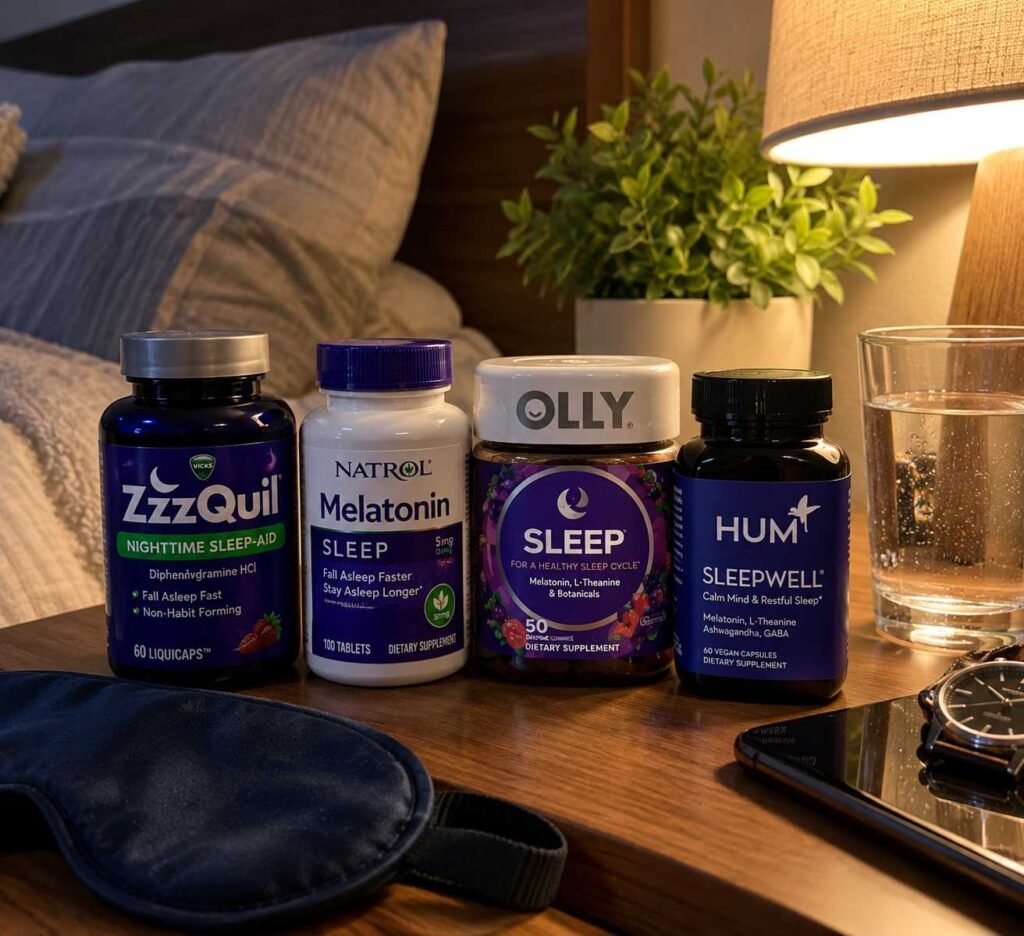
It is 1:30 a.m. and you are staring at the ceiling. You have a big day tomorrow, your body feels tired, but your brain is running like a browser with 40 tabs open. Or maybe you fall asleep fine, then wake up at 3 a.m. and cannot get back under. By morning you are dragging yourself through the day on coffee and willpower.
If that sounds familiar, you are far from alone. Millions of men struggle with sleep, and many of them quietly put up with it for years because they think it is just part of being busy, being older, or being “a bad sleeper.” Because of this, the search for a good sleep supplement for men has become one of the most common wellness searches online.
The problem is that the supplement aisle is confusing. Every bottle promises deep, restful sleep. Some are packed with useful ingredients, while others are mostly marketing. This guide cuts through the noise in plain English. We will look at why men struggle to sleep, which ingredients are actually worth knowing about, how to pick a product without wasting money, who should be careful, and the habits that make any sleep supplement work better.
1. Why Men Struggle to Sleep (And Why It Matters More Than You Think)
Before you buy anything, it helps to understand what is keeping you awake. Sleep problems in men rarely come from just one cause. They usually come from a mix of lifestyle, stress, and body changes.
Stress and work pressure are at the top of the list. Many men carry the weight of providing, deadlines, money worries, and family responsibilities. When your mind is still “on the clock” at bedtime, your body struggles to switch off. Higher evening stress can make it harder to fall asleep and easier to wake up during the night.
Age plays a role too. As men get older, sleep tends to become lighter and more broken. Natural changes in hormones, including a gradual decline in testosterone over time, can be linked with poorer sleep, and poor sleep can in turn be linked with lower testosterone. It becomes a frustrating loop.
Then there are the everyday habits: late caffeine, evening alcohol, scrolling on a phone in bed, irregular schedules, night shifts, and heavy late dinners. Many men also deal with nighttime bathroom trips, which interrupt sleep over and over. And one important medical factor: sleep apnea is more common in men, and it is often missed. Loud snoring, gasping at night, and feeling exhausted despite a full night in bed are warning signs worth taking seriously.
Why does this matter? Because poor sleep affects almost everything: mood, focus, energy, appetite, workout recovery, and long-term health. Sleep is not a luxury. It is the foundation that everything else sits on.
2. What a Sleep Supplement for Men Can (and Cannot) Do
Here is the honest truth that many sellers will not tell you. A sleep supplement is not a sleeping pill. It will not knock you out, and it is not meant to. Most work gently by supporting relaxation, helping your body wind down, or supporting your natural sleep and wake rhythm.
That is actually a good thing for most men. You are not trying to be sedated. You are trying to feel calm enough for your own body to do what it already knows how to do. The trade-off is that results can be subtle, may take a week or two to notice, and vary from person to person.
It is also important to say clearly: supplements do not replace medical care. If your sleep trouble has lasted several weeks, if you snore heavily, if you feel down or anxious most days, or if you are exhausted no matter how long you sleep, please talk to a doctor. A supplement can support healthy sleep, but it cannot diagnose or treat a medical condition.
3. Magnesium: The Calm-Down Mineral
Magnesium is one of the most popular ingredients in any sleep supplement for men, and for good reason. This mineral is involved in hundreds of processes in the body, including muscle relaxation and nervous system function. Many men do not get enough from food, and heavy training, sweating, and stress can use it up.
Some small studies suggest magnesium may support sleep quality, especially in people who are low in it. The form matters. Magnesium glycinate is often chosen for evening use because it tends to be gentle on the stomach, while magnesium oxide is poorly absorbed and more likely to cause loose stools.
Who it may suit: men who train hard, get muscle cramps or tightness at night, or feel “wired but tired.” Keep in mind that high doses can upset the stomach, and anyone with kidney problems should check with a doctor first.
4. Melatonin: Great for Timing, Not a Cure-All
Melatonin is the hormone your brain releases in the evening to tell your body that night is coming. As a supplement, it is probably the best-known sleep aid in the world. It tends to work best for timing problems such as jet lag, shift work, or a body clock that has drifted too late.
Where men go wrong is taking too much. Many gummies and tablets contain far more melatonin than most people need, and a bigger dose does not mean better sleep. Some people wake up groggy or have vivid dreams. A lower dose taken a little before bed is often a smarter place to start.
Because melatonin is a hormone, it can interact with certain medications, including blood thinners and some blood pressure and diabetes medicines. If you take any prescription medicine, speak to your doctor or pharmacist first.
Try Yu Sleep risk free today (backed by a 60-day money-back guarantee)
5. L-Theanine: Calm Focus Without the Fog
L-theanine is an amino acid found naturally in tea leaves, especially green tea. It is known for promoting a relaxed but alert state, which is why it is often paired with caffeine during the day. In the evening, it is used to help quiet racing thoughts.
The research on L-theanine is encouraging for relaxation and stress, though the evidence for it directly improving sleep is more modest. Its big advantage is that it usually does not cause drowsiness the way stronger sedatives can. If your main problem is a mind that will not stop replaying the day, this is an ingredient worth looking for on a label.
6. Ashwagandha: For Stress-Related Sleep Trouble
Ashwagandha is an herb used for centuries in traditional Ayurvedic medicine and is often called an adaptogen. Several studies suggest it may help lower perceived stress and may support sleep quality in some adults, especially when stress is the reason sleep is disturbed.
It is not right for everyone. Ashwagandha can affect thyroid hormones, so men with thyroid conditions should talk to their doctor first. Quality also varies a lot between brands, so choose products that are clear about the amount and the type of extract they use.
7. Glycine, Valerian, and Other Supporting Ingredients
Beyond the headline ingredients, you will see a handful of supporting players in many sleep formulas.
Glycine is an amino acid that some small studies link with feeling more rested and falling asleep a little more easily. Valerian root has a long history as a traditional sleep herb, though study results are mixed. Some people like it and others notice nothing. Chamomile and lemon balm are gentle herbs often used for relaxation. Tart cherry contains naturally occurring melatonin and has been studied for modest improvements in sleep time. Passionflower is often included in blends aimed at restlessness.
None of these is a miracle on its own. But a well-designed formula may combine several at sensible amounts, and that is exactly why many men prefer a single blend over juggling five separate bottles.
8. How to Choose a Sleep Supplement Without Wasting Money
With so many options, a few simple rules can protect both your sleep and your wallet.
First, read the full ingredient list and the amounts. Be wary of “proprietary blends” that hide how much of each ingredient you are actually getting. Second, look for products made in facilities that follow good manufacturing practices, ideally with third-party testing. Third, start with the lowest effective dose and give it at least two weeks before judging, unless you feel unwell, in which case stop.
Fourth, be skeptical of dramatic promises. If a label claims it will cure insomnia or guarantees eight hours every single night, walk away. Honest brands talk about “supporting” relaxation and healthy sleep, not curing anything. Finally, check the refund policy. A company that stands behind its product offers a money-back guarantee. Products sold through ClickBank, for example, come with a 60-day refund window, and some offer even longer, which gives you real time to test them with limited risk.
If you want to compare more options side by side, my roundup of the best sleep supplements for 2026 walks through the top picks.
9. Who Should Be Extra Careful With Sleep Supplements
This is not meant to scare you, but it is the responsible way to use any supplement. Please talk to a doctor or pharmacist before starting a sleep supplement if any of the following apply to you:
- You take prescription medicines, especially antidepressants, anti-anxiety medicines, blood thinners, blood pressure medicines, or diabetes medicines.
- You have a thyroid condition, kidney disease, liver disease, or a heart condition.
- You snore loudly, stop breathing during sleep, or wake up gasping, which can be signs of sleep apnea.
- You drink alcohol heavily, since mixing alcohol with sleep aids can be risky.
- You work with heavy machinery or drive long distances and need to stay fully alert.
- You feel persistently low, hopeless, or anxious. Poor sleep can be a symptom, and you deserve proper support.
A quick chat with a healthcare professional can save you a lot of trouble, and it may uncover a cause that a supplement alone would never fix.
The Habits That Make Any Sleep Supplement Work Better
Here is something that does not sell bottles but is absolutely true: even the best sleep supplement for men will struggle against a chaotic bedtime routine. If you want your supplement to have the best chance of helping, pair it with a few simple habits.
Keep a steady schedule
Going to bed and waking up at roughly the same time, even on weekends, trains your body clock. Irregular sleep times are one of the biggest hidden causes of poor sleep.
Cut off caffeine earlier than you think
Caffeine can stay in your system for many hours. If you are sensitive, try stopping by early afternoon. Be honest about pre-workout powders and energy drinks too, since they often contain a lot more caffeine than a cup of coffee.
Be smart about alcohol
A beer or a glass of whiskey can make you drowsy, which is why so many men use it as a sleep aid. The problem is that alcohol fragments sleep later in the night and can worsen snoring. You may fall asleep fast but wake up at 3 a.m. feeling restless.
Cool, dark, and quiet
Most people sleep better in a cool, dark, quiet bedroom. Blackout curtains, a fan, and putting your phone across the room can make a real difference.
Wind down for 30 to 60 minutes
Dim the lights, put the phone down, and do something calming. Read a few pages, stretch, take a warm shower, or write tomorrow’s to-do list on paper so your brain does not have to hold it all night. Light exercise during the day, such as a walk or a workout, also helps you feel properly tired in the evening. Try not to train hard right before bed if you notice it keeps you wired.
Watch late-night fluids and heavy meals
If you wake up often to use the bathroom, try drinking most of your fluids earlier in the day and finishing dinner a few hours before bed. If nighttime urination is frequent or new, mention it to your doctor, because it can sometimes point to something that needs attention.
A Closer Look at Yu Sleep: Who It May Suit
Now, as promised, let me talk about one formula I think is worth a look for men who want a blend rather than a single-ingredient pill: Yu Sleep.
Yu Sleep is marketed as a nighttime supplement designed to support relaxation and healthy, restful sleep. What appeals to me is the approach. Instead of relying on a large dose of one hormone, it is positioned as a gentler, supportive formula that you take as part of your evening routine. That suits many men who are wary of waking up groggy or who do not want to rely on high-dose melatonin.
I have covered it in more depth in my full Yu Sleep review, including the ingredients, pricing, and the complaints I came across, so I will not repeat every detail here. If you are weighing it against another popular option, this Yu Sleep vs Sleep Revive comparison lays out how they stack up.
Here is who Yu Sleep may be a good fit for:
- Men whose sleep trouble is mostly about winding down and quieting a busy mind, rather than a diagnosed medical condition.
- Men who want a simple nightly routine with one product instead of several separate bottles.
- Men who would like to test something with a money-back guarantee, so they can try it fairly without feeling locked in.
And here is who should think twice. If you take prescription medication or manage a health condition, check the label and talk to your doctor before trying it. Also keep your expectations realistic. Like any supplement of this type, results can vary from person to person, and it works best alongside good sleep habits rather than in place of them.
If you decide to try it, the sensible move is to take it as directed, give it a couple of weeks, and jot down a quick note each morning about how you slept and how you feel. That way you are judging it on evidence, not hope.
Try Yu Sleep risk free today (backed by a 60-day money-back guarantee)
Sleep, Testosterone, and Recovery: The Part Most Men Overlook
Many men come to sleep supplements not because they care about sleep itself, but because they care about energy, strength, and performance. That is fair, and it is worth knowing that the two are tightly connected.
Most of your body’s repair work happens while you sleep. Muscles recover, the brain sorts through the day’s information, and hormones are regulated. Studies have linked short or poor sleep with lower testosterone levels, higher stress hormones, slower recovery from training, and stronger cravings for junk food. In other words, if you are grinding in the gym and watching your diet but sleeping five hours a night, you are leaving results on the table.
This is why improving sleep often feels like a cheat code. Better sleep can mean better focus at work, steadier mood, and more energy for the things you enjoy. A sleep supplement for men is one tool that may help you get there, but the bigger win comes from treating sleep like a priority rather than whatever is left after everything else.
Common Mistakes Men Make With Sleep Supplements
After looking at how people use these products, a few mistakes come up again and again.
The first is taking too much too soon. More is not better, and starting with a high dose is a good way to feel groggy and decide the product “does not work.” The second is expecting instant results. Many people need one to two weeks of consistent use to notice a difference. The third is ignoring the basics: taking a supplement while still drinking coffee at 5 p.m. and scrolling a phone until midnight is like putting premium fuel in a car with a flat tire.
The fourth is mixing too many products at once. If you take a magnesium capsule, a melatonin gummy, a herbal tea, and a blend that already contains all of those, you may be doubling up without realizing it. Check labels carefully. The fifth is skipping the doctor when something feels off. If you snore loudly, wake up with headaches, or never feel rested, a supplement is not the answer, and you deserve a proper check-up.
Frequently Asked Questions About Sleep Supplements for Men
What is the best sleep supplement for men?
There is no single best option for everyone. The right choice depends on why you are not sleeping. Magnesium and L-theanine are popular for stress and tension, melatonin is better suited to timing problems like jet lag or shift work, and blends combine several ingredients for general nighttime support. Start with your biggest problem and choose accordingly.
Are sleep supplements safe to take every night?
Many gentle ingredients are considered fine for short-term nightly use in healthy adults, but long-term safety data is limited for several of them. If you find you need a supplement every single night for months, that is a good reason to check in with your doctor about the underlying cause.
How long does a sleep supplement take to work?
Some people feel calmer within the first night or two, while others need one to two weeks of consistent use before noticing a change. If you notice nothing after about a month, it may not be the right product for you.
Can a sleep supplement help with low energy and low testosterone?
Better sleep is linked with better energy and hormone balance, but a sleep supplement does not treat low testosterone or any medical condition. If you suspect your hormone levels are low, ask your doctor about testing rather than guessing.
Is it safe to take melatonin and magnesium together?
Many people do, and the combination appears in plenty of commercial formulas. Still, if you take medication or have a health condition, confirm with your pharmacist or doctor first.
Will I become dependent on sleep supplements?
Most of the ingredients discussed here are not considered habit-forming in the way prescription sleep medicines can be. However, it is possible to become psychologically reliant on a routine, which is why building good sleep habits alongside is wise.
Should I try a supplement or see a doctor first?
If your sleep trouble is occasional and mild, trying better habits and a gentle supplement is reasonable. If it has lasted weeks, is getting worse, or comes with loud snoring, daytime sleepiness, or mood changes, see a doctor first. Safe, effective help starts with knowing the cause.
Try Yu Sleep risk free today (backed by a 60-day money-back guarantee)
The Bottom Line
Men’s sleep is shaped by stress, lifestyle, age, and sometimes underlying health issues, which is why one-size-fits-all advice rarely works. The most useful sleep supplement for men tends to be one that supports relaxation gently, using ingredients such as magnesium, L-theanine, a modest amount of melatonin when timing is the issue, and thoughtfully combined blends.
Choose products with clear labels, realistic claims, and a solid refund policy. Check with a healthcare professional if you take medication, have a health condition, or snore heavily. And remember that a cool, dark room, a steady schedule, less late caffeine and alcohol, and a calmer evening routine will boost anything you take.
If you want a simple nighttime formula to test with a safety net, Yu Sleep is the one I would put on your shortlist. You get time to try it properly, and if it is not for you, you can ask for your money back. You can also browse my full list of sleep supplements if you want to compare before you decide.
Try Yu Sleep risk free today (backed by a 60-day money-back guarantee)
Disclosure: This article contains affiliate links. If you purchase through them, I may earn a commission at no extra cost to you. This content is for general information only and is not medical advice. It has not been evaluated by the FDA, and supplements are not intended to diagnose, treat, cure, or prevent any disease. Always speak with a qualified healthcare provider before starting a new supplement.