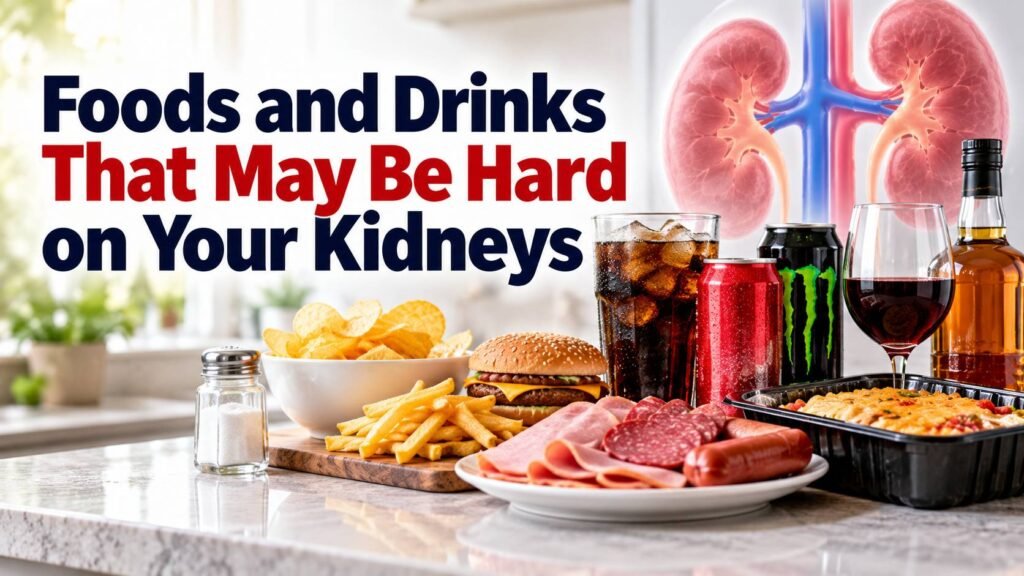
Your kidneys work continuously to filter waste from your blood, regulate fluid balance, and help keep important minerals and electrolytes within a healthy range. What you eat and drink can affect how much work your kidneys have to do and, in people with kidney disease, can have an even greater impact on overall health.
But there is an important distinction between foods that are generally unhealthy and foods that may specifically become problematic when kidney function is reduced.
For example, a food may be nutritious for a healthy person but contain large amounts of potassium or phosphorus that someone with chronic kidney disease (CKD) may need to control. Likewise, foods high in sodium can be especially concerning because excessive sodium can contribute to high blood pressure and fluid retention.
So rather than memorizing a universal list of “bad kidney foods,” it is more useful to understand which foods and drinks deserve attention and why.
Quick Answer: What Foods and Drinks Can Be Hard on Your Kidneys?
The foods and drinks that may be most problematic for kidney health include high-sodium processed foods, processed meats, heavily salted snacks, sugary drinks, excessive alcohol, and foods containing large amounts of phosphorus or potassium when those nutrients need to be restricted.
People with CKD may have additional dietary restrictions based on their kidney function, blood tests, medications, and treatment.
The most important point is that there is no single list that applies to everyone. Someone with healthy kidney function does not necessarily need to avoid the same foods as someone with advanced CKD.
Why Certain Foods Can Be Hard on the Kidneys
Your kidneys help maintain the body’s internal balance by filtering waste and regulating substances such as sodium, potassium, phosphorus, and water.
When kidney function is impaired, the kidneys may become less capable of handling some of these substances efficiently.
That is why nutrition recommendations can become more specific as CKD progresses.
For someone with reduced kidney function, regularly consuming large amounts of sodium, potassium, phosphorus, or fluids may create problems depending on their individual condition.
At the same time, dietary choices can affect other factors that influence kidney health, including blood pressure, blood sugar, cardiovascular health, and body weight.
1. Highly Salty Foods
One of the biggest dietary concerns for kidney health is excessive sodium.
Sodium itself is an essential nutrient. The problem is consuming too much of it, particularly on a regular basis.
High sodium intake can encourage the body to retain fluid and can contribute to elevated blood pressure. High blood pressure is particularly important because it can damage blood vessels in the kidneys and contribute to worsening kidney function.
Common high-sodium foods include:
- Salty chips and snack foods
- Instant noodles
- Canned soups
- Packaged meals
- Salted crackers
- Some sauces and condiments
- Fast food
- Heavily salted restaurant meals
One of the easiest ways to reduce sodium is to eat more meals prepared from basic ingredients and use herbs, spices, garlic, onion, lemon, or vinegar for flavor instead of relying heavily on salt.
2. Processed Meats
Processed meats deserve particular attention because they can contain substantial amounts of sodium.
Examples include:
- Bacon
- Sausages
- Ham
- Hot dogs
- Salami
- Some deli meats
- Cured meats
Some processed meats may also contain phosphorus-containing additives.
If you have CKD and have been advised to control sodium or phosphorus, reducing processed meats can be a practical way to address both concerns.
When appropriate, choosing less processed protein sources can give you greater control over what goes into your meals.
3. Fast Food and Restaurant Meals
Fast food can be convenient, but frequent consumption may make it difficult to control sodium and other nutrients.
Restaurant meals can also contain more salt than you might expect because sodium is often used in sauces, marinades, seasonings, processed ingredients, and preparation methods.
Depending on the meal, you may also be consuming significant amounts of saturated fat and calories.
This does not mean that one restaurant meal will damage your kidneys. The bigger concern is making heavily processed, high-sodium meals a regular part of your diet.
If you eat out frequently, compare available options and choose meals with less processed meat, fewer salty sauces, and more suitable fresh ingredients when possible.
4. Instant Noodles and Packaged Convenience Foods
Instant noodles, packaged soups, boxed meals, and similar convenience foods can be surprisingly high in sodium.
The noodles themselves may not be the only issue. Seasoning packets, sauces, broths, and flavor concentrates can contribute a large portion of the sodium.
If you regularly eat these foods, consider using less of the seasoning packet, choosing lower-sodium alternatives, or preparing meals from fresh ingredients instead.
For people with CKD, the appropriate choice depends on the individual’s sodium and other nutrient requirements.
5. Sugary Drinks
Sugary drinks may not directly “damage” the kidneys after one serving, but regularly consuming large amounts can work against overall metabolic health.
Soft drinks, sweetened juices, energy drinks, sweet teas, and other sugary beverages can contribute significant amounts of added sugar and calories without providing much nutritional value.
Regularly consuming excessive amounts of added sugar can contribute to weight gain and poor blood sugar control. Diabetes is an important risk factor for chronic kidney disease, making long-term blood sugar management particularly relevant to kidney health.
For most people, reducing sugary drinks is a straightforward dietary improvement.
6. Excessive Alcohol
Alcohol is another drink that deserves moderation.
Excessive alcohol consumption can affect blood pressure and overall health and may contribute to dehydration and other problems depending on the circumstances.
People with kidney disease may also have additional reasons to discuss alcohol consumption with their healthcare professional, particularly if they take medications or have other medical conditions.
If you have CKD, do not assume that recommendations for the general population automatically apply to you.
7. Foods High in Phosphorus
Phosphorus is an essential mineral that helps support bones, muscles, and other normal functions.
Healthy kidneys help maintain the appropriate phosphorus level in the blood. When kidney function declines, phosphorus can accumulate in some people.
This can become especially important in more advanced CKD.
Foods that naturally contain phosphorus include:
- Dairy products
- Meat
- Poultry
- Fish
- Nuts
- Seeds
- Beans
There is also another source to consider: phosphorus additives in processed foods.
Packaged foods may contain ingredients added specifically for preservation, texture, moisture retention, or flavor. Some of these ingredients contain phosphorus.
If your healthcare professional has told you to control phosphorus, checking ingredient lists for words containing “phos” can be useful.
8. High-Potassium Foods May Need Attention With CKD
Potassium is not inherently bad for your kidneys. In fact, your body needs potassium for normal muscle and nerve function.
The issue is that some people with CKD may have difficulty keeping potassium levels within the appropriate range.
High potassium can be dangerous when it becomes significantly elevated, while potassium that is too low can also cause problems.
Foods that can contain substantial amounts of potassium include:
- Bananas
- Oranges and orange juice
- Potatoes
- Tomatoes
- Avocados
- Dried fruits
- Some beans and legumes
However, this does not mean everyone with CKD should avoid these foods.
Your potassium requirements depend on your kidney function, blood potassium level, medications, and other health factors.
If your potassium is normal and your healthcare professional has not advised you to restrict it, eliminating potassium-rich foods unnecessarily may not be appropriate.
9. Large Amounts of Protein
Protein is essential for maintaining muscle and supporting many important functions in the body.
But if you have CKD, consuming extremely high amounts of protein may not be appropriate.
Protein metabolism produces waste products that the kidneys need to filter. Depending on the stage of CKD, a healthcare professional may recommend an appropriate but not excessive protein intake.
This is particularly relevant for people following very high-protein diets or using large quantities of protein supplements.
On the other hand, people receiving dialysis may have higher protein requirements than people with CKD who are not receiving dialysis.
Therefore, do not dramatically increase or decrease your protein intake based solely on general internet advice.
10. Foods With Large Amounts of Added Sugar
Highly sweetened foods can contribute to excessive calorie intake and poor metabolic health.
Examples include:
- Candy
- Sweet pastries
- Cakes
- Sugary cereals
- Sweetened desserts
- Some packaged snack foods
You do not necessarily have to eliminate every sweet food from your diet. The concern is excessive consumption, particularly when these foods regularly replace more nutritious choices.
A balanced diet that limits excessive added sugar can support overall health and help manage risk factors associated with kidney disease.
11. Energy Drinks and Highly Caffeinated Beverages
Energy drinks can contain substantial amounts of caffeine, sugar, or other stimulants.
The concern is not that caffeine is automatically harmful to the kidneys. Rather, excessive consumption may contribute to problems such as increased heart rate, sleep disruption, or blood pressure changes in susceptible people.
Some energy drinks also contain large amounts of added sugar.
If you have kidney disease, high blood pressure, heart problems, or take medications that could interact with stimulants, discuss your beverage choices with your healthcare professional.
12. Certain Herbal and “Detox” Products
Be cautious with products marketed as kidney cleanses, kidney detoxes, or natural kidney remedies.
“Natural” does not automatically mean safe or effective.
Some herbal products may contain multiple ingredients, interact with medications, or have effects that are not well established.
People with CKD should be particularly cautious because impaired kidney function can change how the body handles certain substances.
Before taking an herbal supplement marketed for kidney health, discuss it with your doctor or pharmacist.
What About Salt Substitutes?
Salt substitutes can appear to be an obvious solution for people trying to reduce sodium.
But some salt substitutes replace sodium chloride with potassium chloride.
That can be a concern for people who have been advised to restrict potassium or who are taking medications that affect potassium levels.
Therefore, do not automatically switch to a potassium-based salt substitute without checking whether it is appropriate for you.
Foods That Are Healthy but May Still Need Limits With CKD
This is one of the most confusing aspects of kidney nutrition.
Some foods that are considered very healthy in general may still need to be limited by certain people with CKD.
For example, fruits, vegetables, nuts, seeds, beans, dairy products, and whole grains can all provide valuable nutrients. But some also contain potassium or phosphorus.
That does not make them “bad foods.” It simply means that your kidney function can change how much of a particular nutrient your body can safely handle.
This is why personalized kidney nutrition is more useful than a generic list of forbidden foods.
What Should You Drink for Better Kidney Health?
For many people, water is the simplest beverage choice.
But even fluid intake can become individualized when someone has advanced kidney disease.
People with certain forms of kidney failure may be instructed to limit how much fluid they consume because their bodies cannot remove excess fluid efficiently.
Therefore, the common advice to “drink as much water as possible to flush your kidneys” should not be applied indiscriminately to people with kidney disease.
If your healthcare professional has given you a specific fluid target, follow that recommendation rather than trying to force large quantities of water.
How to Make Better Food Choices
You do not need to completely rebuild your diet overnight.
Instead, start by identifying the foods and drinks you consume most frequently and look for practical substitutions.
Instead of heavily salted snacks
Choose a lower-sodium alternative or an appropriate fresh snack.
Instead of processed meats
Consider less processed protein sources that fit your nutritional requirements.
Instead of sugary drinks
Choose water or another beverage that fits your individual health needs.
Instead of instant meals every day
Prepare simple meals using fresh or minimally processed ingredients when possible.
Instead of relying on salt for flavor
Experiment with herbs, spices, garlic, onion, lemon, vinegar, or other suitable seasonings.
What If You Already Have Chronic Kidney Disease?
If you have CKD, your food choices should be based on more than a generic list of foods that are supposedly “good” or “bad” for your kidneys.
Your healthcare team may monitor kidney function, blood pressure, potassium, phosphorus, nutritional status, and other factors when determining your dietary needs.
Depending on your condition, you may be asked to control one or more of the following:
- Sodium
- Potassium
- Phosphorus
- Protein
- Fluids
These restrictions can change as kidney disease progresses.
A registered dietitian with experience in kidney disease can help you turn your medical recommendations into practical meals instead of simply handing you a list of foods to avoid.
If you are also researching educational approaches related to CKD, our Chronic Kidney Disease Solution review examines that program separately. It is important, however, to distinguish educational information from medical treatment and to discuss any significant dietary or treatment changes with your healthcare professional.
A Simple Way to Think About Kidney-Friendly Eating
Instead of asking, “Is this food good or bad for my kidneys?” ask a few more useful questions:
- How much sodium does it contain?
- Does it contain phosphorus additives?
- Is it high in potassium?
- How much protein does it provide?
- Is it heavily processed?
- Does it contain a lot of added sugar?
- Does it fit my individual kidney-diet requirements?
This approach is much more useful because it recognizes that kidney nutrition depends on the individual.
Foods and Drinks to Be Especially Careful With
| Food or Drink | Why It May Need Attention | Who Should Be Especially Careful |
|---|---|---|
| Processed meats | Often high in sodium and sometimes phosphorus additives | People limiting sodium or phosphorus |
| Instant noodles | Can contain substantial sodium | People limiting sodium |
| Fast food | May be high in sodium, calories, and saturated fat | People managing CKD, blood pressure, or cardiovascular risk |
| Sugary drinks | High in added sugar and calories | People managing blood sugar, weight, or overall metabolic health |
| High-potassium foods | May raise potassium levels in susceptible people | People with elevated potassium or specific CKD restrictions |
| Phosphorus-rich processed foods | May contribute phosphorus intake | People advised to restrict phosphorus |
| Alcohol | Can affect blood pressure and overall health when consumed excessively | People with CKD or other relevant health conditions |
| Potassium-based salt substitutes | May increase potassium intake | People who need to control potassium |
Frequently Asked Questions
What foods are hardest on the kidneys?
Foods that are very high in sodium, heavily processed, or high in phosphorus or potassium may need particular attention, especially in people with CKD. However, the specific foods that need to be limited depend on kidney function and individual laboratory results.
What drinks should you avoid for kidney health?
Regularly consuming large amounts of sugary drinks or excessive alcohol can work against overall health. People with CKD may also need individualized fluid recommendations. Water is often a simple choice, but people with fluid restrictions should follow their healthcare team’s guidance.
Are bananas bad for your kidneys?
Bananas are not inherently bad for healthy kidneys. They contain potassium, however, so people with CKD who need to restrict potassium may need to limit their portions or choose alternatives depending on their blood potassium level and dietary plan.
Are tomatoes bad for the kidneys?
Tomatoes are nutritious foods, but they contain potassium. Whether they need to be limited depends on your kidney function and potassium requirements.
Is salt bad for your kidneys?
Excessive sodium intake can contribute to high blood pressure and fluid retention, making it an important nutrient to control for many people with CKD.
Should people with CKD stop eating protein?
No. Protein is essential for health. Some people with CKD may need to moderate their protein intake, while people receiving dialysis may require more protein. Your individual needs should be determined with your healthcare team.
Should I drink more water to clean my kidneys?
Not necessarily. Adequate hydration is important, but people with advanced kidney disease or certain medical conditions may need to restrict fluids. Do not force excessive amounts of water without appropriate medical guidance.
Are processed foods bad for kidney health?
Many processed foods can make kidney-friendly eating more difficult because they may contain substantial amounts of sodium, phosphorus additives, added sugar, or unhealthy fats. Reducing reliance on heavily processed foods is generally a useful strategy.
Final Verdict
The foods and drinks that may be hardest on your kidneys are not necessarily the foods you would expect.
The biggest issue is often the overall dietary pattern: frequent high-sodium processed foods, excessive sugary drinks, large amounts of processed meat, heavily processed convenience foods, and excessive intake of nutrients that your kidneys may struggle to regulate.
For people with healthy kidney function, there is usually no reason to fear every food that appears on an online “kidney danger” list.
For people with CKD, however, the situation is different. Potassium, phosphorus, sodium, protein, and fluid requirements can become highly individualized.
The goal is not to eliminate every potentially problematic food. The goal is to understand what your kidneys can handle and build your diet around that information.
Reducing excessive sodium, limiting heavily processed foods, being thoughtful about added sugar, and following individualized potassium, phosphorus, protein, and fluid recommendations can make your diet more appropriate for your kidney health.
If you have diagnosed CKD, abnormal kidney function, or another kidney condition, speak with your doctor or a qualified renal dietitian before making major dietary changes.
Medical Disclaimer: This article is for educational and informational purposes only. It is not medical advice and is not intended to diagnose, treat, cure, or prevent any disease. Dietary requirements vary significantly between individuals, especially those with chronic kidney disease. Always consult your doctor or a qualified renal dietitian for advice based on your medical history, laboratory results, medications, and stage of kidney disease.