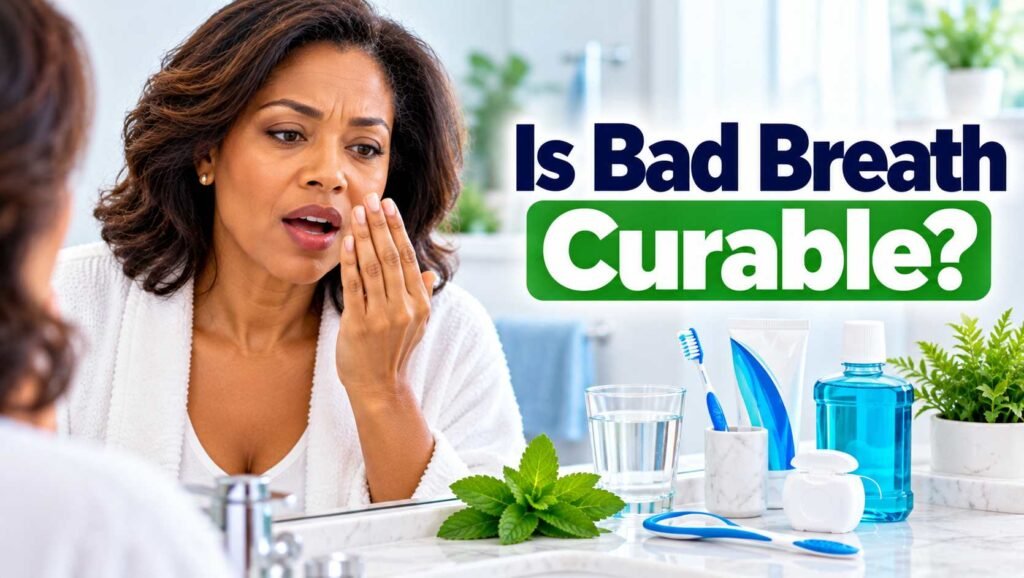
If you’ve struggled with bad breath for weeks or months, you’ve probably wondered whether it can ever truly go away. The short answer is yes, in most cases. Bad breath, or halitosis, is usually a treatable condition, and for the majority of people the cause is in the mouth. But “curable” depends on what’s behind it, and some people need ongoing habits to keep it from returning. This guide explains when bad breath can be fully resolved, when it needs management, and what to do next.
So, Is Bad Breath Curable?
For most people, yes. Research suggests that roughly 80 to 90 percent of persistent bad breath starts in the mouth, and oral causes are among the most treatable. Once the source is identified and addressed, the odor often clears completely.
There are three broad scenarios:
- Fully curable: temporary causes such as dry mouth from dehydration, a dental problem that gets treated, tonsil stones, or a diet-related odor. Fix the cause and the smell goes.
- Controllable with habits: if you’re prone to a coating on the tongue, dry mouth, or an imbalanced oral microbiome, the odor can return when routines slip. Think of it like keeping a garden weeded.
- Linked to a medical condition: sinus infections, acid reflux, diabetes, and liver or kidney problems can affect breath. Treating the underlying condition is what resolves it.
So the more accurate answer is that bad breath is almost always treatable, and often curable, once you find the real cause.
Why Bad Breath Happens
Your mouth hosts billions of bacteria. When certain bacteria break down food particles, dead cells, and proteins, they release volatile sulfur compounds. These smell like rotten eggs or decay, and they are the main driver of bad breath.
Common triggers include:
- A bacterial coating on the back of the tongue
- Food trapped between teeth
- Dry mouth from dehydration, alcohol, mouth breathing, or medications
- Gum disease and cavities
- Smoking and tobacco
- Tonsil stones, sinus problems, and acid reflux
For a deeper look at the causes, see what causes persistent bad breath.
Step 1: Find the Cause
Curing bad breath starts with working out why you have it. Ask yourself:
- Does the smell come mostly from your mouth, or does it seem to come from your nose or throat?
- Is it worse in the morning, after meals, or all day?
- Do you have a white coating on your tongue, bleeding gums, or a bad taste?
- Do you have a dry mouth, snore, or breathe through your mouth?
- Have you recently started a new medication or diet?
If you can’t pinpoint the cause, a dentist can usually find it quickly. A dental exam checks for gum disease, cavities, and infections, which are the most common hidden culprits.
Step 2: Build a Solid Daily Routine
The foundation of any cure is consistent oral hygiene.
Brush properly. Two minutes, twice a day, with fluoride toothpaste. Angle the bristles toward the gumline and replace your brush every three months.
Clean between your teeth. Floss or use interdental brushes daily. Trapped food is a major cause of lingering odor.
Scrape your tongue. The back of the tongue holds more odor-causing bacteria than almost anywhere else. A daily scrape makes a noticeable difference for many people.
Stay hydrated. Saliva is your natural defense. Sip water through the day and chew sugar-free gum to keep saliva flowing.
Limit triggers. Cut back on tobacco, excess alcohol, sugary snacks, and strongly flavored foods.
For more detail on these habits, see my guide to how to get rid of breath smell and the list of best bad breath treatments in the US.
Step 3: Support Your Oral Microbiome
Here’s something many people overlook. Brushing and flossing remove bacteria, but they don’t determine which bacteria dominate your mouth. A healthy mouth has a balance of beneficial and harmful microbes. When that balance tips toward the harmful side, odor, plaque, and gum problems become more likely, and bad breath tends to keep coming back.
That’s why oral probiotics have become popular. They aim to introduce beneficial bacteria that compete with the ones responsible for odor. The research is promising but still developing, and results vary between individuals. They work best as an addition to good hygiene, not a replacement.
ProDentim: A Recommended Option
One product I recommend looking at is ProDentim. It’s a chewable oral probiotic made with strains such as Lactobacillus paracasei, B. lactis BL-04, and L. reuteri, along with supporting ingredients like peppermint. It’s designed to support fresh breath, teeth, and gums as part of a daily routine, which makes it a sensible fit for anyone dealing with recurring bad breath.
Why it’s worth considering:
- It targets the microbiome, which is one of the root drivers of recurring odor
- It comes in an easy chewable form that fits into a daily routine
- It can be used alongside brushing, flossing, and other habits
If you’d like to see the full details, you can check ProDentim here.
Before you buy, read my full ProDentim review for ingredients, complaints, and pricing. If breath is your main concern, 5 ways ProDentim treats bad breath covers it in more depth. Please remember that supplements aren’t a substitute for dental care, and individual results will differ. If you’re pregnant, nursing, have a medical condition, or take medication, check with your doctor or dentist first.
Step 4: Treat Medical and Dental Causes
If good hygiene doesn’t solve the problem, look for an underlying cause:
- Gum disease and cavities: professional cleaning and treatment are the cure. Brushing won’t remove hardened tartar.
- Tonsil stones: gargling with salt water can help, and a doctor can advise on recurring cases.
- Sinus infections and postnasal drip: treating the infection or allergy clears the source.
- Acid reflux: managing reflux through diet, lifestyle, or medication often improves breath.
- Dry mouth from medications: ask your doctor or pharmacist about alternatives or saliva-support options. Don’t change medication on your own.
Seek medical advice promptly if you notice a fruity, ammonia-like, or fecal-smelling breath, or symptoms like unexplained weight loss, extreme thirst, or persistent nausea.
How Long Does It Take to Cure Bad Breath?
It depends on the cause:
- Diet or dehydration: often improves within a day or two
- Poor tongue and interdental cleaning: many people notice a difference within a few days to two weeks
- Gum disease: may take several weeks of treatment and consistent care
- Microbiome support: it generally takes consistent daily use over weeks, and results vary
- Medical conditions: depends on treating the underlying issue
Be patient and consistent. If there’s no improvement after two to three weeks of good habits, book a dental visit.
Why Bad Breath Sometimes Comes Back
Even after it clears, bad breath can return if the cause reappears. Common reasons include:
- Slipping on tongue cleaning or flossing
- Dehydration or sleeping with your mouth open
- Returning to smoking or heavy alcohol use
- Untreated gum problems
- A diet high in sugar or strong-smelling foods
- Stress, which can dry the mouth
Treat your routine as a long-term habit rather than a one-time fix. That’s the real “cure” for most people.
Common Myths About Curing Bad Breath
“Mouthwash cures bad breath.” It masks odor and reduces bacteria briefly, but it doesn’t fix the cause. Alcohol-based rinses can even dry your mouth.
“It’s always from the stomach.” Most cases start in the mouth, not the stomach.
“Mints and gum solve it.” They offer short-term cover. Sugar-free gum can help by boosting saliva, but it’s not a cure.
“Natural remedies alone will fix everything.” Tongue scraping, hydration, and green tea can help, but a persistent problem may need a dentist.
Frequently Asked Questions
Is bad breath permanent?
No. For most people it’s temporary and treatable once the cause is found.
Can bad breath be cured naturally?
Often, yes. Tongue scraping, hydration, good hygiene, and a mouth-friendly diet resolve many cases. Persistent cases may need dental or medical care.
Can probiotics help bad breath?
Some research suggests oral probiotics may help support a healthier balance of mouth bacteria, though results vary. An option like ProDentim is meant to be used alongside good hygiene.
When should I see a dentist?
If your breath doesn’t improve after two to three weeks of consistent care, or if you have bleeding gums, tooth pain, or a persistent bad taste.
Can bad breath be a sign of something serious?
Occasionally. Diabetes, liver disease, kidney problems, and chronic sinus or lung conditions can affect breath. A doctor can check if you have other symptoms.
Final Thoughts
So, is bad breath curable? In the great majority of cases, yes. The key is to find the cause, build a consistent routine, support a healthy oral microbiome, and get professional help when needed. For many people, a combination of tongue scraping, flossing, hydration, and an oral probiotic like ProDentim makes a meaningful difference. Stay consistent, be patient, and don’t ignore a smell that refuses to go away.
Further Reading
- Is ProDentim legit?: an honest look at the claims and complaints before you try an oral probiotic.
- ProDentim: 10 things you need to know: the key facts in a quick, readable format.
- Best over-the-counter bad breath products: store-bought options for fast relief alongside daily habits.
- ProDentim vs Provadent: a side-by-side comparison of two oral probiotics.
This article is for general information only and isn’t medical or dental advice. Talk to your dentist or doctor about persistent symptoms.