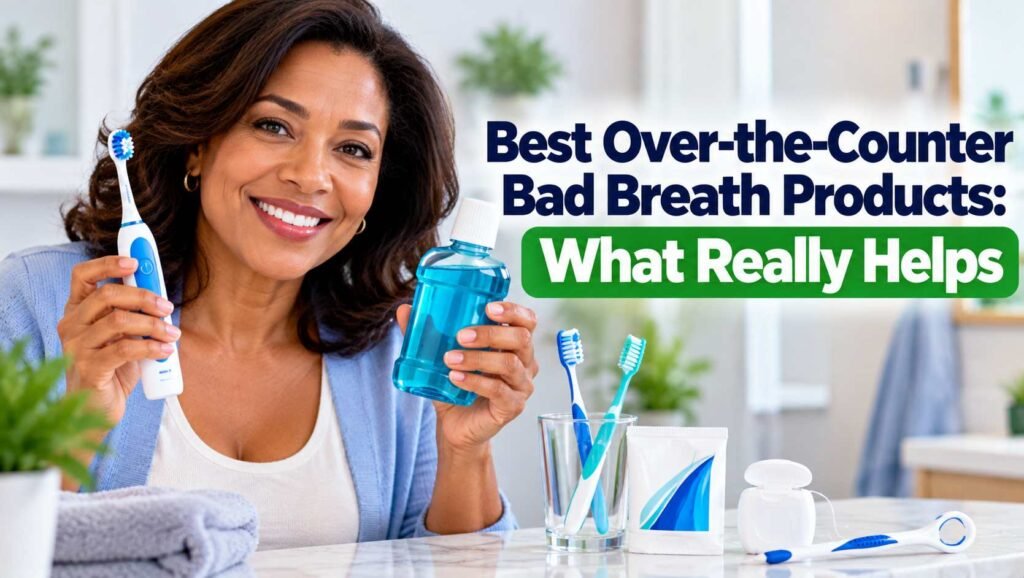
Quick answer: The over-the-counter (OTC) products that help most with bad breath are a tongue scraper, an alcohol-free antibacterial mouthwash (CPC, chlorine dioxide or zinc), floss or a water flosser, sugar-free xylitol gum, and dry mouth products such as Biotene if your mouth feels dry. Oral probiotics like ProDentim may be a worthwhile extra for some people. Mints and sprays only mask odor for a short time.
Why Choosing the Right Product Matters
Walk down the oral care aisle of any American pharmacy and you’ll find dozens of products promising “fresh breath.” Most of them fall into two groups. Some actually reduce the bacteria and sulfur compounds that cause odor. Others simply cover it up with mint for twenty minutes.
Both have a place, but if you deal with bad breath regularly, the first group is where your money should go. Chronic bad breath (halitosis) usually comes from bacteria on the tongue and between the teeth and gums, so the best OTC products either remove those bacteria physically, neutralize the gases they make, or help your mouth keep itself clean through saliva.
One honest caveat before we start: no store-bought product can fix gum disease, cavities, an abscess or a medical cause such as reflux or a sinus infection. If your breath doesn’t improve after two to three weeks of consistent use, see a dentist. We cover the full range of options, including professional treatments, in our guide to the best bad breath treatments in the US.
1. Tongue Scrapers and Tongue Brushes
Why it helps: The back of the tongue is the biggest reservoir of odor-producing bacteria for most people. Cleaning it physically removes the coating, and several small studies suggest scrapers lower sulfur compounds more than brushing the tongue with a toothbrush.
What to buy: A stainless steel or copper scraper with a smooth, rounded edge is simple, durable and costs roughly five to ten dollars. Soft silicone scrapers are gentler if you have a strong gag reflex. Many toothbrushes also have a textured tongue cleaner on the back, which is better than nothing.
How to use it: Pull forward from as far back as is comfortable, rinse the scraper, and repeat several times. Do it daily, ideally in the morning. Avoid pressing hard.
2. Antibacterial and Odor-Neutralizing Mouthwashes
Mouthwash is where the label matters most. Here are the main types you’ll find over the counter in the US.
CPC (cetylpyridinium chloride) rinses
CPC is an antibacterial ingredient in many popular rinses, including some Crest Pro-Health and Colgate Total formulas. Look for alcohol-free versions, which are gentler and less drying. Research shows CPC rinses can reduce plaque bacteria and help with breath, and they are suitable for everyday use.
Chlorine dioxide and zinc rinses
TheraBreath and similar brands use chlorine dioxide or zinc to chemically neutralize volatile sulfur compounds instead of just covering them. Many people with persistent morning breath find these work longer than a standard minty rinse. They are alcohol-free, which makes them a good fit if you tend to have a dry mouth.
Essential oil rinses
Listerine-style rinses contain eucalyptol, menthol, thymol and methyl salicylate. They have good evidence for reducing plaque and gingivitis. The original alcohol-containing versions can sting and dry the mouth, so consider an alcohol-free option.
What to avoid
Cosmetic rinses that are mostly flavored water and alcohol. They freshen briefly, may dry your mouth and can make the problem worse over time. Check the ADA Seal of Acceptance on the box as a quick quality signal where available.
Tip: Rinse after brushing and tongue scraping, not instead of them, and avoid eating or drinking for around thirty minutes afterward.
3. Toothpastes Formulated for Breath
Your toothpaste matters because you use it twice a day. Options that target breath typically contain one or more of the following:
- Stannous fluoride, which fights plaque bacteria and protects gums. Crest Gum Detoxify and Colgate Total are widely sold examples.
- Zinc, which binds sulfur compounds.
- Baking soda, which may help neutralize acids.
Whatever you pick, make sure it contains fluoride, since cavities are a common hidden source of odor. If your gums tend to be sensitive, avoid very harsh whitening pastes.
4. Floss, Interdental Brushes and Water Flossers
This category is often overlooked, yet food and plaque trapped between teeth are among the most common causes of persistent odor. Your toothbrush can’t reach those surfaces.
- String floss or floss picks: Cheap and effective if used properly. Waxed floss slides more easily between tight teeth.
- Interdental brushes: Small brushes that work well if you have gaps, braces or bridges.
- Water flossers (for example, Waterpik): Useful for braces, implants and people who find string floss difficult. Many are priced between $40 and $100. They can also help flush out tonsil stones when used on a low setting.
The best choice is the one you will use every single day.
5. Sugar-Free Gum, Lozenges and Mints With Xylitol
Chewing sugar-free gum stimulates saliva, which washes away bacteria and food debris. Products containing xylitol, such as Spry and Xlear, may also help limit the growth of cavity-causing bacteria. Gum and lozenges are handy after meals when you can’t brush.
Choose sugar-free only, since sugar feeds the very bacteria you’re trying to control. Keep in mind that xylitol is toxic to dogs, so store these products safely out of a pet’s reach.
Regular breath mints and sprays are fine for an emergency but shouldn’t be your main strategy. They mask smell for a short time and don’t address the cause.
6. Dry Mouth Products
If your breath is worst in the morning or you often feel thirsty, dry mouth may be a major factor. Many common medications cause it. OTC options include:
- Biotene mouth rinses, gels, sprays and lozenges, designed to supplement saliva.
- Moisturizing mouth sprays and gels for use at night.
- A bedroom humidifier if you sleep with your mouth open.
- Plain water, sipped throughout the day. It’s still the cheapest option.
If dry mouth is severe or started after you began a new medication, speak to your doctor or pharmacist. Don’t stop any prescription on your own.
7. Tonsil Stone Tools
Tonsil stones are small, smelly lumps that can form in the tonsils. A water flosser on its lowest setting, salt water gargles and a soft oral irrigator are common OTC approaches. Avoid scraping at your tonsils with sharp objects or cotton swabs pushed hard, since you can injure the tissue. If stones keep coming back or cause pain, an ENT doctor can advise you.
8. Oral Probiotics
Oral probiotics are one of the fastest growing OTC categories for breath and gum health. The idea is that beneficial bacteria help crowd out the species that produce odor. The research is promising for some strains, but studies so far are fairly small and short, so probiotics are best thought of as a supportive extra on top of the basics above, not a replacement for them or for dental care.
Supplements are not evaluated by the FDA the way medicines are, so quality and claims vary a lot. Look for products that name their strains, state how many bacteria they contain and offer a clear refund policy. ProDentim is one of the best-known options in this category, and it’s worth a closer look.
ProDentim: A Possible Option for Breath and Oral Balance
ProDentim is a chewable, dissolvable tablet designed to support a healthier balance of bacteria in the mouth. According to the manufacturer, each tablet delivers 3.5 billion probiotics from three strains, Lactobacillus paracasei, B.lactis BL-04 and Lactobacillus reuteri, alongside inulin (a prebiotic fiber), malic acid, tricalcium phosphate and peppermint. You slowly chew one tablet a day, and the manufacturer offers a 60-day money-back guarantee, with free shipping on US orders.
The rationale is that a more balanced oral microbiome may help keep odor-producing bacteria in check, and the peppermint adds a pleasant fresh taste. That makes it a possible solution for people who have already sorted out the basics (scraping, flossing, a good rinse) and want extra support. ProDentim is a supplement, not a medicine: results vary, the claims on the official site haven’t been evaluated by the FDA, and it won’t treat gum disease, cavities or a medical cause of odor.
What we like:
- Simple daily routine: one chewable tablet, no rinsing or measuring.
- Alcohol-free, so no burning or dryness like some mouthwashes.
- Named strains and a stated bacteria count, which is more transparent than many supplements.
- Peppermint flavor for a fresh feeling after chewing.
- 60-day money-back guarantee lowers the risk of trying it.
- Free shipping in the US.
- Works alongside your normal brushing and flossing.
What to keep in mind:
- Evidence for oral probiotics is still developing, and individual results differ.
- It costs more than a bottle of mouthwash, and it takes consistent daily use to judge.
- It isn’t a replacement for dental checkups or treatment.
☛ Check the current ProDentim offer and 60-day guarantee on the official website
For a closer look at ingredients, customer complaints and pricing before you decide, read our full ProDentim review. If you’re comparing it with another oral probiotic, see our side-by-side of ProDentim vs Provadent.
Quick Comparison Table
| Product Type | How It Helps | Best For | Typical Cost |
|---|---|---|---|
| Tongue scraper | Removes tongue coating and bacteria | Almost everyone | $5 to $10 |
| CPC mouthwash | Reduces plaque bacteria | Daily maintenance | $5 to $12 |
| Chlorine dioxide or zinc rinse | Neutralizes sulfur compounds | Persistent or morning breath | $8 to $15 |
| Essential oil rinse | Reduces plaque and gingivitis | Gum health | $5 to $10 |
| Floss, interdental brush or water flosser | Cleans between teeth | Food trapping, braces, implants | $3 to $100 |
| Xylitol gum or lozenges | Boosts saliva | After meals, mild dry mouth | $3 to $8 |
| Biotene and similar products | Moistens the mouth | Dry mouth | $6 to $15 |
| Oral probiotics (e.g., ProDentim) | Supports oral bacterial balance | Extra support on top of hygiene | Varies by pack size |
| Mints and sprays | Temporary masking | Emergencies only | $1 to $5 |
Costs are rough estimates and vary by brand and retailer.
How to Build a Simple OTC Routine
Morning: Scrape your tongue, brush with fluoride toothpaste, rinse with an alcohol-free antibacterial mouthwash, and drink a glass of water. If you use ProDentim, chew your tablet as directed on the label.
During the day: Sip water regularly and chew sugar-free xylitol gum after meals.
Evening: Floss or use an interdental brush or water flosser, brush again, scrape your tongue and rinse. Skip food and drink afterward.
Stay consistent for two to three weeks before judging results. Most people notice clear differences within that time if the cause is simple tongue bacteria, trapped food or dryness.
Common Mistakes When Buying OTC Breath Products
- Buying only mints and sprays and ignoring the tongue and the spaces between teeth.
- Choosing alcohol-heavy mouthwashes that dry out the mouth.
- Skipping fluoride toothpaste in favor of “natural” pastes without fluoride.
- Expecting a single product to fix everything. Combining a few is far more effective.
- Ignoring warning signs such as bleeding gums, pain, swelling or an unusual odor.
- Overusing antibacterial rinses in ways that go against the label.
When OTC Products Aren’t Enough
See a dentist if your breath hasn’t improved after two to three weeks of a consistent routine, or sooner if you notice bleeding or swollen gums, tooth pain, loose teeth, a persistent bad taste or visible decay. Gum disease and cavities are among the most common causes of stubborn odor, and only professional treatment resolves them.
If your mouth is healthy, ask your doctor about sinus problems, reflux or other medical causes. Get urgent medical advice for a fruity breath odor along with extreme thirst, nausea or confusion, or for facial swelling with fever.
The Bottom Line
The best OTC products for bad breath are the unglamorous ones: a tongue scraper, floss or a water flosser, fluoride toothpaste and an alcohol-free antibacterial rinse. Add xylitol gum and dry mouth products if saliva is part of the problem. An oral probiotic such as ProDentim may be a helpful extra for some people who want to support their mouth’s bacterial balance, as long as expectations stay realistic. And if nothing seems to work, treat that as a sign to get checked, not to keep buying more products.
☛ See ProDentim’s official page for details and the 60-day money-back guarantee
Frequently Asked Questions
What is the best over-the-counter product for bad breath?
No single product is best for everyone. A tongue scraper combined with an alcohol-free antibacterial or chlorine dioxide mouthwash and daily flossing gives the biggest improvement for most people.
Do mints and breath sprays work?
Only briefly. They mask odor for a short time without removing bacteria. They’re fine in an emergency but not a long-term fix.
Is alcohol-free mouthwash better for bad breath?
Often, yes. Alcohol can dry your mouth, and a dry mouth tends to make bad breath worse. Alcohol-free CPC, zinc and chlorine dioxide rinses are popular choices.
Can probiotics help with bad breath?
Some small studies on specific oral probiotic strains are promising, but the evidence is still limited. They work best as an addition to brushing, flossing and tongue cleaning.
What ingredients are in ProDentim?
According to the manufacturer, ProDentim contains Lactobacillus paracasei, B.lactis BL-04 and Lactobacillus reuteri, plus inulin, malic acid, tricalcium phosphate and peppermint.
How long should I try an OTC product before deciding it doesn’t work?
Give a consistent routine two to three weeks. If there’s no improvement, see a dentist to check for gum disease, cavities or other causes.
Is xylitol gum safe?
It’s generally safe for people, but it is toxic to dogs. Keep it out of reach of pets, and note that large amounts can cause digestive upset in some people.
Affiliate disclosure: This article contains affiliate links. If you buy through them, we may earn a commission at no extra cost to you. This helps support our work, and it doesn’t influence our honest assessments.
Medical disclaimer: This article is for general information only and is not a substitute for professional medical or dental advice, diagnosis or treatment. Statements about supplements have not been evaluated by the FDA, and these products are not intended to diagnose, treat, cure or prevent any disease. Always consult a qualified dentist or healthcare provider about persistent bad breath or any health concern. Individual results vary.