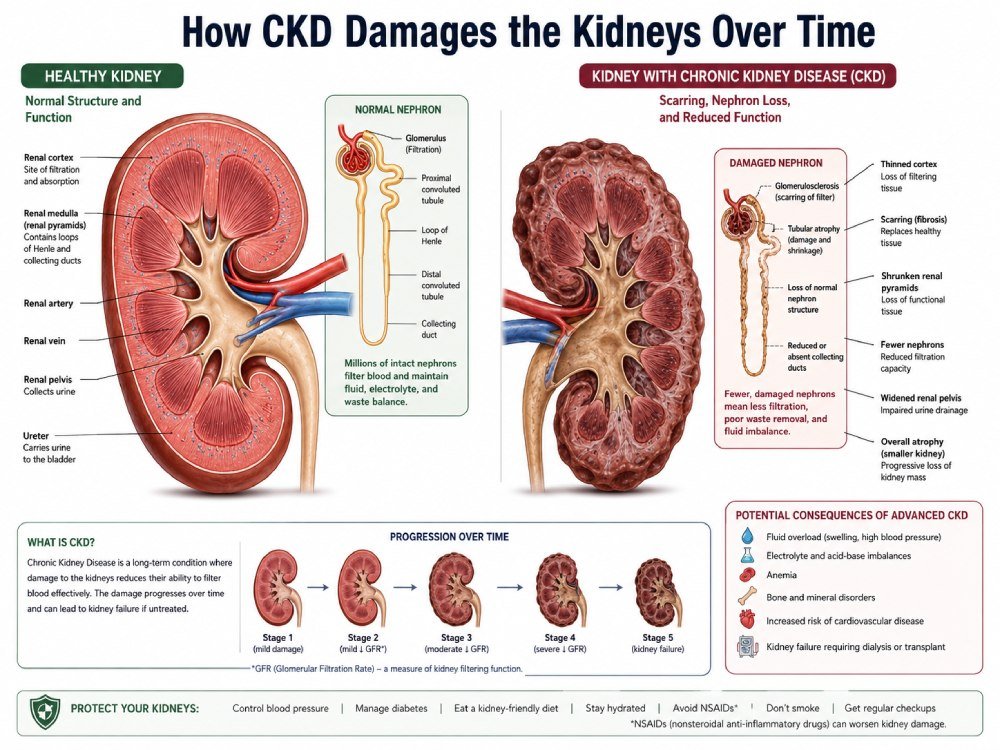
Chronic kidney disease — CKD — is when the kidneys slowly lose their ability to filter waste from the blood, and have been doing so for at least three months. It affects roughly 35.5 million people in the United States alone, and hundreds of millions more worldwide. Most of them had no idea anything was wrong until a routine blood test caught it.
That’s the thing about CKD: it’s often completely silent in the early stages. By the time symptoms appear — fatigue, swelling, changes in urination — meaningful damage has already happened. This guide exists to close that information gap. Whether you’ve just been diagnosed, you’re managing an existing condition, or you’re worried about someone you love, everything you need to understand about CKD is here in one place.
This is not a substitute for medical advice. It’s a clear, honest guide to help you ask better questions and make more informed decisions alongside your doctor.
Quick Reference: Chronic Kidney Disease at a Glance
| Condition | Chronic Kidney Disease (CKD) |
| Also Known As | Chronic kidney failure, chronic renal disease |
| How Common | ~35.5 million US adults; 753 million+ globally |
| Main Causes | Diabetes, high blood pressure |
| Key Test | eGFR (estimated glomerular filtration rate) from a blood test |
| Number of Stages | 5 stages (Stage 1 = mildest, Stage 5 = kidney failure) |
| Can It Be Reversed? | Usually not, but progression can be slowed or stopped |
| Main Treatments | Blood pressure control, diet, SGLT2 inhibitors, ACE inhibitors/ARBs, dialysis or transplant at Stage 5 |
| When Dialysis Is Needed | Stage 5 (eGFR below 15), if kidneys can no longer sustain life |
| Specialist to See | Nephrologist (kidney specialist), renal dietitian |
1. What Is Chronic Kidney Disease?
Chronic kidney disease is a long-term condition where the kidneys are damaged and gradually lose their ability to filter blood properly. “Chronic” means it’s been going on for at least three months — that’s the clinical threshold, not a guess. It’s not a single disease but a category that includes many different conditions that all result in the same outcome: declining kidney function over time.
The kidneys sit just below the rib cage, one on each side of the spine. Together they filter roughly 200 liters of blood every day, removing waste products and excess fluid as urine. When that filtering capacity falls, waste builds up in the bloodstream — and that’s when the real problems begin.
CKD is graded on a 5-stage scale based primarily on a number called eGFR (estimated glomerular filtration rate). The higher the eGFR, the better the kidneys are working. A healthy adult has an eGFR of 90 or above. Stage 5 CKD — kidney failure — means the eGFR has dropped below 15.
Here’s the part that catches most people off guard: you can have CKD for years and feel absolutely fine. The kidneys have a remarkable ability to compensate for damage, which is why the disease is often called a “silent” condition. By the time physical symptoms show up, you may already be in Stage 3 or 4.
2. How the Kidneys Work — and What Goes Wrong in CKD
Inside each kidney are about one million tiny filtering units called nephrons. Each nephron contains a small knot of blood vessels called a glomerulus. Blood is pushed through the glomerulus under pressure, and waste products, excess water, and certain minerals pass through into a collecting tube, eventually forming urine. Essential things — proteins, red blood cells, most glucose — are kept in the bloodstream.
In CKD, this filtration system is damaged. The exact mechanism depends on the cause, but in the most common cases — diabetes and high blood pressure — it works like this:
Diabetes and the kidneys: Persistently high blood sugar damages the blood vessels inside the glomeruli. Over years, this causes a condition called diabetic nephropathy. The damaged filters start letting proteins through that should stay in the blood. This protein in urine (albuminuria or proteinuria) is one of the earliest detectable signs of kidney damage — and a key marker in diagnosing CKD.
High blood pressure and the kidneys: Elevated blood pressure puts constant extra force on blood vessel walls throughout the body, including inside the kidney’s delicate filtration units. Over time this physical stress scars the glomeruli. As more nephrons are scarred and stop working, the kidneys also lose their ability to regulate blood pressure — creating a feedback loop where CKD makes hypertension worse, which in turn worsens CKD.
Other causes damage the nephrons differently — glomerulonephritis (inflammation), polycystic kidney disease (cysts that grow and crowd out functional tissue), or autoimmune conditions — but the endpoint is the same: fewer working nephrons, lower filtration capacity, rising waste in the blood.
The kidneys also perform jobs beyond filtering: they activate Vitamin D (critical for bones), produce the hormone erythropoietin (which tells bone marrow to make red blood cells), and help regulate potassium, phosphorus, and fluid balance. As CKD advances, all of these functions deteriorate, which explains why the complications of CKD reach so far beyond the kidneys themselves.
3. The 5 Stages of CKD Explained
CKD is classified into five stages based on eGFR — a number calculated from a blood test measuring creatinine (a waste product the muscles produce). Your doctor may also use uACR (urine albumin-to-creatinine ratio), which measures protein leaking into urine, as an additional marker of severity.
| Stage | eGFR | Kidney Function | What It Means |
|---|---|---|---|
| Stage 1 | 90 or above | Normal or high | Kidneys work normally but there are signs of damage (protein in urine, structural abnormality). Often no symptoms. |
| Stage 2 | 60–89 | Mildly decreased | Slight reduction in filtering ability. Still requires evidence of kidney damage to qualify as CKD. Few if any symptoms. |
| Stage 3a | 45–59 | Mild to moderate decrease | Waste begins to build up. Complications like anemia and high blood pressure may start to appear. Referral to a nephrologist often begins here. |
| Stage 3b | 30–44 | Moderate to severe decrease | Symptoms become more noticeable. Active management of diet and medications becomes essential. |
| Stage 4 | 15–29 | Severely decreased | Significant waste buildup. Planning for dialysis or transplant should begin. Dietary restrictions tighten. |
| Stage 5 | Below 15 | Kidney failure (ESRD) | Kidneys can no longer sustain life without assistance. Dialysis or kidney transplant required. |
It’s worth knowing that eGFR numbers fluctuate — a single abnormal reading isn’t enough to diagnose CKD. Doctors look for consistently low eGFR over at least three months, often alongside albuminuria, to confirm the diagnosis. An acute illness can temporarily lower eGFR without indicating chronic disease.
4. Symptoms at Every Stage
One of the most important things to understand about CKD is the mismatch between severity and symptoms. Many people feel well in Stages 1 through 3. Symptoms often appear later — but by then, significant damage has occurred. This is exactly why routine kidney function tests matter, especially if you have diabetes, high blood pressure, or a family history of kidney disease.
Early Stages (1 and 2)
Usually no physical symptoms. CKD at this stage is almost always found by a blood or urine test done for another reason. Occasionally people notice slightly foamy urine (protein leaking through) or slightly elevated blood pressure.
Stage 3
This is typically when the first noticeable symptoms may begin to appear, though many Stage 3 patients still feel fine. Possible signs include persistent fatigue and low energy, swelling in the ankles and feet (fluid retention), changes in urination frequency (more or less than usual, or at unusual times), back pain near the kidney area, sleep problems, and mild cognitive cloudiness some describe as “brain fog.”
Stage 4
Symptoms become more pronounced and difficult to ignore. The buildup of waste products (uremia) causes nausea, reduced appetite, difficulty concentrating, pale or itchy skin, shortness of breath (from fluid buildup or anemia), muscle cramps, and worsening swelling. Blood pressure becomes harder to control.
Stage 5 (Kidney Failure)
At this point the kidneys cannot adequately filter waste. Symptoms are severe: extreme fatigue, severe nausea and vomiting, loss of appetite leading to weight loss, confusion or difficulty concentrating, little to no urine output, severe swelling in the legs and abdomen, shortness of breath, and a characteristic ammonia-like breath odor from waste buildup. This stage is life-threatening without treatment.
5. Causes and Risk Factors
For most people, CKD isn’t caused by a single thing — it’s the result of several factors acting together over years or decades.
The Two Leading Causes
Type 2 diabetes is the number one cause of CKD globally. About 1 in 3 adults with diabetes will develop some degree of kidney disease. Uncontrolled blood sugar damages kidney blood vessels over years, leading to diabetic nephropathy. The good news is that careful blood sugar management and newer medications can substantially reduce this risk.
High blood pressure (hypertension) is the second leading cause. The constant extra force on kidney blood vessels causes progressive scarring. The relationship is circular: CKD itself raises blood pressure, making management harder the longer it goes untreated.
Other Known Causes
Glomerulonephritis (inflammation of the kidney’s filtering units) — including IgA nephropathy, which now has new disease-modifying treatments as of 2025. Polycystic kidney disease (PKD), an inherited condition where cysts grow in and around the kidneys. Lupus and other autoimmune conditions. Recurrent kidney infections. Prolonged use of certain medications (NSAIDs like ibuprofen, some antibiotics, certain chemotherapy drugs). Long-term exposure to heavy metals including lead and solvents.
Risk Factors That Raise Your Chances
Being over 60 (eGFR naturally declines with age), having a family history of kidney disease, being Black, Hispanic, Native American, or Pacific Islander (higher rates of diabetes and hypertension in these groups contribute to higher CKD rates), obesity, smoking, cardiovascular disease, and a history of acute kidney injury.
6. How CKD Is Diagnosed
Diagnosing CKD requires evidence of kidney damage or reduced function lasting at least three months. Your doctor uses two main tests:
Blood Test: eGFR (estimated Glomerular Filtration Rate)
This is calculated from your serum creatinine level, age, and sex. Some labs now also use cystatin C — a different protein — to provide a more accurate estimate, particularly in people who have unusual muscle mass. The result tells your doctor how much filtering capacity your kidneys have relative to normal. A result below 60, confirmed on repeat testing over three months, is a key CKD indicator.
Urine Test: uACR (Urine Albumin-to-Creatinine Ratio)
This measures the amount of albumin (a protein) leaking into your urine. Healthy kidneys keep albumin in the bloodstream. When they’re damaged, albumin escapes. A uACR above 30 mg/g is considered a sign of kidney damage, and a uACR above 300 mg/g indicates more significant protein loss. Both eGFR and uACR together give a more complete picture of kidney health than either alone — higher protein in urine at any given eGFR stage means a higher risk of progression.
Additional Tests Your Doctor May Order
Blood tests for electrolytes (potassium, sodium, bicarbonate, phosphorus, calcium). A complete blood count to check for anemia. Blood pressure monitoring. Kidney ultrasound to look for structural abnormalities, cysts, or size changes. In some cases, a kidney biopsy may be done to identify the specific type of kidney disease, particularly if glomerulonephritis is suspected.
7. Diet and Nutrition with CKD
Diet is one of the most powerful tools in managing CKD — and one of the most confusing areas for patients. The right diet changes depending on your stage, your lab values, and other conditions you have. There is no single “CKD diet.” What’s appropriate for Stage 2 can actually be harmful in Stage 4. A registered renal dietitian is genuinely worth seeing.
That said, here are the key nutritional areas relevant to CKD:
Sodium
Limiting sodium is almost universally recommended for CKD patients, because excess sodium raises blood pressure and causes fluid retention — both of which accelerate kidney damage. The standard target is less than 2,300 mg of sodium per day (roughly one teaspoon of salt). This isn’t just about the salt shaker — processed foods, canned goods, frozen meals, restaurant food, and even bread contain large amounts of sodium. Reading nutrition labels is essential.
Protein
Protein is metabolized into waste products that the kidneys must filter. In later stages of CKD (typically Stage 3b and beyond), limiting protein intake — usually to around 0.6 to 0.8 grams per kilogram of body weight per day — reduces the filtration burden on damaged kidneys. Studies have found that adherence to low-protein diets slows eGFR decline. However, too little protein can cause malnutrition, so this needs careful management. Higher animal protein intake (especially red and processed meat) has been linked to faster CKD progression; plant-based proteins are generally preferred.
Potassium
In early CKD, potassium restriction is usually unnecessary. As kidney function declines, the kidneys can no longer excrete excess potassium, and high blood potassium (hyperkalemia) becomes a serious — potentially life-threatening — risk. High-potassium foods to potentially limit in later stages include bananas, oranges, potatoes, tomatoes, avocados, beans, and most dairy. But potassium restriction should only be based on your actual blood potassium levels — not as a blanket rule for all CKD patients.
Phosphorus
Damaged kidneys struggle to excrete phosphorus. High phosphorus levels pull calcium from bones (weakening them) and cause calcification in blood vessels. Foods high in phosphorus include dairy products, dark colas (which contain phosphoric acid), processed meats, nuts, seeds, and beans. Phosphorus from plant sources is absorbed less efficiently than from animal sources, another reason plant-based diets are often recommended in CKD. Research suggests that restricting phosphorus intake from early stages (below 1,000 mg/day) may help preserve eGFR and reduce markers of kidney stress.
Fluids
Fluid restriction is generally only needed in later stages when the kidneys can no longer manage fluid output. In early and mid-stage CKD, staying adequately hydrated is actually important — dehydration can acutely worsen kidney function. Your doctor or dietitian will advise on fluid targets based on your urine output and other factors.
The DASH Diet Connection
Research following 14,882 adults over 23 years found that strong adherence to the DASH diet (high in vegetables, fruits, whole grains, and low-fat dairy; low in red and processed meat) was associated with a 14% lower risk of developing CKD. It’s not a kidney diet per se, but its principles align well with kidney health, particularly in early stages. As CKD advances, some DASH elements (like high potassium from fruits) may need to be modified.
8. Treatment Options — From Early Stage to End Stage
The goal of CKD treatment changes as the disease progresses. In early stages, it’s about slowing progression and preventing complications. In advanced stages, it shifts to preparing for and then managing kidney replacement therapy.
Controlling Blood Pressure (The Most Important Intervention)
Target blood pressure for most CKD patients is less than 130/80 mmHg. Two drug classes are the cornerstone of treatment:
ACE inhibitors (such as ramipril, lisinopril) and ARBs (such as losartan, valsartan) both reduce blood pressure and directly protect the kidneys by lowering pressure inside the glomeruli. They also reduce protein leakage in urine, which is independently protective. These are typically first-line treatments for CKD patients with albuminuria.
SGLT2 Inhibitors — The Biggest Advance in CKD Treatment in Decades
Originally developed as diabetes drugs, SGLT2 inhibitors (dapagliflozin/Farxiga, empagliflozin/Jardiance, canagliflozin/Invokana) have shown remarkable kidney-protective effects independently of blood sugar control. The CREDENCE trial of canagliflozin found a 32% risk reduction in kidney failure compared to placebo in diabetic CKD patients. SGLT2 inhibitors are now recommended for CKD in patients with type 2 diabetes as part of first-line treatment, and their use in non-diabetic CKD is expanding. They lower the pressure inside the glomeruli (similarly to ACE inhibitors/ARBs) while also reducing inflammation and improving metabolic markers.
GLP-1 Receptor Agonists
Semaglutide (Ozempic/Wegovy) and similar drugs have shown kidney-protective benefits, particularly in CKD patients with type 2 diabetes. The FDA’s recent approval of semaglutide for CKD in this population reflects a shift toward earlier use of metabolic protection drugs, not just blood pressure management. These medications also help with weight loss, which independently reduces kidney stress.
Finerenone (Kerendia)
A non-steroidal mineralocorticoid receptor antagonist, finerenone reduces inflammation and scarring in kidney tissue. Studies in diabetic kidney disease show it slows CKD progression and reduces cardiovascular events. As of March 2026, its potential use in type 1 diabetic kidney disease is being studied.
Managing Blood Sugar
For diabetic CKD patients, keeping HbA1c (average blood sugar over 3 months) in a target range set by your doctor is essential. Tight blood sugar control slows the development and progression of diabetic nephropathy. Metformin, once avoided in CKD, is now considered safe in eGFR above 30 with appropriate dose adjustment.
Anemia Treatment
As CKD progresses, the kidneys produce less erythropoietin, causing anemia. Updated KDIGO guidelines published in January 2026 address anemia management in CKD, including the use of erythropoiesis-stimulating agents (ESAs) and newer HIF-PH inhibitors (oral drugs that stimulate the body’s natural erythropoietin production). Iron supplementation is also commonly required.
Dialysis
When kidneys can no longer sustain life (typically eGFR below 10–15), dialysis takes over the filtration function artificially. There are two types:
Hemodialysis — Blood is circulated through a machine that filters it, then returned to the body. Typically done three times per week at a dialysis center, each session lasting 3 to 4 hours. Home hemodialysis is an option for some.
Peritoneal dialysis — A fluid is introduced into the abdominal cavity through a catheter. The peritoneum (the lining of the abdomen) acts as a natural filter. The fluid is drained and replaced multiple times per day or overnight using a machine. More flexible than hemodialysis, allowing more independent management at home.
Kidney Transplant
A kidney transplant is generally considered the best treatment for end-stage kidney disease. A living donor kidney functions on average for 15 to 20 years; a cadaver donor kidney typically for 10 to 15 years. Patients must be evaluated for transplant eligibility, placed on a waiting list for cadaver kidneys, or find a living donor. After transplant, lifelong immunosuppressive medications are required to prevent rejection.
9. Lifestyle Changes That Actually Help
Stop smoking. Smoking constricts blood vessels and accelerates kidney damage. It’s one of the most directly harmful things a CKD patient can do. Quitting at any stage offers measurable benefits.
Manage weight. Obesity raises blood pressure, worsens blood sugar control, and increases kidney filtration demand. Weight loss of even 5–10% has shown meaningful improvements in kidney function markers.
Exercise regularly. Regular moderate exercise (150 minutes per week of walking, swimming, or cycling) helps control blood pressure, blood sugar, and weight — all of which directly impact CKD progression. CKD itself limits physical capacity, particularly in later stages, so the approach should be tailored with your care team.
Avoid NSAIDs. Ibuprofen, naproxen, and other non-steroidal anti-inflammatory drugs reduce blood flow to the kidneys. For pain management, paracetamol (acetaminophen) is generally preferred for CKD patients — but discuss any regular medication use with your doctor.
Be careful with supplements and herbal products. Some supplements marketed for health — including certain herbal teas, aristolochic acid (found in some traditional medicines), and high-dose vitamin C — can worsen kidney function. Phosphorus and potassium in supplement form are also risky in later stages. Always check with your nephrologist before adding anything.
Monitor blood pressure at home. Having your own blood pressure monitor and keeping a log provides much better data for your doctor than one reading taken in a clinic setting. Many decisions about medication dosing depend on real-world blood pressure patterns.
10. Complications You Should Know About
CKD rarely stays in the kidneys. As kidney function declines, it sets off a chain of problems throughout the body.
Cardiovascular disease is the leading cause of death in CKD patients — ahead of kidney failure itself. Damaged kidneys disrupt fluid balance, raise blood pressure, cause inflammation, and dysregulate cholesterol and calcium — all factors that accelerate heart disease and stroke. Managing cardiovascular risk is as important in CKD management as managing kidney function itself.
Anemia becomes increasingly common from Stage 3 onward as erythropoietin production falls. Anemia causes fatigue, shortness of breath, and impaired cognitive function — symptoms that significantly impact quality of life.
Bone disease (renal osteodystrophy) results from disrupted calcium, phosphorus, and Vitamin D metabolism. Phosphorus accumulates (because the kidneys can’t excrete it), which pulls calcium out of bones, weakening them. At the same time, impaired Vitamin D activation reduces calcium absorption from the gut. The result is brittle bones, increased fracture risk, and in severe cases, calcification of blood vessels.
Hyperkalemia (high blood potassium) is a potentially life-threatening complication in advanced CKD. Elevated potassium can cause dangerous heart rhythm abnormalities. It often has no symptoms until it reaches dangerous levels, making regular blood monitoring essential.
Metabolic acidosis occurs when the kidneys can no longer excrete acids produced by normal metabolism. The resulting acid buildup can accelerate bone loss, muscle wasting, and CKD progression itself. Bicarbonate supplements can correct this.
Mental health is affected more than most people realize. Depression and anxiety are significantly more common in CKD than in the general population — driven by physical symptoms, lifestyle restrictions, uncertainty about the future, and the burden of managing a chronic illness. This is an underrecognized area that deserves attention alongside the physical management of the disease.
11. CKD vs Acute Kidney Injury: What’s the Difference?
These two conditions are often confused, and the distinction matters.
| Feature | Chronic Kidney Disease (CKD) | Acute Kidney Injury (AKI) |
|---|---|---|
| Onset | Gradual, over months or years | Sudden, within hours or days |
| Duration | Permanent (3+ months, often lifelong) | Often temporary and reversible |
| Common Causes | Diabetes, high blood pressure, genetics | Dehydration, infection, medications, surgery, trauma |
| Symptoms | Often none until advanced | Often more sudden — rapid decline in urine output, swelling |
| Reversible? | Usually not; can be slowed | Often yes, with prompt treatment |
| Relationship | AKI can accelerate CKD or trigger it | CKD increases risk of AKI episodes |
A person with CKD is at higher risk of acute kidney injury — and an AKI episode in someone with CKD can permanently drop them to a lower stage of kidney function. This is why CKD patients are warned to stay well-hydrated, avoid nephrotoxic drugs where possible, and seek medical attention promptly when ill.
12. What to Realistically Expect
The trajectory of CKD is highly individual. Some people remain stable at Stage 2 or 3 for decades. Others progress faster, particularly if the underlying cause is not controlled.
Here’s what the evidence suggests:
Progression is not inevitable. Many people diagnosed with CKD — particularly at Stage 1, 2, or 3 — never develop kidney failure. With proper management of blood pressure, blood sugar, diet, and the use of kidney-protective medications, progression can be slowed substantially or halted.
The first six months after diagnosis are critical. Setting up the right treatment plan, getting dietary guidance, and engaging a nephrologist early significantly affects long-term outcomes. Many people don’t see a specialist until Stage 4 — when more damage is already done.
There is no cure. No diet, supplement, or product can reverse CKD or regenerate destroyed nephrons. Anyone claiming their product “restores kidney function” or “reverses CKD” is making a claim that current medicine cannot support. Be very cautious about such claims.
Quality of life can remain good for a long time. Especially in Stages 1–3, many people live full, active lives with CKD. The adjustments required — diet, medication, monitoring — are real but manageable.
End-stage disease is manageable, not the end. Many people on dialysis continue to work, travel, and maintain relationships. A kidney transplant can restore near-normal kidney function. Life expectancy varies widely, but with the support of modern nephrology, many patients on dialysis or with a transplant live for years or decades.
If you’re navigating a related health challenge like blood sugar management or blood pressure, you might find our reviews of products like GlucoTrust or Cardio Shield useful context — though always discuss any supplement use with your nephrologist before trying anything.
13. Frequently Asked Questions
What are the first signs of chronic kidney disease?
In the early stages, CKD usually has no obvious symptoms. When symptoms do appear they can include fatigue, swelling in the ankles or feet, changes in how often you urinate, foamy or darker urine, high blood pressure, and loss of appetite. The most reliable way to detect CKD early is through routine blood and urine tests — especially if you have diabetes, hypertension, or a family history of kidney disease.
Can chronic kidney disease be reversed?
In most cases, kidney damage from CKD is not reversible. Nephrons that have been scarred don’t regenerate. However, the right treatment can significantly slow or even halt progression. Some people in early stages stabilize and never advance to kidney failure. The goal isn’t reversal — it’s preservation of remaining kidney function.
What foods should you avoid with chronic kidney disease?
The specifics depend on your stage and blood test results, but common restrictions include high-sodium foods (processed foods, canned soups, fast food), and in later stages: high-potassium foods (bananas, oranges, potatoes, tomatoes), high-phosphorus foods (dairy, dark colas, processed meats), and excess animal protein. A registered renal dietitian is the best resource here — the right diet is individualized to your lab values, not a generic list.
What is a normal eGFR number?
A healthy eGFR is generally 90 or above. An eGFR between 60 and 89 may indicate mild kidney damage if combined with other markers of damage. Below 60 is considered impaired kidney function. Below 15 is kidney failure. eGFR does naturally decline slightly with age, which your doctor will account for.
What is the life expectancy with chronic kidney disease?
Life expectancy with CKD varies widely depending on the stage, underlying cause, overall health, and how well the condition is managed. Many people with early-stage CKD live normal or near-normal lifespans. Those who progress to Stage 5 need dialysis or a kidney transplant. A kidney from a living donor typically functions for 15 to 20 years.
Does CKD always lead to dialysis?
No. Most people diagnosed with CKD — particularly at Stages 1 through 3 — never develop kidney failure. With appropriate management of blood pressure, blood sugar, diet, and kidney-protective medications, many people stabilize. Only patients who progress to Stage 5 with severely impaired kidney function require dialysis or a transplant to survive.
What medications help protect the kidneys in CKD?
The main kidney-protective medications are ACE inhibitors and ARBs (for blood pressure and protein leakage), SGLT2 inhibitors (such as dapagliflozin and empagliflozin, which have shown strong kidney-protective effects in trials), and finerenone for diabetic kidney disease. GLP-1 agonists like semaglutide are also now being used as part of CKD management in type 2 diabetic patients. All of these require a prescription and monitoring by a physician.
What is the best diet for chronic kidney disease?
There is no one-size-fits-all CKD diet. Dietary needs shift with your stage and your individual lab values. Generally, a kidney-friendly diet limits sodium to under 2,300 mg per day, moderates protein intake, and limits phosphorus and potassium as the disease progresses. The DASH diet has shown benefit in reducing CKD risk. Working with a registered renal dietitian gives you advice tailored to your specific situation.
14. The One Thing Most CKD Articles Won’t Tell You
Most CKD guides treat it as a kidney problem. Cardiologists and nephrologists now understand it differently: CKD is a systemic cardiovascular-renal-metabolic syndrome, and the biggest killer isn’t kidney failure — it’s heart disease.
People with CKD are far more likely to die of a heart attack or stroke than to ever reach kidney failure. Yet most general articles on CKD focus almost entirely on protecting the kidneys, with cardiovascular risk management treated as secondary. In practice, the two are inseparable.
This is also why the biggest advances in CKD treatment over the past few years — SGLT2 inhibitors and GLP-1 agonists — weren’t developed by nephrologists. They were developed by cardiologists and endocrinologists. They happen to protect kidneys because they address the underlying metabolic and inflammatory drivers that damage both the heart and kidneys simultaneously.
What this means for a CKD patient: managing your cardiovascular risk isn’t a side project. It’s central. Blood pressure control, cholesterol management, quitting smoking, staying active — these aren’t just heart health tips. They are, at least as much, kidney health interventions.
Another underreported reality: medication review is critical in CKD. Many common drugs — including over-the-counter painkillers, certain antibiotics, contrast dyes used in imaging, and some herbal supplements — are nephrotoxic or require dose adjustment in CKD. Many patients with CKD are prescribed doses of other medications that are appropriate for people with healthy kidneys but accumulate to toxic levels when kidney clearance is reduced. Every time a new drug is added, a CKD patient should confirm with their doctor or pharmacist that it’s appropriate for their stage of kidney function.
A practical tip most guides skip: before any imaging procedure (MRI with contrast, CT scan), tell your medical team you have CKD. Contrast dyes can cause acute kidney injury in people with reduced kidney function. Alternatives or protective protocols can often be used if the medical team knows in advance.
And finally — the mental load of CKD is real and rarely discussed. Managing a chronic condition with no cure, monitoring multiple lab values, adjusting diet, taking multiple medications, attending regular appointments — it’s exhausting. Research consistently shows higher rates of depression and anxiety in CKD patients. If you’re struggling emotionally with a CKD diagnosis — yours or a loved one’s — that’s not weakness. It’s a normal response to a genuinely difficult situation. Seeking support, whether through a counselor, a patient support group, or simply honest conversations with your care team, is part of managing the condition well.
If you’re interested in natural programs that some people explore alongside CKD management, our review of The Chronic Kidney Disease Solution gives an honest look at what it offers and who it might or might not be appropriate for.
Medical Disclaimer: The information on this page is intended for general informational purposes only and does not constitute medical advice. It should not be used to diagnose or treat any health condition. Always consult a qualified physician, nephrologist, or other healthcare professional before making any changes to your treatment plan, diet, or medication. Chronic kidney disease requires individualized medical management — this article is a starting point for understanding, not a substitute for professional care.