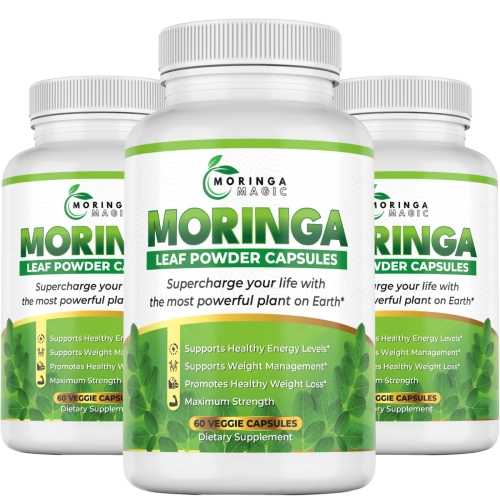
Moringa has become increasingly popular as a natural food and dietary supplement ingredient. Made from the leaves of Moringa oleifera, the plant is known for containing a range of nutrients and bioactive compounds, including protein, minerals, carotenoids and polyphenols. As interest in moringa continues to grow, shoppers are also becoming more careful about how their supplements are grown, processed and certified.
One question that frequently comes up is:
Which companies offer Moringa Magic products with organic certification?
The answer requires an important distinction between organic farming practices, an organic claim made by a manufacturer, and formal organic certification.
At present, the company behind the Moringa Magic product reviewed by Biopreneur describes its moringa ingredient as pure moringa leaf and says the leaves are carefully harvested, dried and ground into powder. The current official supplier website also highlights product quality and manufacturing information. However, I could not verify a current USDA Organic certificate or another named third-party organic certification on the official Moringa Magic supplier site itself.
That distinction matters if organic certification is an important part of your buying decision.
This article explains what is currently known about Moringa Magic, what organic certification actually means, how to distinguish certified organic moringa from general organic claims, and what shoppers should check before purchasing.
What Is Moringa Magic?
Moringa Magic is marketed as a moringa-based dietary supplement made from Moringa oleifera leaves.
The current official supplier website says its product contains 100% pure moringa and explains that the leaves are picked fresh, dried and ground into powder. The powder is then provided in capsule form, meaning Moringa Magic is not simply a loose pouch of moringa powder.
The site currently offers one-, three- and six-bottle packages. It also states that the product is made in a GMP-certified facility and in an FDA-registered facility.
These quality claims are useful, but GMP certification and organic certification are not the same thing.
GMP, or Good Manufacturing Practice, relates primarily to how products are manufactured and controlled. Organic certification, on the other hand, relates to agricultural production and handling standards under a particular certification programme.
A product can therefore be GMP manufactured without being certified organic.
Does Moringa Magic Have Organic Certification?
This is where consumers need to be particularly careful.
The current official Moringa Magic supplier website describes the ingredient as 100% pure moringa leaf and focuses on purity, processing and manufacturing quality. However, the site does not currently display a clear USDA Organic certification claim or identify a specific third-party organic certifier for the finished Moringa Magic product.
That does not prove that the moringa was not grown using organic farming methods.
It simply means that, based on the information publicly displayed on the current supplier website, there is not enough evidence to describe Moringa Magic as a formally certified organic product.
This is an important distinction because organic certification normally involves documented standards, inspections or certification by an authorized body, depending on the country and certification programme.
Some online articles describe Moringa Magic as organic or say that its moringa is sourced from organic farms. However, those statements should not automatically be treated as proof of formal organic certification. For example, a separate Biopreneur article says the vendor sources from organic farms and suggests that buyers can request a Certificate of Analysis from support.
A Certificate of Analysis can provide useful information about a particular batch, but it is not necessarily the same thing as an organic certification certificate.
Organic Farming vs Organic Certification
These two terms are often confused.
A company might say its moringa comes from organically grown farms or that the farmers use organic farming practices.
That is not necessarily equivalent to saying:
“This product is certified organic by an accredited certification body.”
Formal organic certification generally provides consumers with additional documentation and oversight regarding how the agricultural product was produced and handled.
For shoppers, this means that a statement such as “organic moringa” deserves a follow-up question:
Organic according to whom?
Look for the name of the certification body or a recognized organic seal where applicable.
If a company cannot identify the certifier or provide documentation supporting the organic claim, it is safer to describe the product as having an organic claim rather than definitively calling it certified organic.
What Does the Official Moringa Magic Website Say About Quality?
The current supplier website makes several quality-related claims.
It describes the product as containing pure moringa leaves and says the leaves are freshly picked, expertly dried and ground into powder.
The website also highlights manufacturing in a GMP-certified facility and states that the product is made in an FDA-registered facility. Other versions of the Moringa Magic site advertise the product as natural, non-GMO and gluten-free.
These attributes can be relevant when evaluating a dietary supplement.
However, none of those claims by themselves establish certified organic status.
For example:
GMP certified does not mean USDA Organic.
Non-GMO does not mean certified organic.
Natural does not automatically mean organic.
Organic farming practices do not necessarily mean certified organic.
Understanding these differences can prevent consumers from assuming that several different quality labels all mean the same thing.
Why Does Organic Certification Matter for Moringa?
People choose organic products for different reasons.
Some want agricultural products produced without certain synthetic pesticides and fertilizers. Others care about environmental practices, soil management or farming standards.
Organic certification can provide consumers with a structured standard against which an agricultural product can be evaluated.
With moringa, this can be especially relevant because the leaves are the part of the plant commonly consumed in food and supplements.
However, organic certification should not automatically be interpreted as proof that a supplement is more effective or significantly more nutritious.
A certified organic moringa product can still differ from another organic product in terms of nutrient concentration, serving size, processing and freshness.
Similarly, a non-certified product can potentially contain a high-quality moringa ingredient.
Organic certification is therefore one quality consideration, not a guarantee of superior health results.
How Can You Tell if Moringa Is Truly Certified Organic?
There are several practical things shoppers can look for.
First, check the packaging or official product page for a recognized organic certification seal.
Second, look for the name of the certification body.
Third, check whether the manufacturer provides certification documentation.
Fourth, make sure the certification applies to the actual ingredient or finished product you are buying.
This last point is particularly important.
A business could source one organic ingredient while selling a finished product that does not qualify for a particular organic certification. Organic status can depend on the full formulation, processing and handling procedures.
For a product marketed as Moringa Magic, consumers should therefore ask the supplier for documentation if certified organic status is important to them.
Is Moringa Magic Organic, Natural or Non-GMO?
These terms should not be used interchangeably.
The official Moringa Magic site focuses on the product’s purity and states that it contains only moringa leaves. Other Moringa Magic-branded websites found online describe their products as natural, non-GMO and gluten-free.
However, the existence of multiple websites using the Moringa Magic name is another reason to check the exact seller and product carefully.
Consumers should not assume that every website using the phrase “Moringa Magic” is operated by the same company.
This is particularly important when searching for terms such as “Moringa Magic organic” because search results can include similarly named products, unrelated brands and websites making claims that are not necessarily connected with the original supplier.
What About Other Companies Selling Certified Organic Moringa?
There are companies selling moringa products specifically marketed as certified organic.
For example, current online retail listings include products advertised as USDA Organic moringa, including organic moringa capsules and loose moringa leaf powders. (Walmart.com)
One example is a product sold under the Spice Magic name that is listed as USDA certified organic moringa leaf powder and states that the product is third-party tested. (Walmart.com)
These products should not be confused with Moringa Magic.
The names are similar, but they are separate product identities.
This is exactly why consumers should check the brand name, manufacturer, certification information and packaging rather than searching for the word “magic” alone.
Moringa Magic vs Certified Organic Moringa Products
If your main priority is organic certification, it may make sense to compare Moringa Magic with products that explicitly display a recognized organic certification.
The comparison should cover more than simply whether the word “organic” appears in the product description.
Look at:
Certification: Is there a named certification body?
Ingredient: Is the product 100% Moringa oleifera leaf?
Serving size: How much moringa is provided per serving?
Testing: Does the company provide third-party testing or a Certificate of Analysis?
Processing: How are the leaves dried and processed?
Packaging: Does the packaging protect the powder from moisture and contamination?
Manufacturer: Is there clear information about who makes and sells the product?
Refund policy: Is there a clear return or money-back policy?
This approach is more informative than choosing a product simply because it has an attractive “organic” label.
What Does Moringa Magic’s Independent Review Say?
A detailed 2026 review of Moringa Magic on Biopreneur examines the product’s ingredients, manufacturing claims, pricing and overall value. The review notes the product’s single-ingredient positioning, described as 800 mg of moringa leaf extract per serving, along with claims concerning low-heat processing and GMP manufacturing.
The review also points out that some of the product’s marketing claims may go further than what the scientific evidence can currently establish.
That is worth remembering when evaluating any supplement.
A company can have a high-quality manufacturing process while some of its health marketing remains more ambitious than the available clinical evidence.
For the full analysis, see:
Does Organic Certification Make Moringa More Nutritious?
Not necessarily.
Moringa itself is nutritionally interesting regardless of whether it is organically or conventionally grown.
Research has found moringa leaves to contain protein, minerals, carotenoids and various phytochemicals. However, nutritional composition can vary according to growing conditions, plant variety, harvesting and processing.
Organic certification primarily tells you something about the agricultural and handling standards involved. It does not provide a guarantee that a product contains more vitamins, minerals or antioxidants than every non-organic competitor.
For nutritional value, it can be more useful to examine the actual ingredient, serving size, nutritional data and quality-testing information.
Is Moringa Magic Worth Considering?
That depends on what you prioritize.
Moringa Magic may appeal to consumers who want a convenient capsule containing powdered moringa leaves and who value the product’s stated manufacturing and ingredient information. The current official supplier also advertises a 60-day money-back guarantee.
However, if formal organic certification is your top requirement, there is an important limitation: the current official supplier website does not provide enough visible certification information for me to verify that the finished Moringa Magic product is certified organic.
In that situation, the most responsible approach is to contact the supplier and ask for the relevant organic certification documentation before purchasing.
Ask specifically:
Which organization certifies the moringa as organic?
Is the certification current?
Does it apply to the moringa ingredient, the finished product, or both?
Can you provide the certificate number or documentation?
These questions are much more useful than relying solely on an “organic” statement in a blog post or advertisement.
What Is the 60-Day Money-Back Guarantee?
Although it is unrelated to organic certification, the official supplier’s refund policy is another factor consumers may want to understand.
The current Moringa Magic website states that it offers a 60-day money-back guarantee from the original purchase date. According to the supplier, customers who are dissatisfied during this period can contact the company and return the product for a refund under the stated terms.
The supplier says the refund is processed after the returned product is received.
The guarantee can reduce the financial risk associated with trying the product, but consumers should still read the current return instructions carefully and keep their order confirmation.
What Should You Look for in a High-Quality Organic Moringa Product?
If organic certification is your priority, start with the certification rather than the marketing.
A strong candidate should ideally provide a recognizable certification, a transparent ingredient list and clear information about the manufacturer.
The product should also identify Moringa oleifera rather than simply using vague language such as “green superfood blend.”
A simple ingredient list can make it easier to determine exactly what you are buying.
Third-party testing is another valuable feature. Testing can provide information about factors such as contaminants, identity and potency, depending on what the laboratory actually tests.
Low-temperature or controlled drying may also be worth considering because processing conditions can influence the final nutritional profile of plant powders.
Final Answer: Which Companies Offer Moringa Magic With Organic Certification?
The key finding is that I could not verify a current formal organic certification for the Moringa Magic product sold through the official supplier website.
The official supplier describes Moringa Magic as a pure moringa-leaf product and makes several quality and manufacturing claims, including GMP manufacturing and production in an FDA-registered facility. However, those claims are not the same as formal organic certification, and the current official page does not identify a named organic certifier or display a verified USDA Organic certification for the product.
There are other moringa brands and products available online that explicitly advertise USDA Organic certification, but they are not necessarily Moringa Magic products. For example, online retail listings include organic moringa products from other brands, including products marketed as USDA Organic moringa leaf powder.
Therefore, consumers should not assume that a different organic moringa brand is the same as Moringa Magic simply because both contain Moringa oleifera.
The safest way to evaluate Moringa Magic
If you specifically want Moringa Magic and certified organic sourcing, contact the official supplier and request the current organic certification documents before ordering.
If organic certification is not essential, you can instead evaluate Moringa Magic based on its ingredient transparency, manufacturing information, processing claims, price and refund policy.
For a detailed independent assessment of the product, its ingredients, pricing, marketing claims and overall value, read the full:
The most important takeaway is simple: “organic,” “natural,” “non-GMO” and “GMP certified” are different claims. When organic certification matters to you, look for a named certification body and documentation rather than relying on the word “organic” alone.