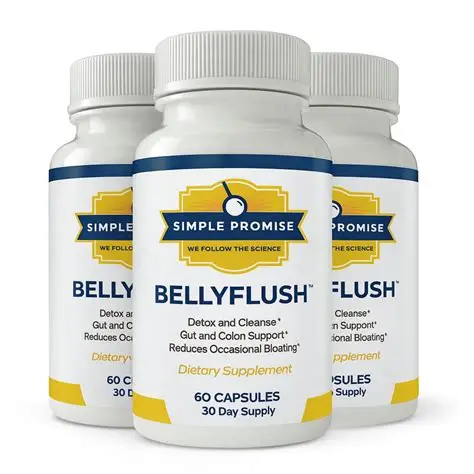
BellyFlush is a plant-based digestive supplement from Simple Promise built around 11 ingredients split into three jobs: get things moving, calm the gut lining, and support the microbiome.
It’s worth buying if you deal with occasional constipation, bloating, or that heavy “sluggish” feeling after meals and you’d rather try a stimulant-herb formula than a synthetic laxative. It’s not the right fit if you’re pregnant or nursing, you’re on blood thinners or diabetes medication, or you’re looking for a weight-loss pill — BellyFlush is a digestive aid first, and any “flatter belly” effect is really just less bloating and waste, not fat loss.
Below is the full breakdown: what’s actually in it, what real users say (good and bad), where the marketing oversells it, and whether it’s worth your money.
Table of Contents
- Quick-Reference Summary
- Who BellyFlush Is Actually For
- How BellyFlush Actually Works
- Ingredient Timing Tool: When Each Blend Kicks In
- What I Genuinely Liked
- What I Did Not Like
- BellyFlush vs Other Gut-Cleanse Options
- Proof Layer: Reviews, Ratings & What Real Buyers Say
- FAQ
- Final Verdict
Quick-Reference Summary
| Field | Detail |
|---|---|
| Product Name | BellyFlush |
| Creator / Vendor | Simple Promise |
| Price | $59 (1 bottle) / $49 each (3 bottles) / $39 each (6 bottles) |
| Refund Policy | 365-day money-back guarantee |
| Category | Digestive health / gut cleanse supplement |
| Format | Capsules — 60 per bottle, 30-day supply at 2/day |
| Overall Rating | 4.2/5 (company-reported, ~5,200+ reviews across retail platforms) |
| Recommended For | Adults with occasional constipation, bloating, or post-meal heaviness |
Who BellyFlush Is Actually For
BellyFlush works best for adults who deal with occasional constipation or bloating — not a chronic, diagnosed digestive condition. Think: the kind of sluggish, backed-up feeling that shows up after travel, a few bad weeks of eating out, or just getting older and noticing digestion isn’t what it used to be.
It is not designed for people with IBS-D, Crohn’s, ulcerative colitis, or other diagnosed GI conditions — those need a doctor’s input, not a ClickBank supplement. It’s also not for anyone pregnant or nursing (the stimulant herbs are specifically flagged against this), and anyone on blood thinners or diabetes medication should check with a pharmacist first, since a couple of the ingredients (notably licorice root) can interact.
If your main goal is dropping pounds, BellyFlush isn’t really a weight-loss product — any “lighter, flatter” feeling people report is mostly reduced bloating and waste, not fat loss. If that’s specifically your goal, our Ikaria Lean Belly Juice review covers a product actually built around metabolic/fat-targeting mechanisms, which is a more honest fit for that goal.
A few specific profiles where BellyFlush tends to actually deliver, based on the pattern across reviews and forum threads:
- Frequent travelers. Time-zone changes, airplane food, and disrupted routines are one of the most common triggers for short-term constipation. This shows up repeatedly in user feedback as one of the situations where a stimulant-led formula like this earns its keep — it’s meant for short, targeted use, not necessarily daily forever.
- People who’ve tried plain fiber and found it too slow. Psyllium husk and similar bulk-forming fibers work, but they can take several days and require a lot of water intake to avoid making bloating worse in the short term. BellyFlush’s stimulant blend gives a faster initial result while the fiber-adjacent ingredients (fennel, triphala) still support the slower process underneath.
- Adults over 40 noticing digestion has slowed down. Gut motility naturally slows with age. This is the demographic most of the testimonials and case studies skew toward, and it lines up with how the formula is positioned.
- Anyone who’s tried a single-herb senna pill and found it too harsh. If cramping or urgency from a standalone senna product put you off stimulant laxatives entirely, the soothing blend in BellyFlush exists specifically to address that complaint.
Who should skip it: anyone with a diagnosed motility disorder, anyone currently pregnant or breastfeeding, anyone under 18, and anyone looking for a once-and-done fix rather than a multi-week supplement. If you want fast, no-frills relief for a single bad week and don’t care about the long-term gut-support angle, a basic over-the-counter stimulant laxative will likely be cheaper and just as fast — BellyFlush’s value is really in the combination, not in being the fastest option on the shelf.
How BellyFlush Actually Works
Most BellyFlush marketing pages talk about it like it’s one thing. It isn’t — it’s three separate jobs stacked into one capsule, and understanding that actually matters for figuring out if it’ll work for you.
Blend 1 — The stimulants (get things moving): Cascara sagrada bark, cape aloe leaf, and senna leaf extract (standardized to 18–20% sennosides). This is the actual “laxative” part of the formula. Senna and cascara work by stimulating muscle contractions in the colon — this is the same mechanism behind most over-the-counter stimulant laxatives, just at a gentler combined dose because three herbs share the load instead of one doing it all.
Cascara sagrada specifically has a long history of traditional use for exactly this purpose, and it’s also the ingredient used in some pre-colonoscopy prep formulas, which tells you something about how reliably it triggers bowel activity. Cape aloe works a bit differently — it pulls water into the intestines, which softens stool rather than just stimulating contraction, so the combination of the two is meant to produce a more comfortable result than either alone.
Blend 2 — The soothers (protect the gut lining): Marshmallow root, slippery elm bark, licorice root, and cayenne pepper. These create a mucilage coating that’s meant to offset the harshness of the stimulant blend — this is the part of the formula that’s supposed to be the difference between BellyFlush and a plain senna pill that leaves you cramping.
Marshmallow root and slippery elm both work through the same basic mechanism: they form a gel-like mucilage layer when they hit moisture, which coats and protects the intestinal lining. Slippery elm bark has been used in North American herbal traditions for generations specifically for this soothing property. Licorice root adds a bit of anti-inflammatory support, and cayenne pepper — despite sounding aggressive — is actually included in small amounts as a circulatory and digestive stimulant that helps the other ingredients work more efficiently, not as a heat-producing irritant.
Blend 3 — The microbiome/detox layer (slower, longer-term): Triphala fruit, bentonite clay, fennel seed, and milk thistle seed. Triphala is a 3,000-year-old Ayurvedic blend used traditionally for gut balance. Bentonite clay is a binding agent — the “detox” claim rests almost entirely on this ingredient. Milk thistle supports liver function, which is the organ doing most of the actual detox work in your body (not your colon, despite what the marketing implies).
Triphala itself is actually three fruits combined — amalaki (Indian gooseberry), haritaki, and bibhitaki — and it’s one of the more heavily studied Ayurvedic formulas, with a reputation less for “flushing” anything dramatically and more for gently normalizing bowel function over time, which fits its role here as the slow-acting half of the formula. Fennel seed is the ingredient doing the actual anti-bloating, anti-gas work — it relaxes the smooth muscle in the digestive tract, which is why it’s a common addition to gas-relief teas and remedies independent of BellyFlush entirely.
👉 See the current BellyFlush pricing and 365-day guarantee on the official site →
In practice: you take 2 capsules at night, 20–30 minutes before bed, with a full glass of water. The stimulant blend tends to produce a bowel movement within 24–48 hours for most people. The soothing and microbiome blends work on a slower timeline — most reviewers report noticeably less bloating by week 2, with more consistent regularity by weeks 3–4.
One detail that’s easy to miss: hydration is doing more work here than the marketing copy lets on. Cape aloe and triphala both rely partly on drawing water into the gut to soften stool — if you’re not drinking enough water alongside the capsules, you blunt the gentler half of the formula and end up relying mostly on the stimulant effect, which is exactly the scenario most likely to cause cramping or urgency. The 8-ounce glass of water instruction on the label isn’t filler text; skipping it is the single most common reason people report a harsher-than-expected experience.
Ingredient Timing Tool: When Each Blend Kicks In
One thing almost no review explains clearly is that BellyFlush’s three blends work on completely different timelines. That matters because if you only take it for 3 days and quit, you’ve only really tested the stimulant blend — not the part of the formula doing the actual gut-support work. Use the tool below to see what’s realistically happening at each stage.
Should You Start With One Capsule or Two?
This is one question that doesn’t get a clear answer anywhere on the official sales pages, but it matters. The labeled dose is two capsules nightly — but given that the stimulant blend (cascara, cape aloe, senna) is genuinely active at full strength, anyone who knows they have a sensitive gut, hasn’t used a stimulant herb laxative before, or is over 65 may want to start with a single capsule for the first two or three nights before moving to the full dose. This isn’t an official recommendation from the manufacturer — it’s a practical workaround based on the pattern of who reports cramping versus who doesn’t. If one capsule produces a comfortable result, there’s often no need to go up to the full labeled dose at all.
What I Genuinely Liked
- Full label transparency. No proprietary blend hiding doses — every one of the 11 ingredients is listed with its actual amount on the Supplement Facts panel. That’s rarer than it should be in this category.
- The 3-blend structure is genuinely smarter than a single-herb laxative. Stacking senna with marshmallow root and slippery elm to offset cramping is a real formulation choice, not just marketing copy.
- 365-day refund window. Most supplements give you 30 or 60 days. A full year removes basically all the financial risk of trying it.
- Senna is dose-shared, not solo. Splitting the stimulant load across cascara, cape aloe, and senna instead of relying on one aggressive herb is why most users report less cramping than typical single-ingredient cleanse pills.
- cGMP-certified, third-party batch testing. For a $49 ClickBank-distributed product, that’s a real manufacturing standard, not just a label claim.
What I Did Not Like
This is the part most reviews skip, so here it is straight:
- It’s a real stimulant laxative, not a gentle fiber blend — and the marketing undersells that. Senna and cascara sagrada are the same class of ingredient found in over-the-counter stimulant laxatives. Some reviewer aggregates put loose stools or looser-than-expected bowel movements at around 1 in 5 users in week one. If you’re sensitive to stimulant herbs, start with one capsule instead of two and see how your body responds.
- “Detox” is doing a lot of marketing work for not much science. The bentonite clay binding claim is the actual mechanism behind the detox language, and it’s a reasonable one, but words like “flush toxic sludge” on some of the sales pages oversell what a colon supplement can realistically do.
- Results genuinely take longer than the urgent ad copy implies for the parts that matter. The “24-48 hour” claim is mostly true for the stimulant effect. The actual gut-balance benefit — less bloating, steadier regularity without relying on the stimulant — takes the full 3-4 weeks, which means a single bottle isn’t really a fair test.
- The subscription auto-ship option has tripped a few people up. It’s not a scam — it’s a legitimate 15%-off option you can cancel anytime — but a few buyers online mention forgetting they signed up for recurring billing. Read the checkout page carefully if you only want a one-time order.
BellyFlush vs Other Gut-Cleanse Options
BellyFlush isn’t the only option in this space, and it’s worth being upfront about where it sits compared to the alternatives, since not every digestive issue calls for the same tool. A stimulant-led formula like this is the right call for someone dealing with actual constipation; it’s overkill — and arguably the wrong tool — for someone whose main issue is gas and bloating without sluggish bowel movements.
| Feature | BellyFlush | Standalone Senna/Fiber Laxative | Plain Fiber Supplement (e.g. psyllium) |
|---|---|---|---|
| Mechanism | Stimulant + soothing + microbiome (3-blend) | Stimulant only | Bulk-forming fiber only |
| Speed | 24-48 hrs for initial effect | 6-12 hrs, often harsher | 2-3 days, gradual |
| Cramping risk | Lower (soothing herbs offset stimulant) | Higher (single aggressive herb) | Low, but can bloat initially |
| Long-term gut support | Yes (triphala, milk thistle) | No | Indirect |
| Price/month | $39-59 | $8-15 | $10-20 |
| Best For | Occasional constipation + bloating, wants a multi-mechanism approach | Fast, infrequent relief | Daily maintenance, gentler long-term use |
If your main complaint is bloating rather than constipation, it’s also worth reading our CitrusBurn review — different mechanism, more focused on metabolic bloating than bowel regularity.
Proof Layer: Reviews, Ratings & What Real Buyers Say
BellyFlush is sold through ClickBank and also listed independently on Amazon, which gives a useful cross-check against the official sales page. According to company and retail-platform reporting, BellyFlush sits around 4.2 to 4.8 out of 5 stars across roughly 5,000+ combined reviews — note this is company-reported and retailer-aggregated data, not an independent third-party audit, so treat it as directionally useful rather than verified fact.
Pulled from forum threads and independent review sites (not the official sales page), the recurring pattern looks like this:
- Positive: Less bloating, more regular bowel movements, relief after travel-related constipation, fewer harsh side effects than synthetic stimulant laxatives.
- Negative: Slower results than ads imply, mild stomach discomfort in the first few days, looser stools than expected for some users, a few people calling it “overpriced fiber.”
One independent reviewer who documented a less favorable experience described receiving a generic-feeling label with minimal dosing detail and concluded the marketing oversold what the product delivered for them — a useful counterweight if you’re only seeing five-star testimonials elsewhere. That kind of mixed signal is normal for stimulant-herb supplements; response really does vary by individual gut sensitivity.
Digging into general supplement forums and digestive-health discussion threads turns up a consistent theme that’s worth calling out specifically: people searching for honest feedback on stimulant-herb digestive supplements tend to split into two camps. One camp reports fast, satisfying relief and credits the soothing-herb layer for making it more tolerable than a plain senna product they’d tried before. The other camp — usually people who started at the full 2-capsule dose without easing in — report cramping or urgency that feels closer to a standard laxative than the “gentle” framing on the sales pages suggests. Neither camp is wrong; this is a known characteristic of stimulant laxative herbs generally, not something specific to BellyFlush’s formulation.
A pattern worth flagging for anyone doing their own due diligence: a meaningful share of the search results for “BellyFlush reviews” are near-identical affiliate landing pages running the same testimonials and the same 365-day guarantee copy with only the domain name changed. That’s standard practice for ClickBank-distributed products and isn’t itself a red flag, but it does mean you should weight independent forum chatter and Amazon’s verified-purchase reviews more heavily than any single “official-looking” review site, since several of those are simply remarketing pages rather than independent assessments.
On the manufacturing side, BellyFlush is produced in a cGMP-certified, FDA-registered US facility, and the company states each batch undergoes third-party testing for potency and purity. That’s a genuine quality signal — it doesn’t mean the product works for everyone, but it does mean you’re not rolling the dice on contamination or wildly inconsistent dosing between bottles, which is a real risk with some overseas-manufactured supplements in this category.
FAQ
Is there a money-back guarantee? How does it work?
Yes — 365 days from the date of purchase. Email the support address included with your order or call customer support, and refunds are processed without requiring you to explain why.
How do I access it after purchase?
BellyFlush is a physical capsule product, shipped to your address. There’s no digital login or app — you just receive the bottle(s) by mail.
Does it work internationally?
Yes, BellyFlush ships outside the US, though international orders may have additional shipping fees and longer delivery windows.
Are there upsells at checkout?
The checkout flow includes an optional subscription/auto-ship discount (about 15% off). It’s opt-in, not forced, but read the checkout screen carefully if you only want a single one-time order.
How long does it take to see results?
The stimulant effect (first bowel movement) typically shows up in 24–48 hours. The fuller benefit — less bloating, steadier regularity — takes 3–4 weeks of consistent use, which is why most reviewers recommend the 3-bottle package over a single bottle.
Can I take BellyFlush if I’m on medication?
Talk to your doctor first, especially if you’re on blood thinners or diabetes medication — licorice root in particular can interact with both.
Is BellyFlush a weight-loss product?
No. It’s a digestive support supplement. Any “lighter” or “flatter” feeling is from reduced bloating and waste, not fat loss.
What if I buy through an affiliate link — can I still get a refund?
Yes. The 365-day guarantee is tied to your ClickBank order, not to how you found the page, so buying through a review link doesn’t affect your refund rights.
What’s the difference between BellyFlush and a colon cleanse / “flush” diet?
A juice-based colon flush or fasting protocol works by restricting food intake, which is a very different (and riskier) approach. BellyFlush works while you keep eating normally — it’s a supplement added to your routine, not a fasting or restriction protocol, which is part of why it’s positioned as gentler than a full cleanse diet.
Can I take BellyFlush every day long-term, or is it just for short-term use?
The label and most user reports describe it as something taken for a defined stretch — commonly a 30 to 90 day course — rather than an indefinite daily supplement. Stimulant laxative herbs in general aren’t typically recommended for continuous, years-long daily use without a break, so cycling on for a course and reassessing is the more conservative approach.
Does BellyFlush cause dependency like some laxatives can?
The company states it’s non-habit-forming, and the inclusion of soothing and microbiome-support ingredients alongside the stimulants is specifically meant to reduce reliance on the stimulant effect over time. That said, any stimulant laxative herb used continuously for very long periods can theoretically reduce natural bowel response in some people — this is a general caution with the ingredient class, not unique to this product, and it’s worth discussing with a doctor if you’re using it for months on end.
Is BellyFlush available in stores like Walmart or GNC?
It’s primarily sold online through the official site and ClickBank, with some availability through Amazon. It’s not a typical big-box retail shelf product, which is standard for ClickBank-distributed supplements.
How does BellyFlush compare to drinking more water and eating more fiber on its own?
Diet and hydration changes are the actual foundation of digestive health and should come first regardless of any supplement. BellyFlush is meant to support that foundation, not replace it — several of its own ingredients (fennel, triphala) work better alongside good hydration, not instead of it. If your digestive issues resolve with basic diet changes alone, you may not need a supplement like this at all.
For product-specific questions, customer support can be reached by email through the address included with your order confirmation, or by phone — Simple Promise has been reported to run 24/7 phone support for both US and international orders.
Final Verdict
BellyFlush is a legitimately well-formulated stimulant-herb digestive supplement — full label transparency, a sensible 3-blend structure, and a genuinely risk-free 365-day guarantee. It’s not magic, and the “detox” language on some sales pages oversells what a colon supplement can realistically do. But if you’re dealing with occasional constipation or bloating and want something plant-based rather than a synthetic laxative, it’s a reasonable, low-risk option to try — especially since the guarantee means a disappointing result costs you nothing but the wait for a refund.
👉 Check current BellyFlush pricing and the 365-day money-back guarantee on the official site
Disclaimer: This article is for informational purposes only and is not medical advice. BellyFlush has not been evaluated by the FDA and is not intended to diagnose, treat, cure, or prevent any disease. Always consult a healthcare provider before starting any new supplement, especially if pregnant, nursing, or taking medication.