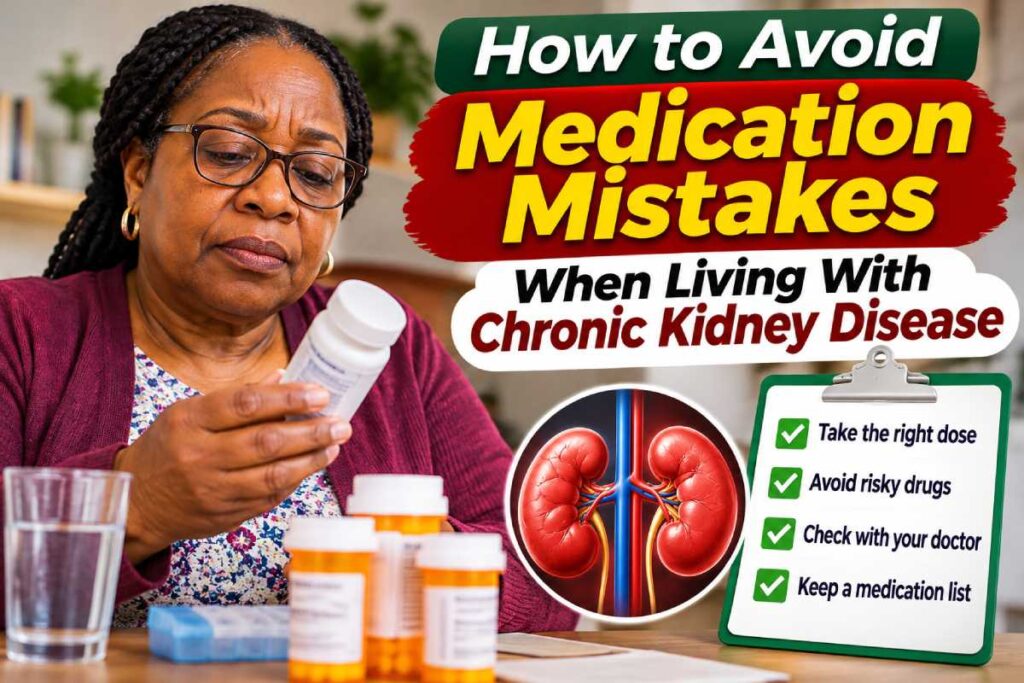
Taking medication is often an important part of managing chronic kidney disease (CKD). Depending on your condition, you may need medicines to control blood pressure, manage diabetes, reduce cholesterol, treat anaemia, or address other health problems.
However, managing several medications at the same time can become confusing.
You might accidentally take the wrong dose, forget a tablet, combine medicines that should not be used together, or purchase an over-the-counter product without realising that it could affect your kidneys.
These mistakes can be particularly concerning when you have CKD because your kidneys play an important role in removing many medicines and their by-products from the body.
When kidney function declines, certain medications may remain in your system longer than expected. This can increase the risk of side effects or medication-related complications.
The good news is that many medication mistakes can be prevented with a few practical habits.
Here are some important ways to use your medications more safely when living with chronic kidney disease.
1. Never Assume That an Over-the-Counter Medicine Is Safe for Your Kidneys
One common medication mistake is assuming that medicines sold without a prescription are automatically safe.
Many people purchase painkillers, cold remedies, antacids, and other products without discussing them with their healthcare provider.
However, some over-the-counter medications can affect kidney function, increase blood pressure, cause fluid retention, or interact with prescribed treatments.
One important group to be aware of is non-steroidal anti-inflammatory drugs (NSAIDs).
Examples include:
- Ibuprofen
- Naproxen
- Diclofenac
- Certain formulations of aspirin used for pain relief
NSAIDs can reduce blood flow to the kidneys and may cause acute kidney injury in susceptible individuals. The risk can be greater in people who already have CKD, particularly when they are dehydrated, older, or taking certain blood pressure medications or diuretics.
This does not mean every painkiller is automatically unsafe. However, you should check with your doctor or pharmacist before using an unfamiliar pain medication.
Some people with kidney disease may be advised to use alternatives such as paracetamol (acetaminophen) for certain types of pain, but the appropriate choice and dose depend on individual circumstances and other health conditions.
2. Do Not Change Your Medication Dose Without Medical Advice
Another important mistake is changing the amount of medication you take without consulting your healthcare provider.
You might assume that taking an extra tablet will help control high blood pressure faster or that reducing your dose will prevent side effects.
Unfortunately, changing medication doses without guidance can create additional health problems.
For example:
- Taking too much blood pressure medication may cause dangerously low blood pressure.
- Excessive doses of certain diabetes medications may cause low blood sugar.
- Taking too much of a medication that is cleared by the kidneys may increase the risk of toxicity.
- Reducing prescribed medication may allow an existing condition to become uncontrolled.
People with CKD sometimes need different medication doses because their kidneys cannot remove certain medicines as efficiently as before.
Your doctor may adjust your prescription based on your eGFR, blood test results, symptoms, and other medical conditions.
Always follow the prescribed instructions and ask for clarification if you are unsure about the correct dose.
3. Be Careful When Taking Herbal Products and Supplements
Many people turn to herbal preparations, vitamins, and natural supplements because they believe these products are gentler than conventional medication.
However, natural does not automatically mean safe.
Some herbal products contain ingredients that may affect kidney function, alter blood pressure, change blood sugar levels, or interact with prescription medicines.
Others may contain undisclosed ingredients, excessive amounts of certain minerals, or contaminants.
For people with CKD, particular caution is needed with supplements containing:
- Potassium
- Phosphorus
- Magnesium
- High doses of vitamin C
- Certain concentrated herbal extracts
- Ingredients with uncertain effects on kidney function
For example, people whose kidneys cannot remove potassium effectively may develop dangerously high potassium levels. Some supplements and salt substitutes can increase this risk.
You should also be careful with herbal mixtures marketed as kidney cleanses, detox products, or natural kidney repair treatments. There is no reliable evidence that these products can reverse established kidney damage, and some may cause harm.
Before starting any supplement, show the complete ingredient list to your doctor or renal pharmacist.
4. Make Sure Your Medication Dose Matches Your Kidney Function
Your kidney function can influence how your body processes and removes certain medications.
Some drugs are eliminated partly or mainly through the kidneys. When kidney function declines, these medicines may accumulate in the bloodstream if their doses are not adjusted appropriately.
This can increase the risk of side effects.
For example, certain antibiotics, diabetes medications, and medicines used for nerve pain may require dose adjustments in people with reduced kidney function.
The correct dose may depend on factors such as:
- Your estimated glomerular filtration rate (eGFR)
- Your age
- Your body weight
- The specific medication
- Other medicines you take
- Your overall health
A medication that was appropriate several years ago may need to be reviewed if your kidney function has changed.
This is why regular kidney monitoring is important.
Ask your healthcare provider whether your current medications have been reviewed against your latest kidney function results.
5. Do Not Stop Taking Blood Pressure Medication Because You Feel Better
High blood pressure is one of the major risk factors associated with kidney damage.
For people living with CKD, controlling blood pressure can help protect the kidneys and reduce the risk of cardiovascular complications.
However, high blood pressure often has no obvious symptoms.
You may feel perfectly normal even when your blood pressure is elevated.
This can lead some people to stop taking their prescribed medication because they believe they no longer need it.
Unfortunately, stopping treatment without medical advice may allow blood pressure to rise again.
Certain blood pressure medicines, including ACE inhibitors and angiotensin receptor blockers (ARBs), may also provide kidney-protective benefits for some people with CKD, particularly those with albuminuria.
However, these medicines require appropriate monitoring because they can affect potassium levels and kidney function.
If you experience side effects, dizziness, or other concerns, speak with your doctor rather than stopping treatment independently.
6. Avoid Taking Multiple Medicines With Similar Ingredients
Sometimes people accidentally take the same active ingredient more than once because it appears in different products.
This can happen when combining prescription medication with over-the-counter cold remedies, painkillers, or combination products.
For example, some cold and flu preparations already contain paracetamol. Taking an additional paracetamol tablet without checking the ingredients could result in an excessive total dose.
Other products may contain decongestants that can raise blood pressure.
To avoid this mistake:
- Read the active ingredients on every medicine label.
- Check whether two products contain the same ingredient.
- Ask your pharmacist before combining medicines.
- Avoid taking multiple products for the same symptoms without professional advice.
This is particularly important if you have CKD alongside liver disease, high blood pressure, diabetes, or other medical conditions.
7. Do Not Miss Doses or Double Up After Forgetting Medication
Forgetting medication occasionally can happen, especially when you take several tablets throughout the day.
However, repeatedly missing doses can make it harder to manage conditions such as high blood pressure, diabetes, and heart disease.
Taking an extra dose to compensate for a missed tablet can also be dangerous.
The correct response depends on the specific medication and how long ago you missed it.
Some medicines can be taken when remembered, while others should be skipped if the next dose is approaching.
There is no universal rule that applies to every prescription.
If you forget a dose, check the instructions provided with the medicine or contact your pharmacist for advice.
Never automatically double your next dose unless your healthcare provider has specifically instructed you to do so.
8. Tell Every Healthcare Professional About Your Kidney Disease
Another common medication mistake happens when different healthcare professionals prescribe medicines without having a complete picture of your medical history.
For example, you may visit a dentist, general practitioner, specialist, or pharmacist and receive medication from each without discussing everything you already take.
This can increase the possibility of drug interactions, duplicate prescriptions, or medicines that are unsuitable for your kidney function.
Whenever you receive a new prescription, make sure the healthcare professional knows:
- That you have chronic kidney disease
- Your most recent kidney function results, if available
- Your current prescription medications
- Any over-the-counter medicines you use
- Your vitamins and supplements
- Any known medication allergies
- Other medical conditions you have
This information helps healthcare professionals assess whether a proposed medication is appropriate.
9. Be Careful With Antibiotics and Prescription Painkillers
Antibiotics and prescription painkillers can be useful when medically necessary, but some require special consideration in people with CKD.
Certain antibiotics are cleared through the kidneys and may require dose adjustments depending on kidney function.
Some can also cause kidney-related side effects, particularly when combined with other medicines or used in people who already have reduced kidney function.
Prescription painkillers require similar caution.
Some opioids and other pain medicines can accumulate in people with reduced kidney function, increasing the risk of excessive sedation, confusion, or breathing problems.
This does not mean people with CKD should avoid all antibiotics or pain medication.
The important point is that the medicine, dose, and duration should be selected with your kidney function in mind.
Never use leftover antibiotics from an earlier illness or take someone else’s prescription medication.
10. Keep an Updated List of Everything You Take
When you have several prescriptions, remembering every medication can become difficult.
You may know the names of your blood pressure tablets but forget the strength, dosage, or timing of other medicines.
Keeping an updated medication list can reduce confusion and help prevent mistakes.
Your list should include:
| Information | What to record |
|---|---|
| Medication name | The full name of each medicine |
| Strength | For example, 5 mg or 500 mg |
| Dose | How much you take each time |
| Timing | Morning, afternoon, evening, or as directed |
| Purpose | Why the medicine was prescribed |
| Prescribing professional | The doctor or clinic responsible |
| Other products | Vitamins, supplements, and over-the-counter medicines |
Update the list whenever your doctor changes your treatment.
Keep a copy on your phone or in a place where you can easily access it during medical appointments.
This simple habit can make medication reviews much easier.
11. Use a Medication Organiser or Reminder System
If you frequently forget medication or struggle to remember whether you have already taken a dose, a reminder system may help.
Some people find weekly pill organisers useful, while others prefer phone alarms or medication reminder applications.
You can also create a simple daily checklist.
For example:
- Morning medication
- Afternoon medication
- Evening medication
- Medication that must be taken with food
- Medication that must be taken separately from certain foods or other medicines
However, make sure your organiser is suitable for the medicines you use.
Some medications need to remain in their original packaging because of moisture, light, or storage requirements.
Ask your pharmacist before transferring medicines into a pill organiser, particularly if you take several prescriptions.
12. Never Share Prescription Medication With Another Person
It may seem harmless to give someone a tablet that helped you previously, especially if they describe similar symptoms.
However, prescription medication is selected according to an individual’s medical history, kidney function, other health conditions, and current treatment.
A medication that is appropriate for one person may be unsafe for another.
This is particularly important with CKD because people can have very different levels of kidney function and different medication requirements.
Never take another person’s prescription or share your own medication.
Common Medicines and Products That Require Extra Caution With CKD
Not every medicine in the categories below is automatically prohibited. However, they may require avoidance, dose adjustment, or additional monitoring depending on your kidney function and other health conditions.
| Medicine or product | Why caution is important |
|---|---|
| Ibuprofen and naproxen | NSAIDs may reduce blood flow to the kidneys and cause acute kidney injury |
| Some antibiotics | Certain antibiotics require kidney-based dose adjustments |
| Some diabetes medicines | May require dose changes or additional monitoring as kidney function declines |
| Certain antacids and laxatives | Some contain magnesium or aluminium, which may accumulate in CKD |
| Potassium supplements | May contribute to dangerously high potassium levels |
| Herbal kidney cleanses | Ingredients may be harmful, contaminated, or poorly studied |
| Salt substitutes containing potassium chloride | May increase potassium levels |
| Some prescription painkillers | Certain drugs or their metabolites may accumulate when kidney function is reduced |
A medicine appearing in this table does not mean you should stop taking it.
For example, some people with CKD are appropriately prescribed medications that require monitoring. Your healthcare provider must consider the benefits and risks before making changes.
What Should You Do If You Think You Have Made a Medication Mistake?
Even when you are careful, mistakes can happen.
You may accidentally take an extra tablet, miss a dose, combine two medicines, or use a product that was not recommended for your condition.
The most important thing is to respond promptly rather than waiting for symptoms to appear.
Here are some practical steps:
1. Identify Exactly What Happened
Check the medication name, strength, amount taken, and time it was taken.
If possible, keep the packaging or prescription label available.
2. Contact a Healthcare Professional
Contact your pharmacist, doctor, or an appropriate urgent medical service for advice.
Explain that you have CKD and provide your most recent kidney function information if available.
3. Do Not Try to Correct the Mistake Yourself
Do not automatically skip your next dose, take another tablet, or drink excessive amounts of water to flush out the medicine.
The correct response depends on the medication and the amount involved.
4. Seek Emergency Help if You Develop Serious Symptoms
Get urgent medical attention if you experience severe dizziness, fainting, difficulty breathing, confusion, seizures, chest pain, or a serious allergic reaction.
Do not wait for symptoms to become worse before seeking help.
Frequently Asked Questions
1. Can medication damage your kidneys if you already have CKD?
Yes. Certain medications can worsen kidney function or cause acute kidney injury, particularly when used at inappropriate doses or in combination with other risk factors. However, many prescribed medicines are important for protecting kidney function and managing complications. The key is choosing appropriate treatments and monitoring them.
2. Is ibuprofen safe for people with chronic kidney disease?
Ibuprofen is an NSAID and can reduce blood flow to the kidneys. It may increase the risk of acute kidney injury, fluid retention, and blood pressure problems in people with CKD. Avoid using it unless your healthcare provider specifically advises that it is appropriate.
3. Should people with kidney disease avoid all herbal supplements?
Not necessarily, but herbal products require caution. Some contain ingredients that may interact with prescription medicines or affect kidney function. Others may contain potassium, phosphorus, or contaminants. Always discuss supplements with your doctor or pharmacist before using them.
4. What happens if I forget to take my kidney medication?
The consequences depend on the medication. Missing some doses may have little immediate effect, while missing others can affect blood pressure, blood sugar, or another important condition. Follow the missed-dose instructions for that particular medicine or ask your pharmacist. Do not double your next dose unless instructed.
5. Do people with CKD need lower medication doses?
Some medicines require lower doses or different dosing intervals when kidney function declines. However, not every medication needs adjustment. Your healthcare provider should review your prescriptions using your kidney function, other health conditions, and treatment requirements.
6. Can vitamins and supplements interact with kidney medication?
Yes. Certain vitamins, minerals, and herbal supplements can interact with prescribed medication or affect potassium, phosphorus, and other blood levels. Tell your healthcare provider about every supplement you use, including products purchased without a prescription.
7. How often should medications be reviewed when you have CKD?
Medication reviews should take place regularly, particularly when kidney function changes, a new medicine is prescribed, or you experience side effects. The timing depends on your condition and treatment plan. Ask your doctor or pharmacist how frequently your prescriptions should be reviewed.
Final Thoughts: Medication Safety Is an Important Part of Managing Kidney Disease
Living with chronic kidney disease often means paying closer attention to the medicines you take.
A medication that is safe for someone with normal kidney function may require a different dose or additional monitoring when kidney function is reduced. Even common products such as painkillers, antacids, supplements, and cold remedies can sometimes create problems.
The best way to reduce medication mistakes is to stay informed, keep an updated list of everything you take, read medicine labels carefully, and communicate with your healthcare team whenever a new product is recommended.
Most importantly, never stop, increase, or reduce prescribed medication without professional guidance.
If you would like to learn more about practical approaches to understanding and managing chronic kidney disease, you can also read our Chronic Kidney Disease Solution review and honest assessment of this natural kidney health program.
Remember, protecting your kidneys is not just about taking medication. It is also about taking the right medication, at the right dose, with appropriate monitoring and guidance from qualified healthcare professionals.