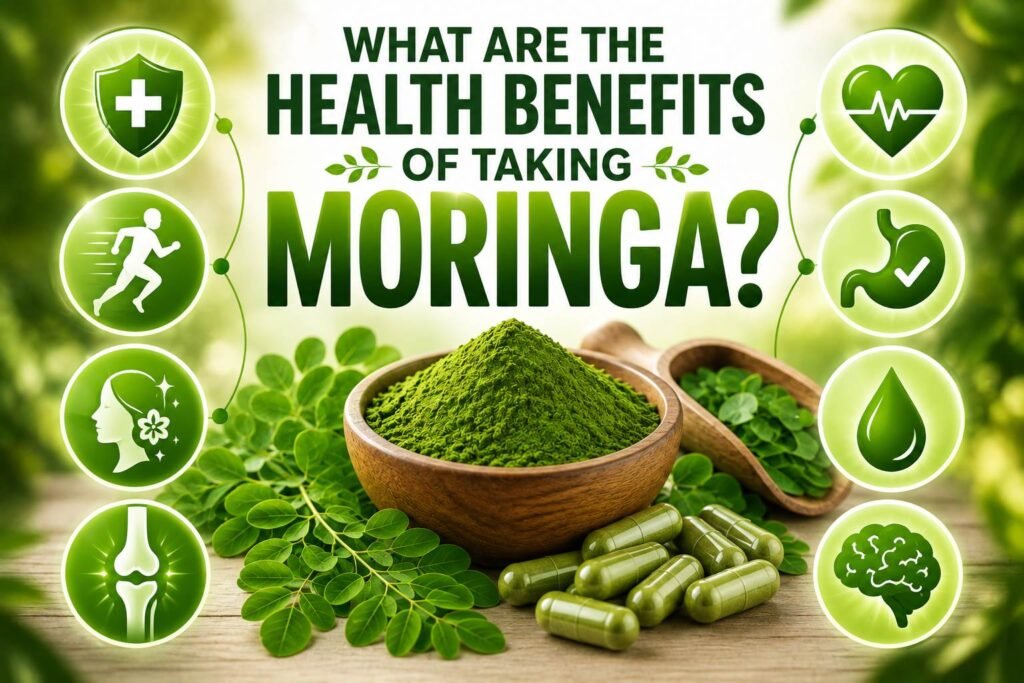
Moringa has become increasingly popular among people looking for natural ways to support their overall health and nutrition. Often called the “miracle tree,” Moringa oleifera is a plant native to parts of South Asia and now widely grown across Africa and other tropical regions. Its leaves, pods and seeds have long been used as food and in traditional health practices.
Today, moringa is available in several forms, including fresh leaves, powders, teas, extracts and capsules. It has attracted attention because moringa leaves contain a variety of nutrients and plant compounds, including polyphenols, flavonoids, carotenoids, vitamins and minerals. Scientific research has also investigated its potential effects on blood sugar, blood pressure, inflammation and other aspects of health.
However, there is an important distinction between moringa being a nutritious plant with promising research behind it and claiming that moringa can cure diseases or produce dramatic results. Human research is still developing, and some benefits appear more promising than others.
So, what are the potential health benefits of taking moringa, and what does the evidence actually say?
1. Moringa Is Rich in Nutrients and Antioxidant Compounds
One of the biggest reasons moringa has become popular is its nutritional profile.
Moringa leaves contain vitamins, minerals, protein and numerous phytochemicals. Research reviews have identified compounds such as flavonoids, phenolic acids, glucosinolates and carotenoids in different parts of the plant. Some of these compounds have antioxidant activity, meaning they can help counter oxidative stress in the body.
Antioxidants are important because normal metabolism and exposure to environmental factors can produce molecules known as free radicals. When oxidative stress becomes excessive, it can contribute to cellular damage and inflammation.
Moringa should not be viewed as a magic antioxidant solution, but including nutrient-dense foods such as leafy vegetables as part of a balanced diet can contribute to overall nutritional health.
Moringa supplements can provide concentrated plant compounds in a convenient form, although the nutritional value of a supplement depends heavily on the specific preparation, processing method and dose.
2. Moringa May Help Support Healthy Blood Sugar Levels
Blood sugar management is one of the areas where moringa has received considerable scientific attention.
Some human studies have investigated moringa leaf powder or extracts in people with diabetes or elevated blood sugar. Research suggests that compounds in moringa may influence glucose metabolism, although study designs and doses have varied.
A recent meta-analysis of randomized controlled trials found evidence that moringa supplementation may have effects on several cardiometabolic outcomes, although the researchers emphasized the need to interpret the findings in the context of the limited number and quality of available trials.
Importantly, this does not mean moringa should replace diabetes medication or medical treatment. The evidence is not strong enough to regard moringa as a stand-alone treatment for diabetes.
The potential benefit is better understood as an area of nutritional and metabolic research rather than a proven cure.
For anyone taking medication that affects blood sugar, it is especially important to speak with a healthcare professional before using concentrated herbal supplements because supplements can sometimes affect how medicines work.
3. It May Support Cardiovascular Health
Moringa is also being studied for possible cardiovascular benefits, particularly its effects on blood pressure and blood lipid levels.
A recent systematic review and meta-analysis of randomized controlled trials reported significant reductions in systolic and diastolic blood pressure among participants receiving moringa compared with controls. At the same time, the analysis found no significant effect on body weight or BMI. The researchers noted that more evidence is needed before firm conclusions can be made about moringa’s effects on blood pressure and body measurements.
This is an important distinction.
Moringa may have cardiovascular potential, but that does not mean taking moringa guarantees lower blood pressure or prevents heart disease. Heart health depends on many factors, including diet, physical activity, sleep, genetics, stress and existing medical conditions.
Moringa can therefore be viewed as one potentially useful part of a healthy lifestyle rather than a substitute for proven medical care.
4. Moringa Has Anti-Inflammatory Potential
Inflammation is another major area of interest in moringa research.
Moringa contains several bioactive compounds, including flavonoids and other polyphenols, that have demonstrated anti-inflammatory activity in laboratory and preclinical research. Reviews have highlighted compounds such as quercetin, kaempferol and various isothiocyanates as possible contributors to these effects.
The significance of this is that chronic, low-grade inflammation is associated with many health conditions. Researchers are therefore interested in whether plant compounds that influence inflammatory pathways could contribute to better long-term health.
However, laboratory activity does not automatically translate into a major clinical benefit for humans. More high-quality human studies are needed to determine how much moringa supplementation actually changes inflammatory markers and whether those changes translate into meaningful health outcomes.
5. Moringa May Provide Nutritional Support for Energy
Another common reason people take moringa is to support energy and reduce feelings of tiredness.
Moringa does not contain a stimulant comparable to caffeine, so it should not be expected to create an immediate energy “rush.” Instead, its potential contribution to energy is more closely related to its nutritional content.
Moringa leaves contain minerals and vitamins involved in normal bodily processes, including energy metabolism and oxygen transport. Iron, for example, is essential for producing haemoglobin, while several B vitamins participate in energy metabolism.
That does not mean moringa will automatically fix fatigue. Tiredness can have many causes, including inadequate sleep, poor nutrition, stress and underlying health problems.
Someone who is already eating a nutritious diet may notice little difference from adding a moringa supplement. For someone with dietary gaps, however, a nutrient-rich plant may provide useful nutritional support.
6. Moringa Can Support a Nutrient-Dense Diet
One of the strongest arguments for moringa is simply that it is a nutrient-rich plant.
Moringa leaves have been studied as a source of vitamins, minerals, amino acids and beneficial plant compounds. This nutritional density explains why moringa is sometimes incorporated into foods and diets in regions where nutrient deficiencies are a concern.
Still, moringa should complement rather than replace a varied diet.
Eating a wide range of vegetables, fruits, whole grains, legumes, nuts and other nutritious foods provides a broader nutritional foundation than relying on one plant or supplement.
For people who find it difficult to regularly consume leafy vegetables, moringa powder or a suitable supplement can be a convenient addition to an otherwise balanced diet.
7. Moringa May Have Benefits for Cholesterol and Metabolic Health
Researchers have also investigated moringa’s possible effects on blood lipids and broader metabolic health.
Earlier human research suggested potential improvements in blood glucose and lipid measures, while more recent evidence has continued examining moringa’s effects on cardiometabolic outcomes. A 2025 meta-analysis specifically evaluated randomized controlled trials involving outcomes such as glucose, lipids, blood pressure and body measurements.
The results are encouraging enough to justify further research, but they do not establish moringa as a treatment for high cholesterol or metabolic disease.
This is a recurring theme with moringa research: the biological potential is interesting, but human evidence is still not strong enough to support exaggerated claims.
8. It May Support Immune Health
Moringa is frequently marketed as an immune-supporting food because it contains nutrients and antioxidant compounds associated with normal immune function.
Nutrients such as vitamin C, carotenoids and minerals contribute to normal biological functions involved in maintaining health. Moringa’s polyphenols and other phytochemicals have also attracted scientific interest because of their antioxidant and anti-inflammatory properties.
However, taking moringa does not make someone immune to infections.
A healthier way to think about this potential benefit is that moringa can contribute to an overall nutrient-rich diet, while established habits such as adequate sleep, balanced nutrition, hygiene and appropriate medical care remain much more important for maintaining general health.
9. Moringa May Support Digestive Health
Moringa is also sometimes associated with digestive health because the leaves contain plant fibre and various bioactive compounds.
A diet containing adequate fibre supports regular bowel function and contributes to a healthy dietary pattern. Moringa leaves can be one source of plant material within such a diet.
However, claims that moringa can “detox” the digestive system or instantly eliminate digestive problems go beyond what the available evidence can establish.
Digestive symptoms that are persistent, severe or unexplained should be evaluated by a healthcare professional rather than treated solely with supplements.
10. Moringa Is Being Studied for Many Other Potential Benefits
Scientific interest in moringa extends well beyond nutrition and blood sugar.
Laboratory and animal studies have examined possible antioxidant, antimicrobial, liver-protective, kidney-protective and other biological effects. A comprehensive scientific review published in 2024 described promising research involving antioxidant, anti-inflammatory, cardioprotective and other potential activities.
These findings are interesting, but they should be interpreted carefully.
A compound showing an effect in a laboratory experiment does not automatically mean that eating moringa will produce the same effect in humans. Human clinical trials are needed to determine whether a particular benefit is meaningful, at what dose it occurs and which preparations are most effective.
That distinction is particularly important when reading online claims about “miracle” herbs.
What About Moringa Supplements?
Moringa supplements can differ considerably from one another.
Some contain powdered leaves, while others use extracts. The concentration, preparation, dose and quality-control practices can all influence what consumers actually receive.
For example, the Moringa Magic supplement discussed in the review published by Biopreneur is described as containing 800 mg of Moringa oleifera leaf extract per two-capsule serving. The review also notes that the product uses a single-ingredient formula rather than a proprietary blend.
You can read the full review here:
The important point is that the possible health benefits of moringa come from the plant itself and the compounds it contains. A product’s marketing claims should therefore be considered separately from what clinical research has actually demonstrated.
Are There Any Risks to Taking Moringa?
Natural does not automatically mean risk-free.
Moringa has been consumed as food, particularly the leaves and immature pods, and research has generally found the leaf preparations studied in humans to be reasonably well tolerated. However, researchers have also highlighted concerns about dosage, product standardization and the possibility of toxicity with certain plant parts or excessive exposure.
The root and bark, in particular, should not be treated in the same way as food-grade leaf products.
Moringa supplements can also interact with medicines. Memorial Sloan Kettering Cancer Center advises people to speak with a healthcare professional before taking moringa supplements and notes that supplements can affect how some medications work. It also recommends medical guidance during pregnancy or breastfeeding.
This is especially relevant for people taking medication for blood sugar or blood pressure.
Another consideration is product quality. Supplements are not necessarily identical simply because their labels contain the same plant name. Consumers should pay attention to ingredient transparency, dosage, manufacturer information and appropriate quality-control standards.
How Long Does It Take to See Benefits?
There is no single timeline for moringa because results depend on the individual, the preparation used and the health outcome being measured.
Someone using moringa as part of a nutrient-rich diet may not notice an obvious physical change at all. Nutritional benefits are often subtle and work alongside other dietary habits rather than creating dramatic overnight effects.
Clinical research also varies significantly in dosage and duration. Some studies have used gram-level amounts of leaf powder over several weeks, while supplement products may provide much smaller amounts of concentrated extract. That makes it difficult to predict exactly how an individual will respond based solely on one study.
This is why claims promising rapid weight loss, instant detoxification or overnight transformations should be treated with caution.
The Bottom Line: Is Moringa Good for You?
Moringa is a genuinely nutrient-rich plant with an interesting and growing body of scientific research behind it.
The strongest reasons to consider moringa are its nutritional density and the presence of antioxidant and other bioactive plant compounds. Research also suggests possible benefits involving blood sugar regulation, blood pressure, inflammation and broader cardiometabolic health, although the evidence is not yet strong enough to treat moringa as a replacement for medical treatment.
The best way to approach moringa is therefore with realistic expectations.
It can be a useful addition to a healthy lifestyle, especially when used as part of an overall nutritious diet. But it is not a miracle cure, and taking a moringa capsule cannot compensate for poor nutrition, inadequate sleep, inactivity or untreated medical conditions.
For consumers considering a commercial moringa supplement such as Moringa Magic, the next step is to look beyond the general benefits of the plant and examine the specific product: its ingredients, dosage, manufacturing information, pricing, refund policy and the evidence behind its claims.
For a detailed examination of those factors, see the Moringa Magic Review 2026.