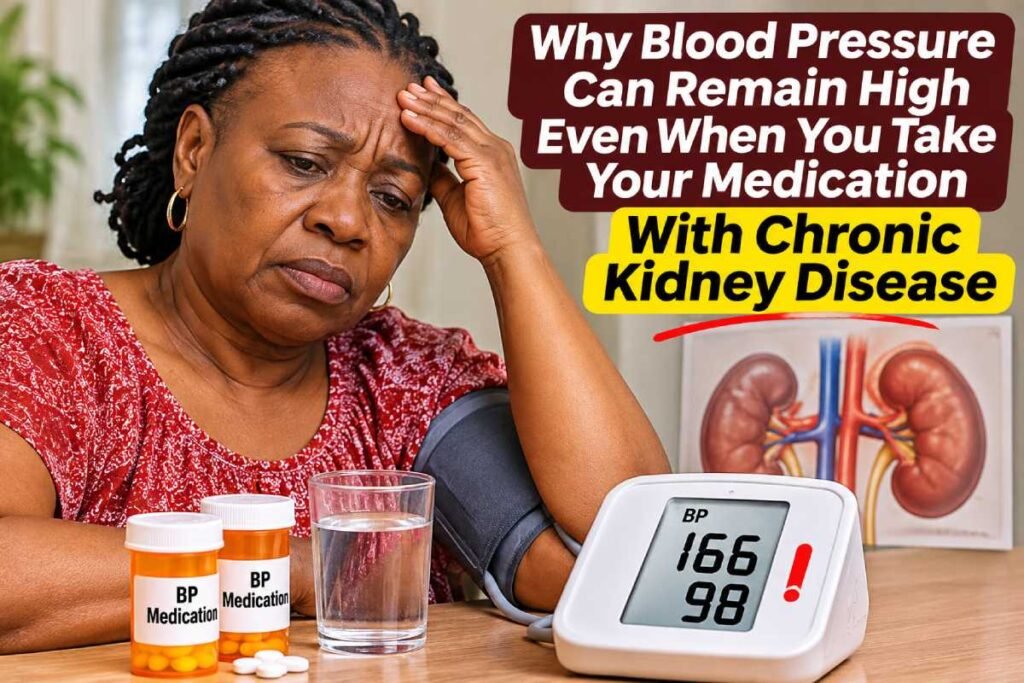
Taking your blood pressure medication every day but still seeing high readings can be frustrating, especially when you are also living with chronic kidney disease (CKD).
You may be following your doctor’s instructions, taking your tablets at the recommended times, and trying to make healthier food choices, yet your blood pressure remains higher than expected.
It is easy to assume that your medication is not working. However, persistent high blood pressure in people with CKD can have several possible explanations.
The kidneys play an important role in regulating blood pressure by controlling sodium, fluid balance, and certain hormones. When kidney function declines, these processes can become less effective. As a result, blood pressure may become more difficult to manage, sometimes requiring adjustments to treatment and closer monitoring.
Understanding what may be happening is an important step towards getting the right support.
Here are some reasons blood pressure can remain high even when you take your prescribed medication with chronic kidney disease.
1. Your Kidneys May Be Retaining Too Much Salt and Water
One of the most common reasons blood pressure remains difficult to control in people with CKD is excess fluid retention.
Healthy kidneys remove extra sodium and water from the bloodstream through urine. This helps maintain a healthy balance of fluid in the body.
However, when kidney function declines, the kidneys may struggle to remove enough sodium and water.
The extra fluid can increase the volume of blood circulating through your blood vessels. This may cause blood pressure to rise or remain elevated despite medication.
You might also notice symptoms such as:
- Swelling around your ankles, feet, or legs
- Puffy eyes, particularly in the morning
- Rapid weight gain over a short period
- Increased breathlessness, especially when lying down
- A feeling of heaviness or swelling in the body
These symptoms can have other causes, but they may indicate fluid accumulation that needs medical assessment.
In some cases, your healthcare provider may need to review your fluid balance and medication plan to determine whether additional treatment is necessary.
2. You May Be Consuming More Sodium Than You Realise
Even when you take your blood pressure medication consistently, your eating habits can influence how well your treatment works.
Sodium, which is found in salt, affects how much water your body retains. Eating too much sodium can make it harder for your kidneys to maintain a healthy fluid balance.
This is particularly important when you have CKD because your kidneys may already have difficulty removing excess sodium.
Some common sources of sodium include:
- Seasoning cubes and seasoning powders
- Instant noodles
- Processed meats and sausages
- Salted fish
- Packaged soups and sauces
- Salted snacks
- Restaurant and takeaway meals
You may not always notice how much sodium you consume because many packaged foods contain significant amounts even when they do not taste particularly salty.
Reducing excessive sodium intake can support blood pressure management and may help your prescribed medication work more effectively.
However, you should not assume that every salt substitute is safe. Some contain potassium chloride, which may be unsuitable for people with CKD because impaired kidneys can have difficulty removing excess potassium.
If you need help changing your diet, ask your doctor or renal dietitian for advice based on your kidney function and nutritional needs.
3. Your Kidney Function May Have Declined Further
Chronic kidney disease can progress over time, although the rate of progression varies considerably between individuals.
As kidney function declines, the body may become less effective at regulating sodium, water, and blood pressure.
This can create a difficult cycle.
When the kidneys are damaged, blood pressure may become harder to control. At the same time, persistently high blood pressure can cause additional damage to the delicate blood vessels inside the kidneys.
This means a medication plan that previously kept your blood pressure under control may eventually need to be reviewed.
Your doctor may recommend blood tests to check:
- Serum creatinine
- Estimated glomerular filtration rate (eGFR)
- Potassium levels
- Sodium levels
- Other electrolytes
A urine albumin-to-creatinine ratio may also help assess whether there is ongoing protein leakage into the urine.
These tests provide useful information about kidney function and can help your healthcare team decide whether your current treatment remains appropriate.
4. Your Medication May Need to Be Adjusted
Not every blood pressure medication works in exactly the same way.
Some medicines relax blood vessels, while others help the body remove excess sodium and water. Different combinations may be needed depending on a person’s kidney function, blood pressure readings, and other health conditions.
As CKD progresses, your treatment requirements may change.
For example, a person who previously needed one blood pressure medication may eventually require a combination of medicines to achieve adequate control.
Sometimes the issue may involve:
- A dose that is no longer sufficient
- A medication combination that needs reviewing
- A medicine that does not adequately address fluid retention
- Changes in kidney function affecting treatment decisions
- Side effects that make the current treatment difficult to tolerate
Your doctor may need to review the type, timing, and dosage of your medication.
Never increase your dose, stop taking a medication, or add another blood pressure tablet without medical guidance. Some medicines used to treat blood pressure and protect the kidneys can affect potassium levels and kidney function, so monitoring is important.
5. You May Have Resistant Hypertension
Sometimes blood pressure remains above the recommended target despite taking several prescribed medications.
This condition is known as resistant hypertension.
It generally refers to blood pressure that remains uncontrolled despite an appropriate treatment plan involving at least three different blood pressure medication classes, usually including a diuretic, at maximally tolerated doses.
A diagnosis should only be made after healthcare professionals have checked for other explanations, such as missed doses, inaccurate readings, and white-coat hypertension.
Resistant hypertension can be particularly challenging in people with CKD because the kidneys may retain more sodium and water than the body can comfortably manage.
This can make controlling blood pressure more difficult.
When resistant hypertension is suspected, your doctor may investigate possible underlying causes and review your medication combination.
The important thing to remember is that persistent high readings do not automatically mean your treatment has failed. They may indicate that something else needs to be identified and addressed.
6. Some Other Medications May Be Raising Your Blood Pressure
You might be taking your prescribed blood pressure medication correctly but also using another medicine that makes it harder to control your readings.
Certain medications can increase blood pressure or interfere with the effects of antihypertensive treatment.
Examples include:
- Non-steroidal anti-inflammatory drugs (NSAIDs), such as ibuprofen and naproxen
- Some cold and flu medicines containing decongestants
- Corticosteroids
- Certain hormonal medications
- Some immunosuppressant medicines
- Certain prescription and over-the-counter supplements
This is especially important for people with kidney disease because some medicines can affect both blood pressure and kidney function.
For example, regular use of certain anti-inflammatory painkillers may worsen fluid retention or kidney function in susceptible individuals.
Do not stop a prescribed medicine simply because you suspect it is affecting your blood pressure. Instead, give your doctor or pharmacist a complete list of everything you take, including painkillers, herbal preparations, vitamins, and supplements.
They can help identify possible interactions and recommend safer alternatives where appropriate.
7. Sleep Problems May Be Contributing to High Blood Pressure
Another possible explanation is obstructive sleep apnoea.
This condition occurs when breathing repeatedly becomes interrupted during sleep, often because the upper airway becomes temporarily blocked.
These interruptions can reduce oxygen levels and trigger stress responses in the body.
Over time, untreated sleep apnoea may contribute to high blood pressure and make existing hypertension more difficult to control.
Some possible signs include:
- Loud or frequent snoring
- Pauses in breathing during sleep noticed by another person
- Waking up gasping or choking
- Morning headaches
- Excessive daytime tiredness
- Difficulty concentrating
Not everyone with sleep apnoea experiences all these symptoms.
If you have CKD and your blood pressure remains high despite treatment, your doctor may consider whether a sleep disorder could be contributing.
A sleep assessment may be recommended if your symptoms suggest obstructive sleep apnoea.
8. Your Blood Pressure Readings May Not Be Completely Accurate
Sometimes the problem is not that your medication is ineffective. It may be that your blood pressure readings do not accurately reflect your usual blood pressure.
For example, measuring your blood pressure immediately after walking, drinking coffee, smoking, or experiencing stress may produce a higher reading.
Using the wrong cuff size or placing your arm incorrectly can also affect the result.
There is another condition called white-coat hypertension, where blood pressure rises in a medical setting because of anxiety or stress.
Some people experience the opposite problem: their readings appear acceptable at the clinic but are higher at home. This is sometimes called masked hypertension.
To obtain more reliable readings:
- Sit quietly for about five minutes before measuring.
- Keep your back supported and feet flat on the floor.
- Rest your arm at approximately heart level.
- Use a properly fitting upper-arm blood pressure cuff.
- Avoid smoking, caffeine, and exercise for at least 30 minutes beforehand.
- Take two readings about one minute apart and record the results.
Your doctor may recommend home blood pressure monitoring or a 24-hour ambulatory blood pressure monitor to understand how your readings change throughout the day and night.
9. Other Health Conditions May Be Affecting Your Blood Pressure
Sometimes persistent high blood pressure is associated with another medical condition that has not yet been identified or adequately managed.
Examples include:
Diabetes: High blood sugar can damage blood vessels and contribute to kidney problems. Diabetes and CKD can also make blood pressure management more complicated.
Hormonal conditions: Certain problems involving the adrenal glands or thyroid can contribute to elevated blood pressure.
Obesity: Excess body weight can increase the risk of hypertension and make blood pressure more difficult to control.
Chronic stress: Ongoing stress can influence blood pressure through changes in hormones, sleep, and everyday behaviour.
Obstructive sleep apnoea: Repeated interruptions in breathing during sleep can contribute to persistent hypertension.
Your doctor may investigate these possibilities depending on your symptoms, medical history, and test results.
Identifying an underlying condition can be important because treating blood pressure alone may not address every factor contributing to the problem.
What Should You Do If Your Blood Pressure Remains High?
If your blood pressure readings remain elevated despite taking your medication, do not ignore the situation or assume that nothing more can be done.
There are several practical steps you can take while working with your healthcare team.
Keep a Record of Your Blood Pressure Readings
Write down your readings regularly, including the date and time.
If possible, measure your blood pressure at consistent times each day and follow the technique recommended by your healthcare provider.
Bring the record to your next appointment. It can help your doctor identify patterns and determine whether your medication is controlling your blood pressure throughout the day.
Review Your Medication With Your Doctor
Make sure your doctor knows every medication and supplement you use.
Mention any missed doses, side effects, difficulties obtaining your prescriptions, or changes in your routine.
These details can help your healthcare provider determine whether your treatment needs adjustment.
Pay Attention to Sodium Intake
Reducing excessive sodium is an important part of managing blood pressure with CKD.
Try to limit heavily salted and processed foods, check food labels, and use less added salt when preparing meals.
Your doctor or renal dietitian can help you identify an appropriate sodium target.
Attend Your Kidney Monitoring Appointments
Regular monitoring helps your healthcare team understand whether your kidney function and blood pressure are changing.
Depending on your condition, your doctor may recommend:
- Blood tests for creatinine and eGFR
- Potassium and other electrolyte tests
- Urine albumin testing
- Blood pressure reviews
- Assessment of swelling and fluid balance
These checks can help identify problems early and guide treatment decisions.
Do Not Change Your Fluid Intake Without Advice
Some people assume that drinking more water will help their kidneys remove excess sodium and improve blood pressure.
However, this is not always appropriate for someone with CKD.
Depending on kidney function and fluid balance, some people may need a fluid restriction, while others may not.
Follow the fluid guidance provided by your healthcare team rather than deliberately drinking more or less water to influence your blood pressure.
When Should You Seek Urgent Medical Attention?
Persistently high blood pressure deserves medical attention, particularly when you have CKD.
However, certain readings and symptoms require more urgent action.
If your blood pressure is higher than 180/120 mmHg, wait at least one minute and measure it again.
If it remains that high and you have symptoms such as chest pain, shortness of breath, severe headache, weakness, numbness, confusion, vision changes, or difficulty speaking, seek emergency medical care immediately.
If the repeat reading remains above 180/120 mmHg without these symptoms, contact a healthcare professional urgently for advice rather than waiting for a routine appointment.
Do not attempt to bring the reading down by taking extra medication unless a healthcare professional specifically instructs you to do so.
Frequently Asked Questions
1. Why is my blood pressure still high even though I take my medication every day?
Several factors may explain this. With CKD, the kidneys may retain excess sodium and water, making blood pressure more difficult to control. Other possible causes include high dietary sodium, medication interactions, sleep apnoea, changes in kidney function, or a treatment plan that needs reviewing.
2. Can chronic kidney disease make blood pressure medication less effective?
Yes. Reduced kidney function can affect the body’s ability to regulate sodium and fluid balance. This may contribute to persistent hypertension even when medication is taken correctly. Your doctor may need to review your treatment and investigate fluid retention or other contributing factors.
3. Should I take an extra blood pressure tablet if my reading is high?
No. Do not take extra medication unless your doctor has specifically instructed you to follow an additional-dose plan. Taking more than prescribed can cause blood pressure to fall too quickly or lead to other complications, including electrolyte disturbances.
4. Can eating too much salt stop blood pressure medication from working?
Excessive sodium intake can make blood pressure more difficult to control, particularly in people with CKD who may retain extra sodium and water. It does not necessarily mean the medication has stopped working, but it may reduce how effectively the overall treatment plan controls blood pressure.
5. Does high blood pressure mean my kidney disease is getting worse?
Not necessarily. High blood pressure can be associated with declining kidney function, but a single high reading does not prove that CKD has progressed.
Your doctor may need to compare creatinine, eGFR, urine albumin, and previous blood pressure readings to understand what is happening.
6. Can resistant hypertension be treated in people with kidney disease?
Yes. Treatment is possible, although it may require careful assessment and adjustments. Doctors may review medication combinations, sodium intake, fluid retention, possible drug interactions, and other underlying conditions.
The appropriate approach depends on kidney function, potassium levels, other medical conditions, and individual treatment needs.
7. What blood pressure should someone with chronic kidney disease aim for?
There is no single target that is appropriate for everyone with CKD. The recommended target depends on factors such as kidney function, age, other health conditions, symptoms, and how well treatment is tolerated.
Your doctor should establish an individual target rather than relying on a number intended for every patient.
Final Thoughts: High Blood Pressure With CKD May Require More Than Medication Alone
Taking your prescribed blood pressure medication consistently is important, but it does not always guarantee that your readings will remain within your recommended range.
Chronic kidney disease can make blood pressure more complicated because the kidneys play a central role in regulating sodium, fluid balance, and other processes that influence blood pressure.
Excess fluid retention, high sodium intake, changes in kidney function, medication interactions, sleep apnoea, and other health conditions may all contribute to persistent high readings.
The most important thing is not to blame yourself or assume that your medication has failed. Instead, work with your healthcare provider to identify what may be preventing your blood pressure from coming under control.
You may also find it helpful to explore our Chronic Kidney Disease Solution review and honest assessment of this natural kidney health program.
Remember, no natural program or dietary change should replace prescribed blood pressure medication or medical care. Managing CKD requires an individualised approach, regular monitoring, and treatment guided by qualified healthcare professionals.