Let’s be honest: a chain-link fence or a perfectly pristine, stark-white vinyl boundary doesn’t exactly scream “cozy garden retreat.” If you’ve been pouring your heart into cultivating beautiful flower beds and vegetable patches, framing them with a sterile, mass-produced fence is a visual buzzkill.
A rustic fence, on the other hand, feels like it grew right out of the earth alongside your plants. It celebrates natural textures, raw edges, and weathered patinas. The best part? Rustic fencing is incredibly forgiving for DIYers. Imperfections aren’t mistakes; they are the very things that give the structure character.
If you are ready to ditch the plastic and build a boundary with some soul, here are 9 rustic garden fence ideas that will perfectly frame your outdoor sanctuary.
1. The Classic Woven Wattle Fence
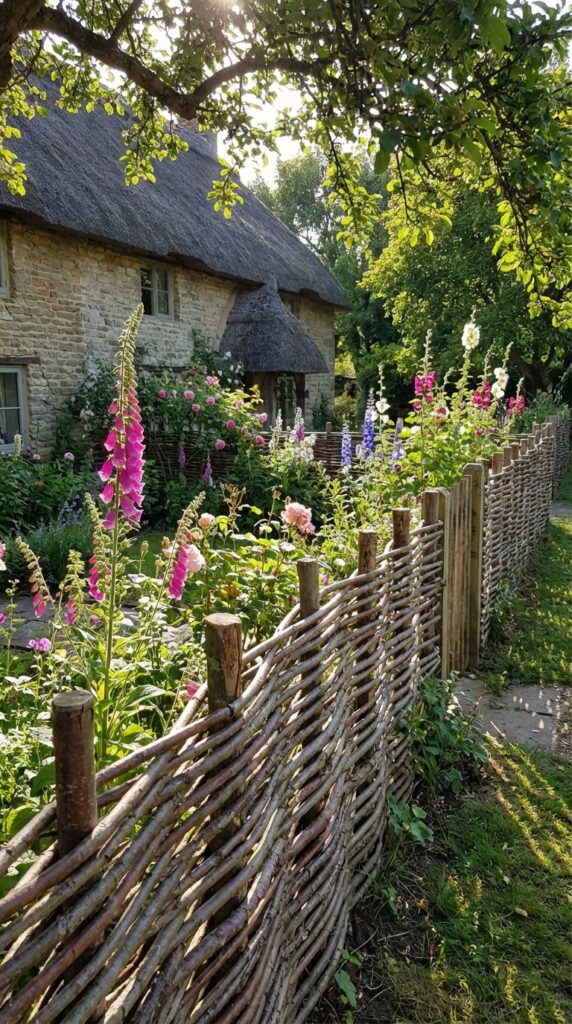
Wattle fencing is one of the oldest and most traditional ways to enclose a garden. It relies entirely on tension and natural materials, creating a beautifully organic, basket-like boundary. This style instantly transports your yard back to an era of handmade craftsmanship and feels completely at one with the surrounding nature.
Why You’ll Love It:
- Eco-Friendly: It uses 100% natural, biodegradable materials with no plastics or harsh chemicals.
- Completely Custom: You can weave it as high or as low as you need, following the natural curves of your landscaping.
- Wind-Permeable: Unlike a solid wood fence, the woven twigs allow a gentle breeze to pass through, which is great for delicate plants.
How to Get the Look:
Drive sturdy, sharpened wooden posts (like hazel or thick pine) deep into the ground about 18 inches apart. Harvest long, flexible branches—willow and hazel are the gold standards, but grapevines or thin, green saplings work too. Starting from the ground up, weave the flexible branches horizontally in an alternating over-and-under pattern between your vertical posts. Push the woven layers down tightly as you go.
2. The Traditional Split Rail Cedar Boundary
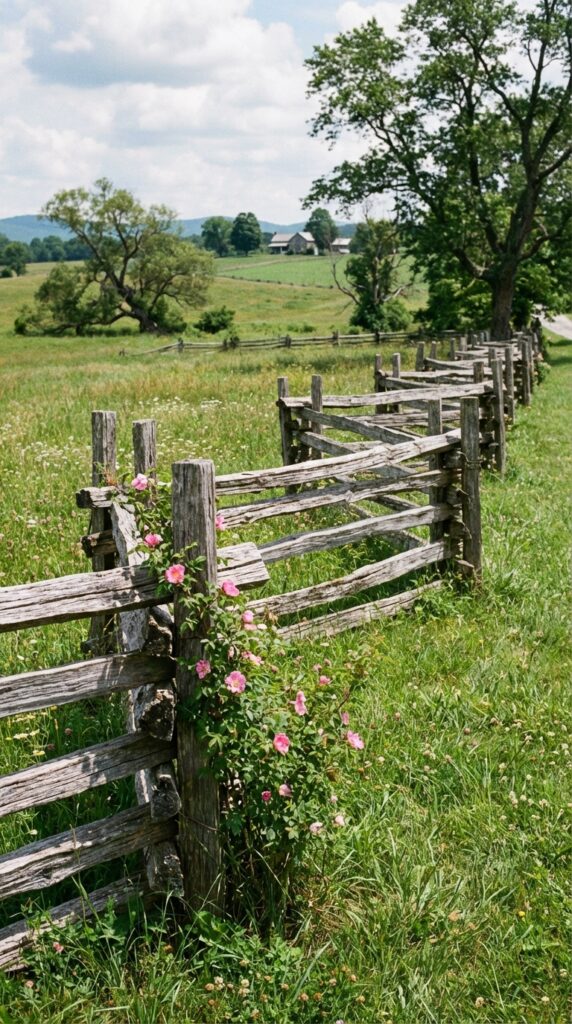
When you picture a historic farm or a rustic mountain cabin, this is the fence you see. Split rail fencing is the ultimate symbol of rugged, pioneer-style landscaping. Because the rails are split along the natural grain of the wood rather than milled perfectly flat, every single piece has a unique, jagged texture that adds immense visual weight to your property line.
Why You’ll Love It:
- Zero Hardware Required: Traditional mortise-and-tenon split rail systems slide together without a single nail or screw.
- Extremely Durable: Cedar and locust woods are naturally resistant to rot and insects, meaning this fence will outlast you.
- Open Concept: It defines your property boundaries without blocking your sweeping views or making the yard feel boxed in.
How to Get the Look:
You can purchase pre-cut split rail posts and rails from most agricultural supply stores or specialty lumber yards. The posts come with pre-routed holes. Simply dig your post holes, set the posts securely in gravel or concrete, and slide the tapered ends of the horizontal rails directly into the slots.
3. The Upcycled Pallet Picket Fence
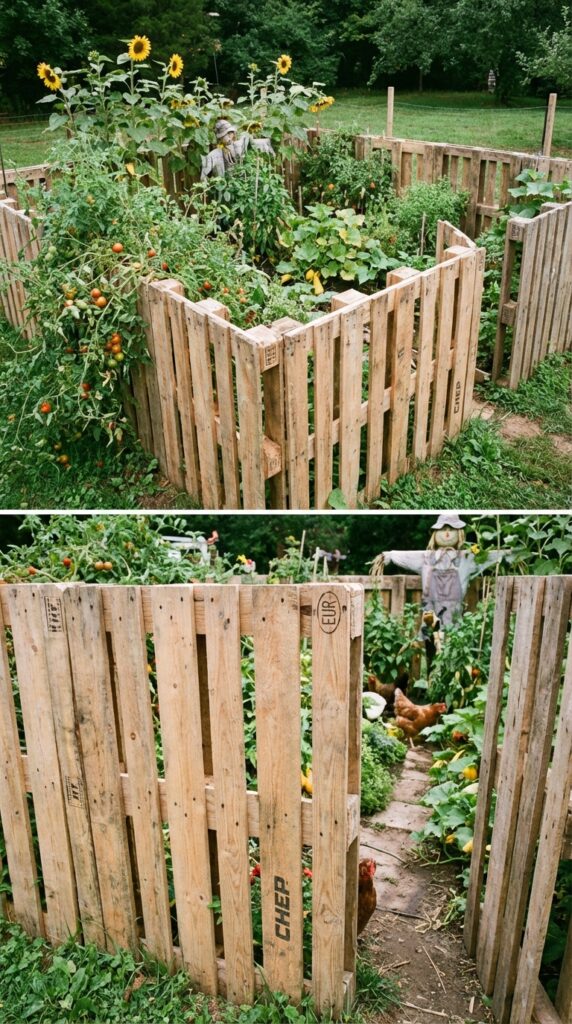
If you want a rustic boundary on an absolute shoestring budget, upcycling shipping pallets is the ultimate DIY hack. Pallet wood is inherently weathered, distressed, and full of character. By breaking them down and repurposing the slats as pickets, you create a charming, patchwork-style fence that looks like it belongs in a quaint countryside allotment.
Why You’ll Love It:
- Unbeatable Price: You can often source pallets for free from local businesses or hardware stores.
- Forgiving Carpentry: The rustic aesthetic means your cuts don’t have to be perfectly level or uniform.
- Sustainable Design: You are keeping perfectly good wood out of the landfill and giving it a beautiful second life.
How to Get the Look:
Source heat-treated (HT) pallets to ensure they are safe for garden use. Carefully pry the pallets apart to salvage the slats. Sink 4×4 posts into the ground and attach two horizontal 2×4 “backer rails” between them. Finally, use wood screws to attach your pallet slats vertically along the rails, leaving a small gap between each board for a rustic picket look.
4. The Hog Wire and Rough-Sawn Pine Enclosure
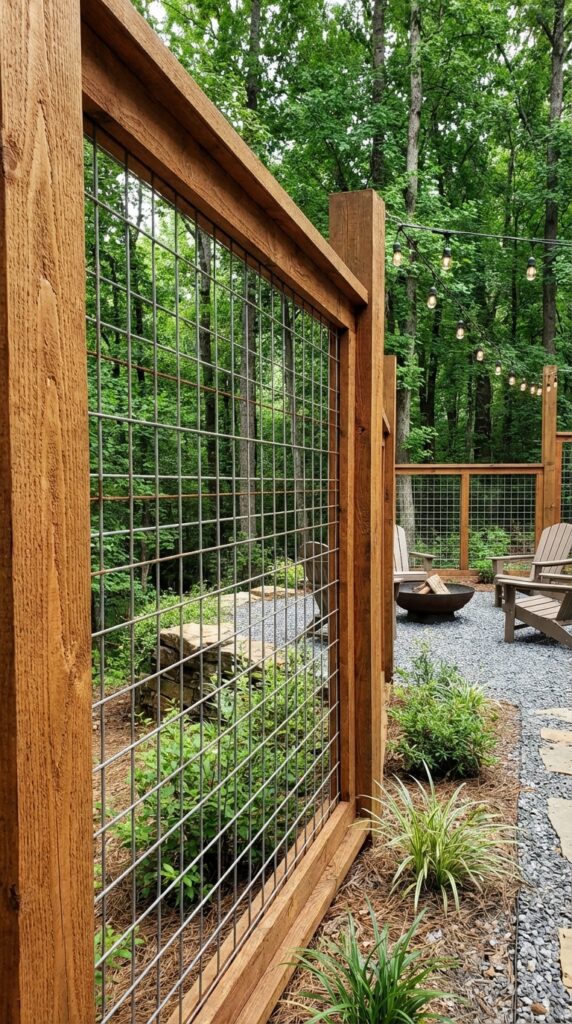
If your rustic vibe leans a little more “modern farmhouse” or “industrial cabin,” hog wire (also known as livestock paneling) is your best friend. It provides the rugged utility of agricultural fencing but looks incredibly sharp when framed out in thick, rough-sawn lumber. It’s the perfect way to keep dogs in and deer out without obstructing your garden views.
Why You’ll Love It:
- Unobstructed Views: The large metal grid practically disappears, making your yard feel massive.
- Critter Control: It is incredibly strong and highly effective at keeping larger wildlife out of your vegetable beds.
- Clean but Rugged: It balances crisp, geometric lines with raw, natural textures.
How to Get the Look:
Set thick, 4×4 or 6×6 wooden posts. Build a “picture frame” out of 2×4 lumber between the posts. Purchase stiff, galvanized steel livestock panels from a farm supply store, cut them to size using bolt cutters or an angle grinder, and sandwich the metal grid securely inside your wooden frames using heavy-duty staples or additional wood trim.
5. The Staggered Raw Log Palisade
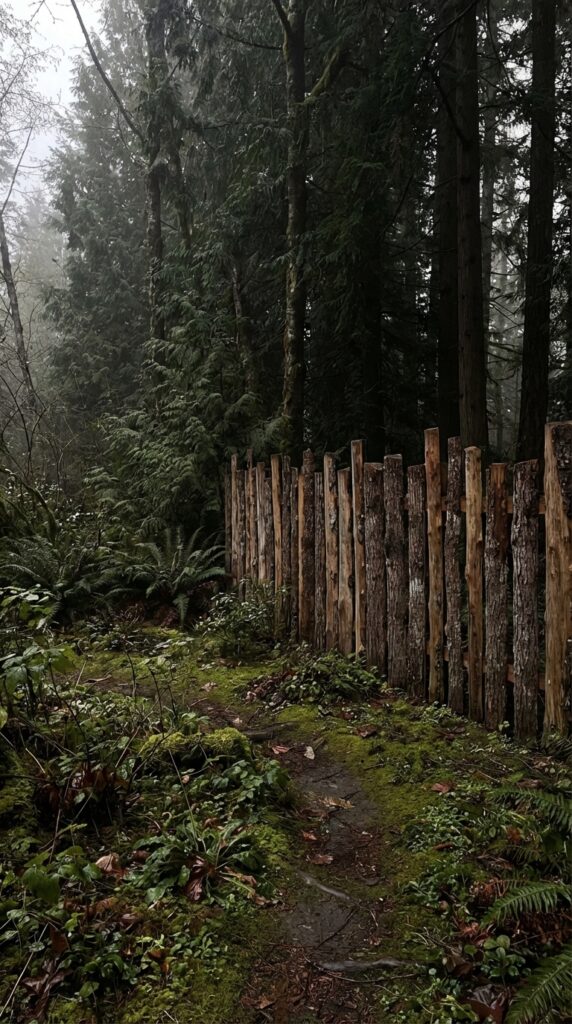
A vertical log palisade fence is a massive, dramatic architectural feature. By using raw, unpeeled logs standing upright, you create a formidable and incredibly earthy boundary that looks like a pioneer fort or a woodland retreat. Staggering the heights of the logs gives it an organic, undulating top edge that mimics the tree line.
Why You’ll Love It:
- Maximum Privacy: Placed snugly together, the logs create a completely solid, impenetrable visual barrier.
- Hyper-Natural Aesthetic: Leaving the bark on the logs ensures the fence blends flawlessly into a heavily wooded lot.
- Excellent Sound Barrier: The thick, dense wood absorbs street noise beautifully, creating a quiet sanctuary.
How to Get the Look:
This requires some heavy lifting! Source raw, straight logs from a local lumber mill, arborist, or tree removal service. Dig a deep, narrow trench along your fence line (about 1/3 the depth of your tallest log). Stand the logs vertically in the trench, packing them tightly together, and backfill the trench with gravel and dirt, tamping it down heavily to lock them in place.
6. The Rusted Corrugated Metal Patchwork
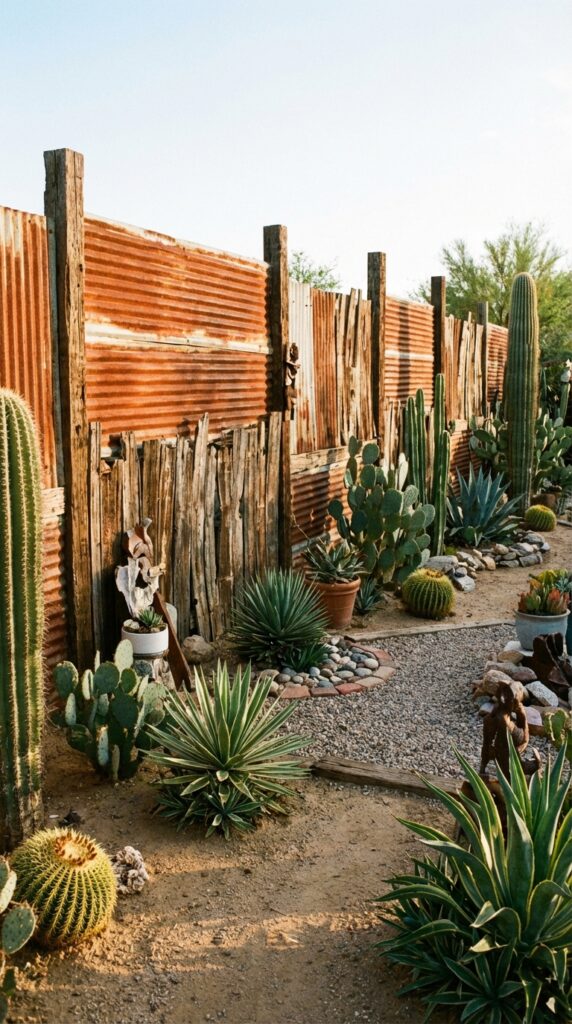
Corrugated metal is a staple of rustic and industrial design. When left out in the elements, it develops an incredible, rich, burnt-orange patina that looks stunning next to bright green foliage. Mixing rusted metal panels with weathered wood creates a textured, patchwork aesthetic that is completely unique and full of character.
Why You’ll Love It:
- Deep Color: The rust provides a gorgeous, warm backdrop that makes plants pop.
- Incredible Durability: Even when rusted, heavy corrugated metal takes decades to break down completely.
- Provides a Windbreak: Solid metal panels offer excellent protection for delicate plants in windy, exposed gardens.
How to Get the Look:
Hunt down old, salvaged corrugated roofing panels from architectural salvage yards or local classifieds (or buy new ones and spray them with a mixture of hydrogen peroxide, white vinegar, and salt to force them to rust quickly!). Build a standard wooden fence frame and attach the metal panels using roofing screws with rubber washers to prevent tearing the metal.
7. The Repurposed Antique Door Boundary
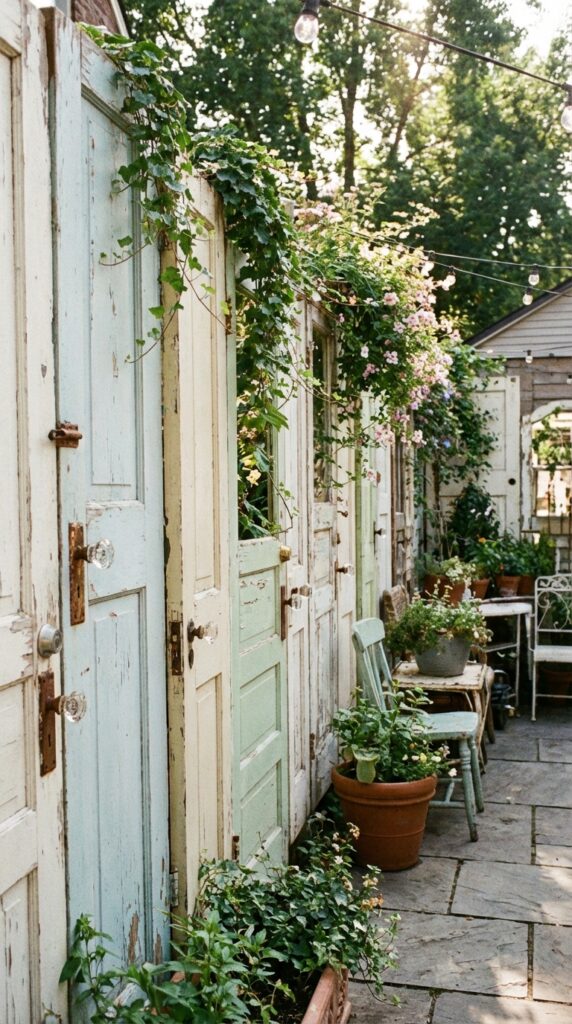
For the ultimate shabby-chic, secret-garden vibe, look no further than an architectural salvage yard. Linking old, solid wood doors together creates a whimsical, Alice-in-Wonderland style boundary. The peeling paint, varied panel details, and leftover hardware make this fence look like a collection of portals to other worlds.
Why You’ll Love It:
- Whimsical and Artistic: It’s a guaranteed conversation starter and a true piece of yard art.
- Solid Privacy: Solid doors provide a hefty, completely opaque barrier for private patios.
- No Two are Alike: Sourcing mismatched doors ensures your fence is 100% unique to your home.
How to Get the Look:
Collect solid, exterior-grade wooden doors. Sink heavy-duty 4×4 posts deep into the ground. Because doors are incredibly heavy, you will need to bolt them securely to the posts using heavy-duty lag screws and metal brackets. For longevity, seal the tops and bottoms of the doors with a clear, exterior-grade marine varnish to prevent moisture from rotting the wood.
8. The Stacked Stone and Timber Frame
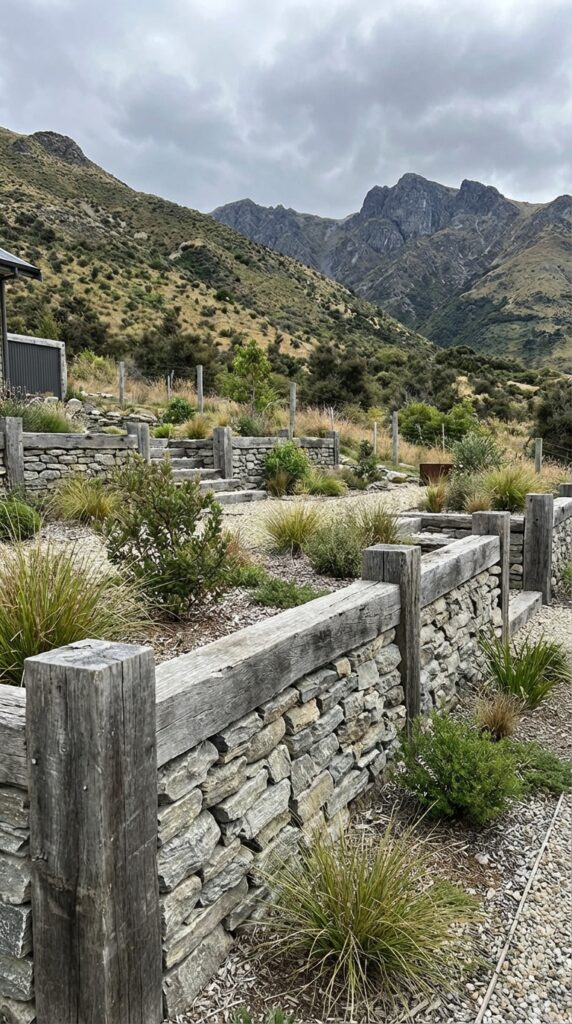
Combining the raw weight of natural stone with the warmth of thick timber creates a fence that looks like it will stand for a thousand years. This style—often seen in mountainous regions or high-end lodges—uses heavy wooden frames packed with dry-stacked rocks to create a low boundary that is both a fence and a retaining wall.
Why You’ll Love It:
- Architectural Gravitas: It adds incredible, high-end weight and permanence to your landscaping.
- Texture Overload: The contrast between the smooth wood and the jagged, multi-colored stones is stunning.
- Zero Maintenance: Rocks don’t rot, warp, or need to be restained!
How to Get the Look:
This is a labor-intensive build. Sink heavy 6×6 wooden posts and attach a sturdy bottom and top rail. You can either dry-stack flat fieldstones carefully within the frame (which requires skill to ensure it doesn’t topple), or build a wire mesh “gabion” cage between the posts and simply fill the cage with decorative river rock or crushed concrete for an easier DIY approach.
9. The Branch and Twig Fairy Trellis
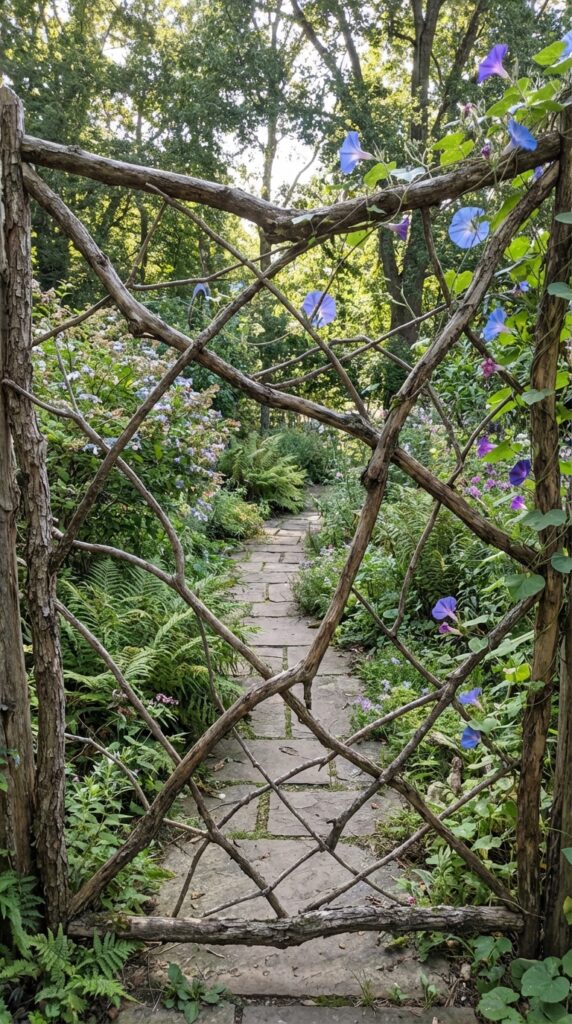
If you need a subtle boundary to keep pets out of a flower bed rather than a massive privacy fence, a twig trellis is a breathtaking option. By nailing together found, curving branches in an organic, overlapping web, you create a delicate, fairy-tale structure that looks like the forest itself grew a fence for you.
Why You’ll Love It:
- Ethereal Beauty: It has a light, airy, and deeply romantic aesthetic.
- Perfect for Climbers: The varying angles of the branches make it the ultimate support structure for vining plants.
- Practically Free: You can build this entirely from the fallen branches and pruning scraps in your own neighborhood.
How to Get the Look:
Drive sturdy, straight stakes into the ground every few feet to act as your main supports. Gather a large pile of varied, curving branches. Using a brad nailer or thin outdoor screws, begin attaching the branches to the uprights and to each other, crossing them at random, organic angles until you’ve built up a beautiful, web-like barrier.