I love the idea of bringing softer, warmer textures into a kitchen to contrast with all the hard surfaces and appliances. However, I have to be completely candid with you about kitchen safety: putting untreated, loose fabric directly over a stovetop is a massive fire hazard and a magnet for airborne cooking grease. Most local building codes strictly prohibit combustible materials within a certain clearance zone above a range.
But don’t scrap your design vision just yet! You can absolutely achieve the cozy, tailored look of a fabric-covered vent hood while keeping your home safe and code-compliant.
Here are 9 brilliant ways to use safely modified fabrics, heavy-duty vinyls, and clever look-alikes to get that soft aesthetic without the fire risk.
1. The Faux-Linen Vinyl Wrap
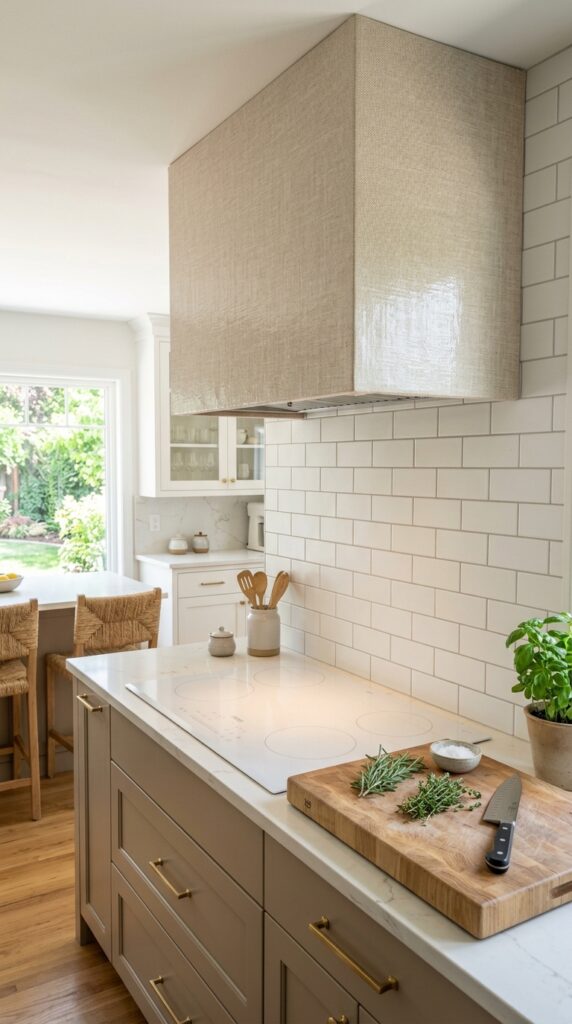
If you want the exact look of fabric with zero fire risk and effortless cleaning, heavy-duty architectural vinyl is the ultimate cheat code. Modern textured vinyls can perfectly mimic the weave, color, and depth of linen, canvas, or silk, but they are completely non-porous, meaning cooking grease wipes right off with a damp sponge.
Why We Love It:
- 100% Grease-Proof: It offers the visual softness of fabric but cleans up like a hard laminate.
- Incredibly Realistic: High-end architectural vinyls have a tactile, woven texture.
- Easy Application: It’s a peel-and-stick process over a standard, smooth MDF box.
How to Get the Look (Safely):
Build a perfectly smooth, straight-sided box frame out of primed MDF. Purchase a commercial-grade, fire-rated vinyl wrap designed for interiors (brands like 3M DI-NOC offer incredible fabric textures). Using a squeegee and a heat gun, carefully stretch and adhere the vinyl over your MDF cover. Ensure the bottom edge nearest the stove is finished cleanly so steam cannot easily peel it up.
2. The Glass-Encased Vintage Textile
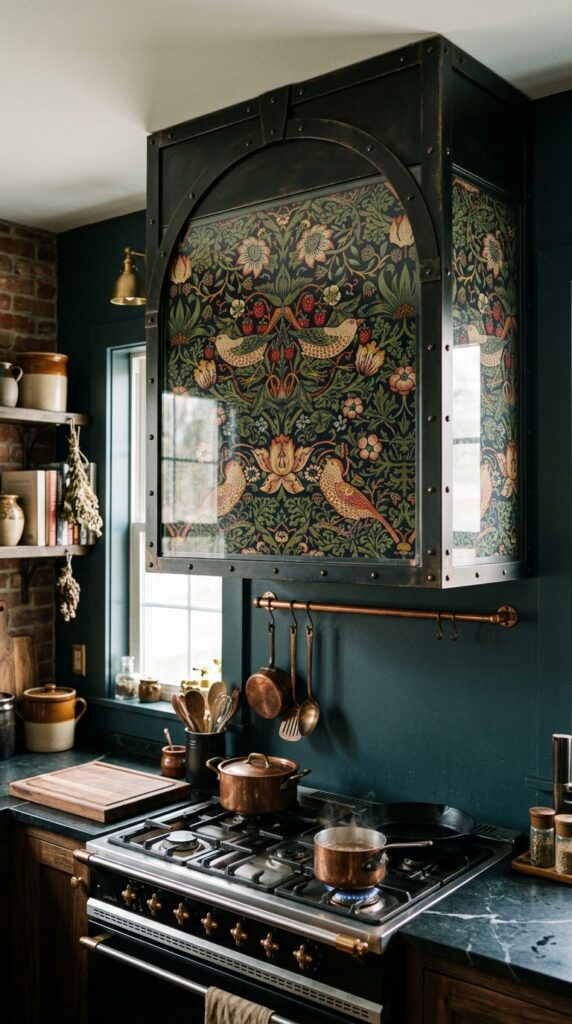
This is a stunning way to use actual, authentic fabric without turning it into a grease trap or a fire hazard. By sealing a beautiful piece of textile, wallpaper, or tapestry behind tempered glass, you turn your vent hood into a framed piece of art that is completely safe and easy to sanitize.
Why We Love It:
- Uses Real Fabric: You can use genuine antique textiles, embroidered cloths, or family heirlooms.
- Completely Safe: Tempered glass is heat-resistant and provides a non-combustible barrier.
- Artistic Focal Point: It treats the ventilation unit like a custom picture frame.
How to Get the Look (Safely):
Construct a custom wood frame for your vent insert with a recessed channel on the front face. Cut a piece of your chosen fabric and mount it securely to a thin backing board. Order a custom-cut piece of tempered glass from a local glazier. Place the fabric board into the recess, cover it with the tempered glass, and secure it with thin, painted wood trim. You can clean the glass just like a window.
3. The Grasscloth Wallpaper Box
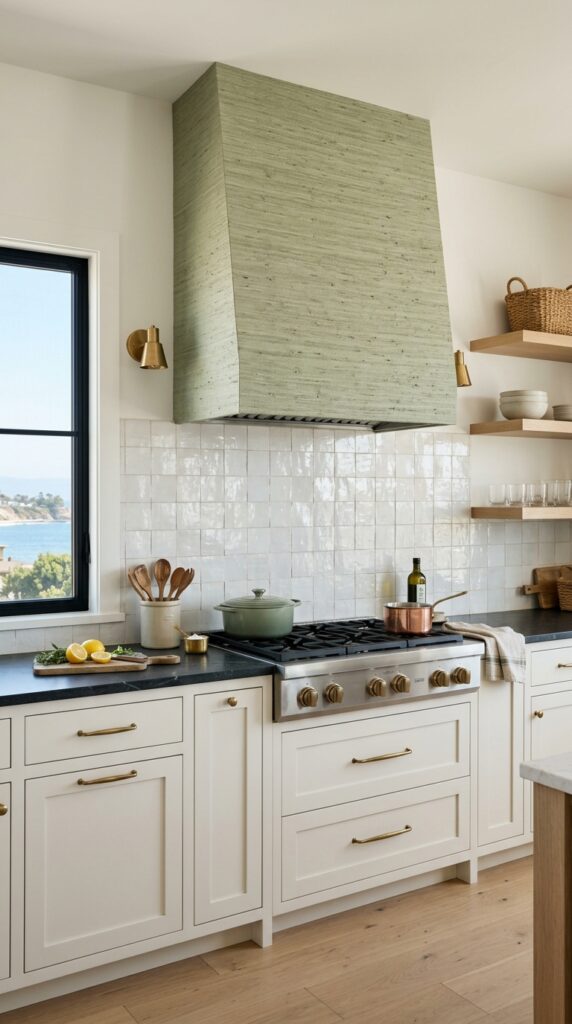
Grasscloth is a classic way to introduce a woven, textile-like texture to walls, and it works beautifully on a vent hood. To make it kitchen-safe, you must use a faux grasscloth made of heavy-duty, scrubbable vinyl, rather than natural dried grasses (which would absorb grease instantly and pose a fire risk).
Why We Love It:
- Rich, Woven Texture: It provides a highly tactile, dimensional surface that mimics natural fibers.
- Elegant and Timeless: Grasscloth is a staple in high-end, traditional, and coastal designs.
- Wipeable Durability: Vinyl look-alikes can withstand standard kitchen cleaning sprays.
How to Get the Look (Safely):
Build a smooth MDF enclosure. Sizing the MDF with a primer is crucial so the wallpaper paste adheres properly. Use a high-quality, commercial-grade vinyl wallpaper with a grasscloth texture. Apply it using heavy-duty wallpaper paste, making sure to wrap the corners tightly and smooth out any air bubbles.
4. The Woven Brass “Textile”
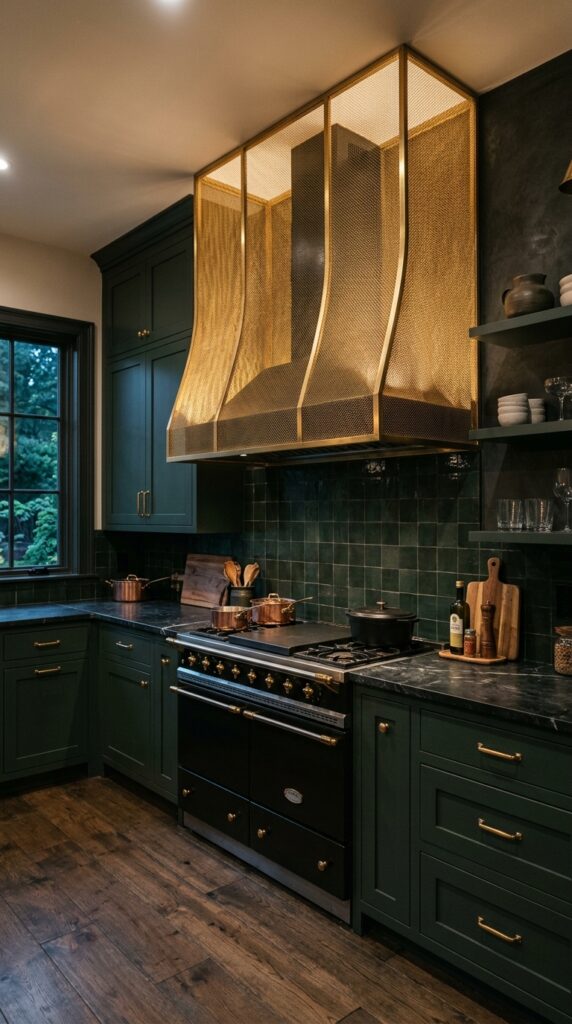
If you love the woven, overlapping threads of fabric, you can replicate that exact structure using metal. Fine wire mesh—often used in custom cabinetry or radiator covers—mimics the warp and weft of cloth but is 100% non-combustible and incredibly durable.
Why We Love It:
- Zero Fire Risk: Metal mesh is completely heatproof and safe for any stovetop clearance.
- Industrial Elegance: It bridges the gap between a soft textile weave and a tough, industrial material.
- Light Play: The woven metal catches the light beautifully, adding depth and warmth.
How to Get the Look (Safely):
You will need to construct a sturdy metal frame (using aluminum or brass angle iron) or a fire-safe treated wood frame. Order architectural wire mesh panels—they come in various weaves, from tight “linen” looks to looser “canvas” styles. Secure the mesh tightly to the frame using metal clips or strong rivets, ensuring all sharp edges are folded inward.
5. The Commercial Fire-Retardant Awning
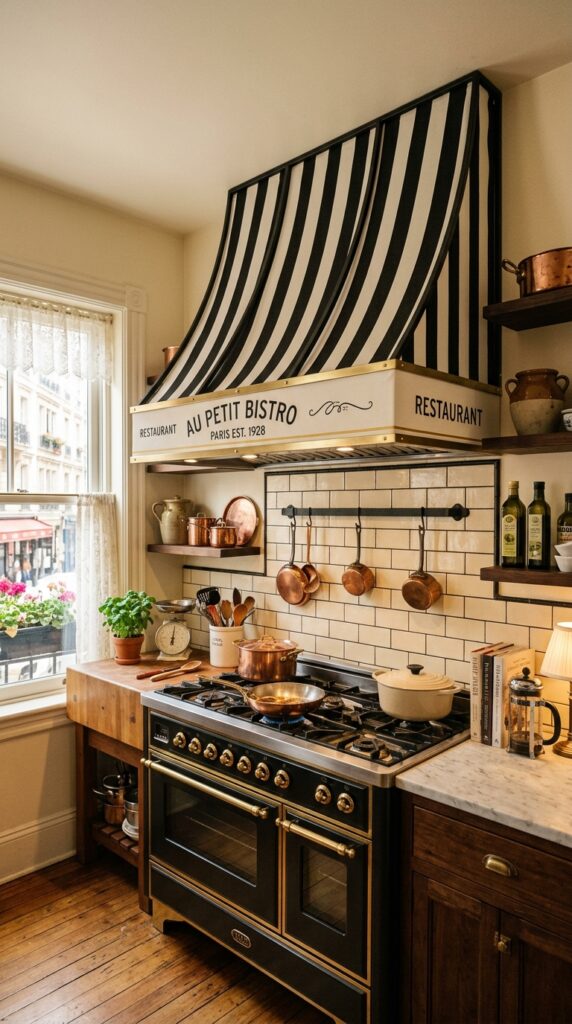
If you have a high ceiling and can place the hood well above the standard minimum clearance, you can take inspiration from commercial restaurant design. Outdoor awnings use heavy, specialized fabrics that are treated with rigorous fire retardants and moisture repellents.
Why We Love It:
- Cafe Aesthetic: It brings an incredibly charming, European bistro vibe right into your home.
- Heavy-Duty Material: Commercial awning fabric (like Sunbrella) is designed to resist stains and fading.
- Treated for Safety: While still requiring caution, these fabrics are chemically treated to resist igniting.
How to Get the Look (Safely):
Crucially, verify your local building codes for clearances regarding treated combustibles. Build a wedge-shaped frame out of metal tubing or fire-treated lumber. Purchase commercial-grade, fire-retardant awning fabric. Stretch it drum-tight over your frame and secure it with heavy-duty staples or specialized awning tracks. Keep it as far from the heat source as your ventilation unit’s specifications allow.
6. The High-Clearance Cafe Valance
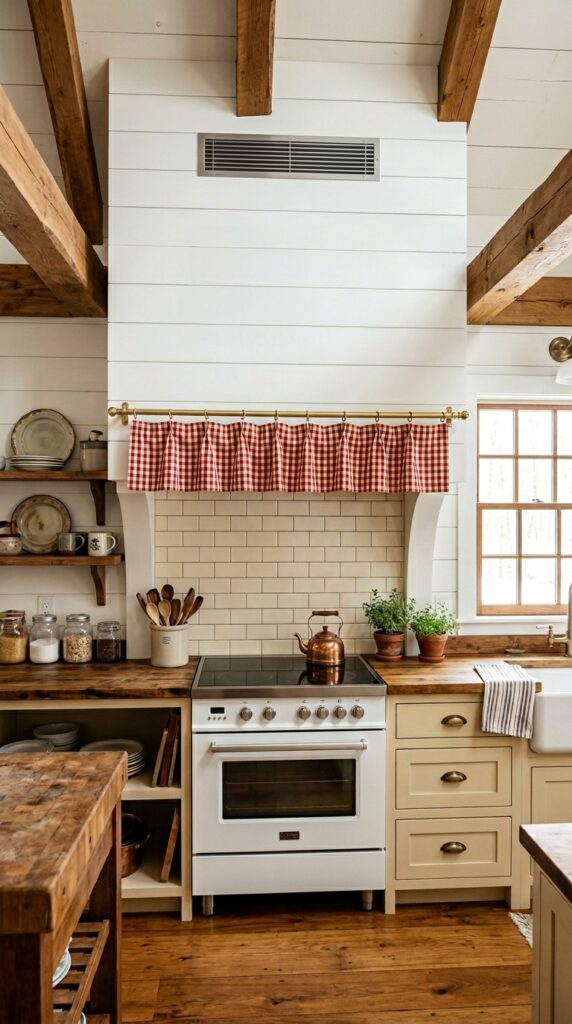
The safest way to use untreated, normal fabric near a stove is to ensure it is nowhere near the stove. By hiding a powerful, flush-mount ventilation insert in the ceiling or high up in an alcove, you can use a decorative fabric valance at the very top of the opening, completely out of the heat and splatter zone.
Why We Love It:
- Uses Real Fabric Safely: Because it’s placed far outside the combustible clearance zone, you can use standard cotton or linen.
- Easy to Wash: Hung on a simple rod, the valance can be taken down and thrown in the washing machine weekly.
- Softens the Architecture: It adds a lovely, drapery-like softness to the hard lines of a cooking alcove.
How to Get the Look (Safely):
This requires an “alcove” setup. You will build an arched or square alcove over your stove, mounting the actual exhaust fan high up inside it. Then, install a simple curtain rod across the very top front of the alcove (at least 36 to 48 inches above the cooking surface, depending on code). Hang your gathered fabric valance purely as a decorative top treatment.
7. The Epoxy-Hardened Canvas Shell
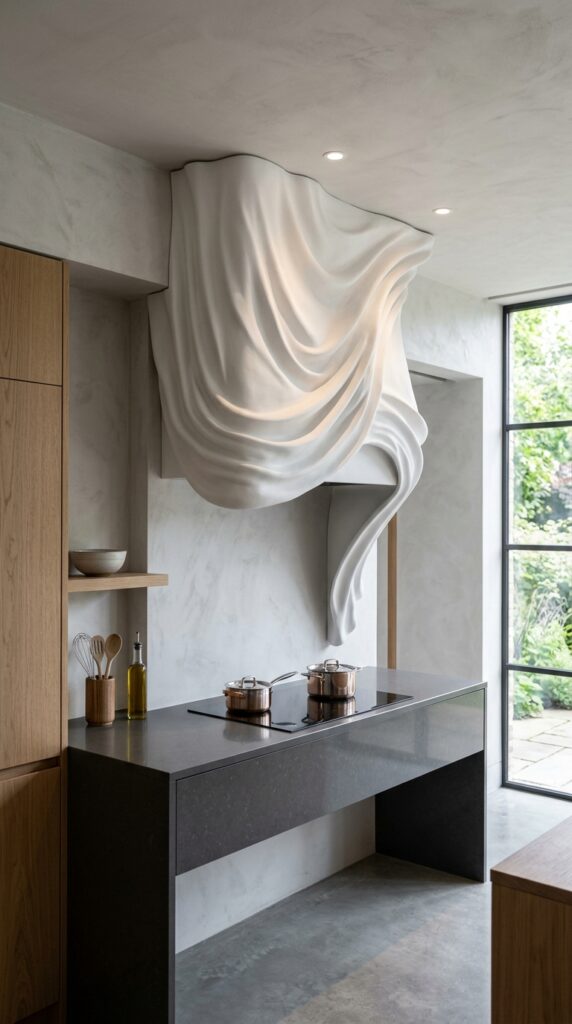
This is a highly advanced, artistic approach. You can take actual, heavy-weight canvas or burlap, drape it over a mold, and saturate it with high-heat, fire-retardant epoxy resin or fiberglass resin. Once it cures, the fabric turns into a rock-hard, non-combustible shell that permanently holds the shape of draped cloth.
Why We Love It:
- Artistic and Sculptural: It creates a truly one-of-a-kind, museum-quality focal point.
- Permanent Folds: It captures the exact look of draped fabric without the flimsiness.
- Wipeable Surface: Once the resin cures and is painted, it is completely hard and can be degreased easily.
How to Get the Look (Safely):
Build a temporary wire or foam mold in the shape of your desired hood. Drape heavy cotton canvas over the mold, pinning it into pleasing folds. In a well-ventilated area, saturate the fabric completely with a marine-grade, high-temp fiberglass resin. Once fully cured and rock-hard, remove the mold, trim the edges, sand it smooth, and paint it with a high-heat enamel.
8. The Woven Rattan Basket Cover
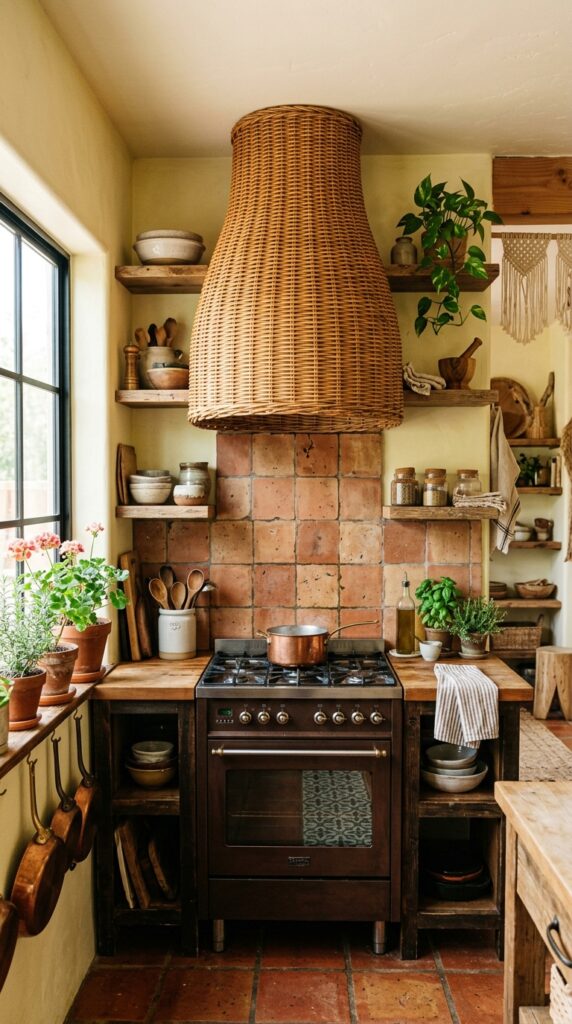
While not fabric, rattan and wicker offer a very similar organic, woven texture that appeals to the same design sensibilities. To use this safely in a kitchen, the rattan must be tightly woven (to prevent grease buildup in deep crevices) and heavily sealed with a fire-retardant clear coat.
Why We Love It:
- Organic Warmth: It brings an earthy, natural element that softens the look of stainless steel appliances.
- Textural Alternative: It provides the woven look of heavy textiles without using cloth.
- Lightweight: Rattan materials are incredibly light, making installation easier than heavy wood or metal.
How to Get the Look (Safely):
Build a lightweight, fire-treated wood skeleton frame. Wrap the frame in heavy-duty, tightly woven cane webbing or rattan matting (available in rolls). Secure it tightly with a pneumatic stapler. Crucially, you must seal the entire exterior with multiple coats of a high-heat, washable polyurethane or a specialized fire-retardant clear spray to make it wipeable and safer near the stove.
9. The Plaster “Linen” Texture
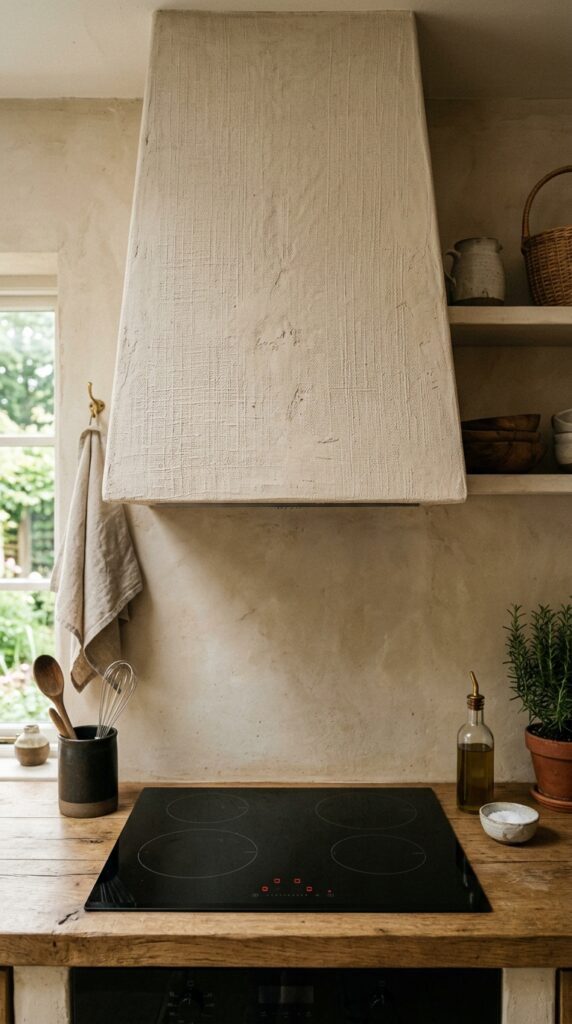
You can use standard, fire-safe drywall and plaster to create a trompe l’oeil (optical illusion) of fabric. By manipulating the wet plaster with specific tools, you can impress a woven, textile-like pattern into the hard, non-combustible surface.
Why We Love It:
- 100% Fireproof: Plaster is completely safe to use around high-heat cooking areas.
- Subtle and Elegant: The texture is only visible up close, providing a quiet, sophisticated detail.
- Seamless Construction: The plaster finish allows the hood to blend flawlessly into the surrounding walls.
How to Get the Look (Safely):
Build a standard MDF or drywall enclosure around your vent. Apply a base coat of Roman clay, Venetian plaster, or high-quality joint compound. While the top coat is still wet, use a stiff-bristled wallpaper brush or a specialized faux-finishing comb to drag horizontal lines through the plaster. Immediately follow by dragging vertical lines over them, creating a cross-hatched, “woven linen” texture. Seal with a washable wax or topcoat.