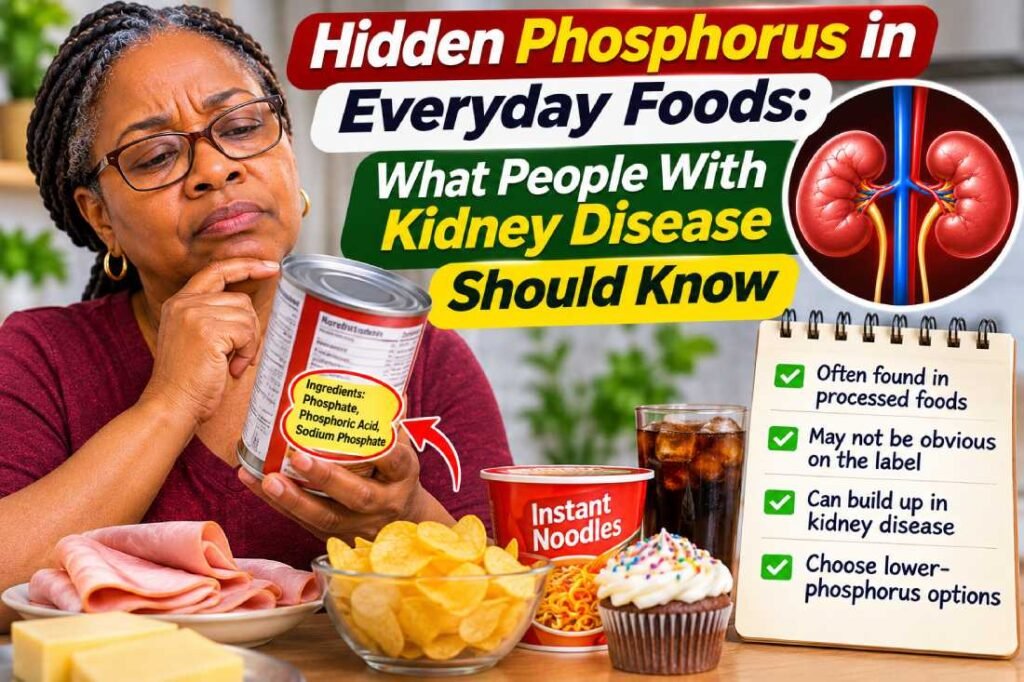
When managing chronic kidney disease (CKD), paying attention to what you eat becomes increasingly important. You may already know that certain foods contain phosphorus and that your doctor might ask you to monitor your intake.
But there is something many people overlook: phosphorus is not always obvious.
It can be naturally present in foods such as meat, dairy products, beans, nuts, and whole grains. However, food manufacturers also add phosphorus-containing ingredients to many processed products to improve their texture, appearance, flavour, moisture, or shelf life.
This added phosphorus is often called hidden phosphorus because you may not recognise it from the product’s name, appearance, or taste.
For people whose kidneys cannot remove excess phosphorus effectively, regularly consuming foods with phosphate additives may make it more difficult to maintain healthy blood phosphorus levels.
The challenge is that phosphorus content is not always clearly displayed on food packaging. You may need to look beyond the nutrition information and examine the ingredient list.
Understanding where hidden phosphorus comes from can help you make more informed food choices without unnecessarily eliminating nutritious foods from your diet.
Here is what people living with chronic kidney disease should know about hidden phosphorus, common food sources, and how to identify it.
1. Why Does Phosphorus Matter When You Have Kidney Disease?
Phosphorus is an essential mineral that your body needs to function properly.
It helps maintain healthy bones and teeth, supports energy production, and plays a role in the normal functioning of cells and tissues.
Your body obtains phosphorus from the foods you eat. Healthy kidneys help regulate the amount circulating in your bloodstream by removing excess phosphorus through urine.
However, when kidney function declines, removing excess phosphorus can become more difficult.
As a result, phosphorus may gradually accumulate in the blood, particularly in people with more advanced CKD.
Persistently elevated phosphorus can contribute to a complication known as chronic kidney disease-mineral and bone disorder (CKD-MBD).
This condition affects the balance of minerals and hormones involved in maintaining healthy bones.
When phosphorus levels remain too high, several problems may develop:
- The parathyroid glands may become overactive.
- Calcium and phosphorus balance may become disrupted.
- Bone health may deteriorate.
- Bones may become weaker and more vulnerable to fractures.
- Calcium and phosphate may accumulate in blood vessels and other tissues.
These changes can affect more than your bones. They may also contribute to cardiovascular complications.
This is why managing phosphorus becomes an important part of kidney disease care when blood tests show that it is elevated or difficult to control.
However, not everyone with CKD needs the same phosphorus restriction. Your kidney function, blood results, nutritional needs, and treatment plan should determine how much phosphorus you need to manage.
2. What Is Hidden Phosphorus?
Hidden phosphorus refers to phosphorus found in foods where its presence may not be obvious to someone choosing what to eat.
There are two broad sources of dietary phosphorus: phosphorus that occurs naturally in food and phosphorus that is added during food processing.
Naturally occurring phosphorus is found in foods such as meat, fish, eggs, dairy products, beans, lentils, nuts, and seeds.
Added phosphorus is introduced during manufacturing as part of ingredients used to improve a food’s texture, flavour, appearance, moisture, or stability.
For example, a processed chicken product may contain phosphate additives to help retain moisture. A packaged cheese product may use phosphate ingredients to improve its texture. Some bottled drinks contain phosphoric acid for acidity and flavour.
The important difference is how readily your body absorbs these forms of phosphorus.
Phosphorus from many additives is highly absorbable. Much of it may enter your bloodstream after digestion.
Naturally occurring phosphorus is generally less completely absorbed, although absorption varies according to the food source.
This means that two foods containing phosphorus can affect your overall phosphorus intake differently.
It also explains why checking food ingredients can be particularly useful when you have CKD.
3. Why Are Phosphate Additives a Particular Concern?
Phosphate additives can make it easier to consume more phosphorus than you realise.
Unlike naturally occurring phosphorus, which is often bound within food structures, inorganic phosphate additives are generally easier for the digestive system to absorb.
A substantial proportion, often estimated at around 90% or more, may be absorbed.
By comparison, the amount absorbed from naturally occurring phosphorus varies. Animal-based phosphorus is generally more absorbable than plant-based phosphorus because much of the phosphorus in plants is bound to phytate.
This difference matters because people with reduced kidney function may have difficulty eliminating excess phosphorus from their bodies.
Consider this example:
You might eat a meal containing fresh chicken and vegetables. The chicken naturally contains phosphorus, but the amount your body absorbs depends on the food and preparation.
Now consider a processed chicken product containing phosphate additives. The added phosphorus may be much more readily absorbed.
This does not mean every processed food is automatically dangerous or that every food containing natural phosphorus should be avoided.
It means that the source of phosphorus matters, especially when your blood phosphorus levels are elevated.
Choosing foods with fewer phosphate additives can help reduce unnecessary phosphorus intake without removing every source of protein from your diet.
4. Everyday Foods That May Contain Hidden Phosphorus
Phosphate additives appear in a wide variety of packaged and processed foods.
Some products may contain them even when phosphorus is not mentioned prominently on the front of the package.
Here are common categories worth checking.
Processed Meats and Sausages
Processed meats are among the products in which phosphate additives may be found.
These ingredients can help retain moisture, improve texture, and maintain the quality of the product.
Examples include:
- Sausages
- Hot dogs
- Bacon
- Deli meats
- Processed chicken slices
- Chicken nuggets
- Some packaged burger patties
- Some frozen meat products
Not every product contains added phosphorus, so checking the ingredient list is important.
When practical, fresh, unenhanced meat or poultry may be a better choice than processed versions containing phosphate additives.
Processed Cheese and Cheese Products
Some processed cheese products contain phosphate ingredients that help maintain a smooth texture and prevent separation.
You may find added phosphates in products such as:
- Processed cheese slices
- Cheese spreads
- Cheese sauces
- Packaged cheese dips
- Some cheese-based convenience meals
This does not mean all cheese products have identical phosphorus content.
Natural cheese also contains phosphorus, so people who need to manage their intake may need to consider portion sizes as well as additives.
Packaged and Convenience Meals
Ready-made meals can contain several ingredients that contribute to phosphorus intake.
Some products use phosphate additives to maintain texture, improve moisture retention, or extend shelf life.
Examples worth checking include:
- Frozen dinners
- Packaged pasta meals
- Instant puddings
- Prepared sauces
- Frozen chicken dishes
- Packaged baked foods
- Some instant meal mixes
The amount and type of added phosphorus vary between manufacturers.
Reading the ingredients is often more useful than judging a product by its appearance or packaging claims.
Cola and Certain Bottled Drinks
Some soft drinks contain phosphoric acid, which is used to provide acidity and a characteristic flavour.
Dark colas are a commonly recognised example.
Other bottled beverages, including some flavoured drinks and ready-made teas, may also contain phosphate additives.
Check the ingredients for names such as phosphoric acid or sodium phosphate.
Not every dark-coloured drink contains phosphorus additives, and not every flavoured drink is unsuitable for people with CKD.
The ingredient list is the better guide.
Breakfast Cereals and Snack Bars
Some packaged cereals and nutrition bars contain phosphate ingredients.
These may be used to influence texture, acidity, or product stability.
Products worth checking include:
- Packaged breakfast cereals
- Cereal bars
- Granola bars
- Protein bars
- Some baking mixes
- Certain packaged breakfast products
Remember that the protein content of a food is not the same as its phosphorus content.
A high-protein product does not automatically contain phosphate additives, but some protein bars and supplements may include them.
Baked Goods and Baking Products
Certain baked products and baking ingredients contain phosphate-based additives.
Examples include some:
- Commercial cakes
- Packaged biscuits
- Baking mixes
- Pancake mixes
- Muffins
- Frozen baked goods
- Baking powders containing phosphate ingredients
The specific ingredients vary, so check the label rather than assuming that all baked foods contain hidden phosphorus.
5. How to Identify Hidden Phosphorus on Food Labels
One of the most useful habits you can develop when managing phosphorus intake is learning to read ingredient lists.
In some countries, phosphorus is not required to appear as a separate nutrient in the nutrition information panel of every packaged food.
This means you may not see a phosphorus quantity even when the product contains phosphate additives.
However, added phosphate ingredients are generally listed in the ingredient section.
A useful clue is the word “phos.”
When examining a packaged product, look for ingredient names containing this word.
Common examples include:
| Phosphate ingredient | Where it may be used |
|---|---|
| Phosphoric acid | Certain soft drinks and processed beverages |
| Disodium phosphate | Processed foods, sauces, and some dairy products |
| Monosodium phosphate | Processed foods and some packaged products |
| Trisodium phosphate | Certain processed food applications |
| Calcium phosphate | Baked goods, cereals, and other packaged foods |
| Sodium tripolyphosphate | Processed seafood and meat products |
| Tetrasodium pyrophosphate | Processed meats and other manufactured foods |
| Sodium hexametaphosphate | Some processed cheese and packaged products |
| Dicalcium phosphate | Certain cereals, baking products, and supplements |
These are examples, not a complete list of every phosphate additive.
The presence of a phosphate ingredient does not tell you exactly how much phosphorus the food contains. However, it can help you identify products that may contribute additional phosphorus to your diet.
A Simple Example
Imagine you are comparing two packaged chicken products.
The first ingredient list contains:
- Chicken
- Water
- Salt
- Herbs
- Spices
The second contains:
- Chicken
- Water
- Salt
- Sodium tripolyphosphate
- Flavouring
The second product contains an added phosphate ingredient.
When managing phosphorus intake, you may prefer the product without added phosphates, provided it also fits your sodium, protein, and other dietary requirements.
This kind of comparison can help you make more informed decisions while shopping.
6. Natural Phosphorus in Animal Foods Is Different From Plant-Based Phosphorus
An important mistake people sometimes make is assuming that all foods naturally containing phosphorus should be avoided.
This can lead to unnecessarily restrictive diets and may reduce the amount of protein and other nutrients they receive.
Phosphorus absorption varies depending on its source.
Animal-Based Foods
Animal foods naturally contain phosphorus.
Examples include:
- Chicken
- Beef
- Fish
- Eggs
- Milk
- Yoghurt
- Cheese
Phosphorus from these sources is generally more absorbable than phosphorus from many plant foods.
However, these foods can also provide valuable protein and other nutrients.
The goal is not necessarily to eliminate them, but to choose appropriate portions and preparation methods according to your nutritional needs.
Plant-Based Foods
Plant foods can also contain considerable amounts of phosphorus.
Examples include:
- Beans
- Lentils
- Peas
- Nuts
- Seeds
- Whole grains
However, much of the phosphorus in these foods is stored as phytate.
Humans do not efficiently break down phytate, so some of the phosphorus remains unavailable for absorption.
As a result, plant-based phosphorus is generally less absorbable than phosphorus from animal foods and phosphate additives.
This is one reason plant protein sources can be useful in some kidney-friendly eating plans.
However, their potassium and phosphorus content still needs to be considered in certain people with advanced CKD.
Do not eliminate beans, lentils, or other nutritious foods simply because they contain phosphorus. Ask your renal dietitian whether they fit your individual dietary plan.
7. How to Reduce Hidden Phosphorus Without Losing Important Nutrients
Reducing phosphate additives does not mean you need to stop eating all packaged foods or remove entire food groups from your diet.
The idea is to make sensible substitutions while maintaining adequate nutrition.
Here are some practical changes to consider.
Choose Fresh Meat More Often
When possible, choose fresh, unenhanced meat, poultry, or fish rather than processed versions.
For example, you could choose fresh chicken pieces instead of packaged chicken nuggets.
Ask the butcher or retailer whether the meat has been enhanced with a solution containing phosphates.
Compare Similar Packaged Products
If you regularly buy packaged foods, compare ingredient lists between brands.
Look for alternatives that do not contain added phosphate ingredients.
Pay attention to other nutrients too, particularly sodium, because some packaged products can contain substantial amounts of salt.
Reduce Phosphate-Containing Soft Drinks
If your preferred beverages contain phosphoric acid, consider suitable alternatives.
Depending on your fluid and dietary requirements, you might choose plain water, tea, or other drinks without phosphate additives.
However, people with CKD may have individual fluid restrictions, so beverage choices and quantities should fit their medical advice.
Prepare More Meals at Home
Preparing meals from fresh or minimally processed ingredients can give you greater control over what goes into your food.
For example, you can prepare chicken, fish, vegetables, and suitable grains without relying heavily on processed sauces or convenience products.
This also makes it easier to control sodium and other ingredients that may need monitoring.
Use Protein Sources That Fit Your Kidney Diet
You do not need to eliminate protein to reduce phosphorus.
Your renal dietitian can help you select appropriate amounts of eggs, fresh fish, poultry, beans, lentils, and other protein sources.
The right choices depend on your kidney function, dialysis status, potassium levels, and nutritional needs.
Be Careful With Supplements and Protein Products
Some protein powders, meal replacements, vitamin preparations, and mineral supplements contain phosphate additives.
Check the ingredient list before purchasing them.
Ask your healthcare provider or pharmacist to review supplements before you begin using them.
8. What Happens If Phosphorus Levels Become Too High?
When the kidneys cannot remove excess phosphorus effectively, blood phosphorus levels may become elevated.
This is known as hyperphosphataemia.
Persistently abnormal phosphorus levels can interfere with calcium and hormone regulation.
One possible consequence is secondary hyperparathyroidism, in which the parathyroid glands produce too much parathyroid hormone in response to disturbances in mineral balance.
Over time, this may contribute to changes in bone health.
Possible complications associated with CKD-related mineral and bone disorder include:
- Bone weakness
- Bone pain
- Increased fracture risk
- Abnormal calcium and phosphorus balance
- Changes in the parathyroid glands
- Calcium and phosphate deposits in blood vessels and other tissues
You may not experience obvious symptoms when phosphorus levels begin to rise.
This is why people with more advanced CKD may need regular monitoring of phosphorus, calcium, and parathyroid hormone levels.
Do not wait for bone pain or other symptoms before attending your recommended laboratory appointments.
9. Do You Need to Avoid All High-Phosphorus Foods?
No. Not everyone with CKD needs to avoid all foods containing phosphorus.
The amount you need to manage depends on several factors, including:
- Your current kidney function
- Your blood phosphorus levels
- Your calcium and PTH results
- Whether you receive dialysis
- Your overall nutritional health
- Your protein requirements
- Any additional medical conditions
For example, someone in an early stage of CKD with normal phosphorus levels may not need the same dietary restrictions as someone with advanced CKD and persistently elevated phosphorus.
Even when phosphorus restriction is necessary, the goal is usually to manage the total amount and prioritise sources that are more easily absorbed.
Avoiding phosphate additives may be a useful first step, but unnecessarily eliminating nutritious protein foods can cause nutritional problems.
Your healthcare provider or renal dietitian can help you identify which foods should be limited and which can remain part of your diet.
10. Do Phosphate Binders Help With Hidden Phosphorus?
Some people with CKD, particularly those with advanced kidney disease or receiving dialysis, may be prescribed medications called phosphate binders.
These medicines work in the digestive tract.
They bind to phosphorus from food while it is being digested, reducing the amount absorbed into the bloodstream.
Different types of phosphate binders are available, and the appropriate option depends on a person’s medical condition and laboratory results.
However, phosphate binders are not necessary for everyone with CKD.
They are prescribed when clinically appropriate, and their use should be guided by blood phosphorus levels and other aspects of mineral management.
If you have been prescribed a phosphate binder, it is generally important to take it with meals or snacks as instructed because it needs to be present in the digestive tract when food is being digested.
Do not change the dose, stop taking it, or take additional tablets without discussing the change with your healthcare provider.
Phosphate binders also do not mean you can ignore food choices. Managing phosphorus through an appropriate diet and prescribed treatment may work together.
Frequently Asked Questions
1. What is hidden phosphorus in food?
Hidden phosphorus refers to phosphorus contained in ingredients that are not always obvious from a food’s name or appearance. It commonly refers to phosphate additives used during food processing to improve texture, flavour, moisture, or shelf life.
2. How do I know if a packaged food contains phosphorus additives?
Check the ingredient list for names containing “phos.” Examples include phosphoric acid, disodium phosphate, calcium phosphate, and sodium tripolyphosphate. These ingredients can indicate that phosphorus has been added during manufacturing.
3. Is natural phosphorus safer than added phosphorus for kidney patients?
Natural phosphorus is generally absorbed less completely than added inorganic phosphate. Plant-based phosphorus is particularly less bioavailable because much of it is bound to phytate. However, the appropriate intake still depends on your kidney function and blood phosphorus levels.
4. Are beans and lentils safe for people with kidney disease?
Beans and lentils provide plant protein and fibre. Although they contain phosphorus and potassium, some of their phosphorus is less readily absorbed than phosphate additives. Many people with CKD can include them in suitable portions, but those with specific potassium or phosphorus restrictions may need individual guidance.
5. Does cola contain hidden phosphorus?
Many cola drinks contain phosphoric acid, an added source of phosphorus. Check the ingredients rather than relying on the drink’s colour or flavour. Other beverages may also contain phosphate additives.
6. Can high phosphorus cause bone problems?
Yes. Persistently elevated phosphorus can contribute to CKD-related mineral and bone disorder by disrupting calcium and parathyroid hormone regulation. Over time, this may affect bone strength and increase the risk of fractures.
7. Do all people with CKD need to limit phosphorus?
No. Phosphorus requirements and restrictions vary according to kidney function, blood results, treatment, and nutritional needs. Your healthcare provider should determine whether you need to reduce phosphorus intake and by how much.
8. Can cooking remove phosphorus from food?
Some cooking methods, particularly boiling in water, may reduce the amount of phosphorus in certain foods. However, the effect varies depending on the food, preparation method, and whether the cooking water is discarded. Cooking does not reliably remove phosphate additives from processed products.
9. Should people with CKD take phosphate binders?
Only when prescribed by a healthcare professional. Phosphate binders are used for some people whose phosphorus levels require treatment. They should be taken according to the prescribed instructions, generally with meals or snacks.
Final Thoughts: Learning to Spot Hidden Phosphorus Can Help You Make Better Food Choices
Managing phosphorus is an important part of kidney care for people who have difficulty removing excess amounts from their bodies.
The challenge is that phosphorus does not come only from foods you might immediately recognise as being rich in minerals. It can also be added to processed meats, packaged meals, cheese products, baked goods, cereals, and certain bottled beverages.
Learning to recognise ingredients containing “phos” can help you identify these products and compare alternatives when shopping.
At the same time, remember that not all phosphorus sources affect your body in the same way. Naturally occurring phosphorus in plant foods is generally less absorbable than phosphate additives, so eliminating nutritious foods such as beans and lentils may not be necessary.
The most sensible approach is to reduce unnecessary phosphate additives when appropriate, maintain adequate nutrition, and follow the dietary recommendations based on your blood results and kidney function.
You may also find it helpful to read our Chronic Kidney Disease Solution review and honest assessment of this natural kidney health program.
Remember, no single food change or natural program can reverse kidney damage. Managing chronic kidney disease requires appropriate dietary choices, regular laboratory monitoring, and guidance from qualified healthcare professionals.