If you’re ready to keep exploring ways to upgrade your kitchen’s focal point, I’ve got you covered. Adjusting the formatting to make the hierarchy crystal clear and adding that extra context right up front is a great idea.
Here are 8 more unique DIY vent hood cover concepts, formatted exactly as you requested to help you envision the final result.
1. The Rustic Corbel Shelf Detail
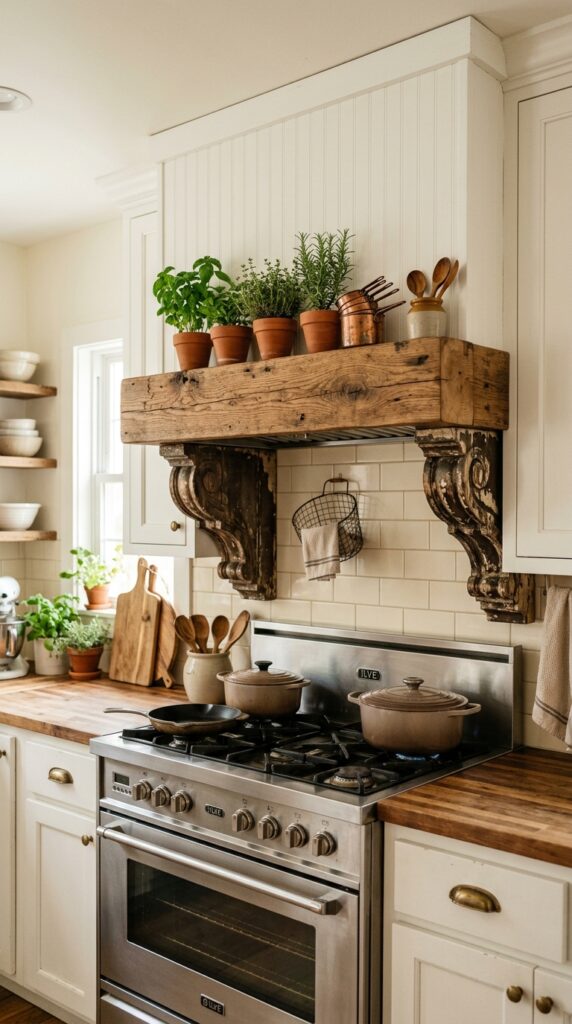
Adding a display shelf supported by architectural corbels completely changes the visual purpose of your vent hood. Instead of just a utility box hiding a fan, it becomes a functional, styled mantelpiece for your kitchen. This approach draws the eye to your curated decor rather than the appliance itself, blending hardworking ventilation with personalized charm.
Why We Love It:
- Dual Purpose: It provides bonus storage and display space for frequently used spices, oils, or artwork.
- Architectural Interest: Corbels add instant custom-cabinetry appeal without the custom price tag.
- Seasonal Styling: The shelf gives you a dedicated spot in the kitchen to switch out seasonal decor.
How to Get the Look:
Build a standard flat-front plywood enclosure. Before painting, attach two decorative wooden corbels (easily found online or at architectural salvage yards) to the bottom left and right of the front face. Measure and cut a piece of stained wood to sit across the corbels, acting as a mantle. Secure everything with wood glue and brad nails, then paint the main box to match your cabinets while leaving the shelf stained for contrast.
2. The Curved Spanish Stucco Slant
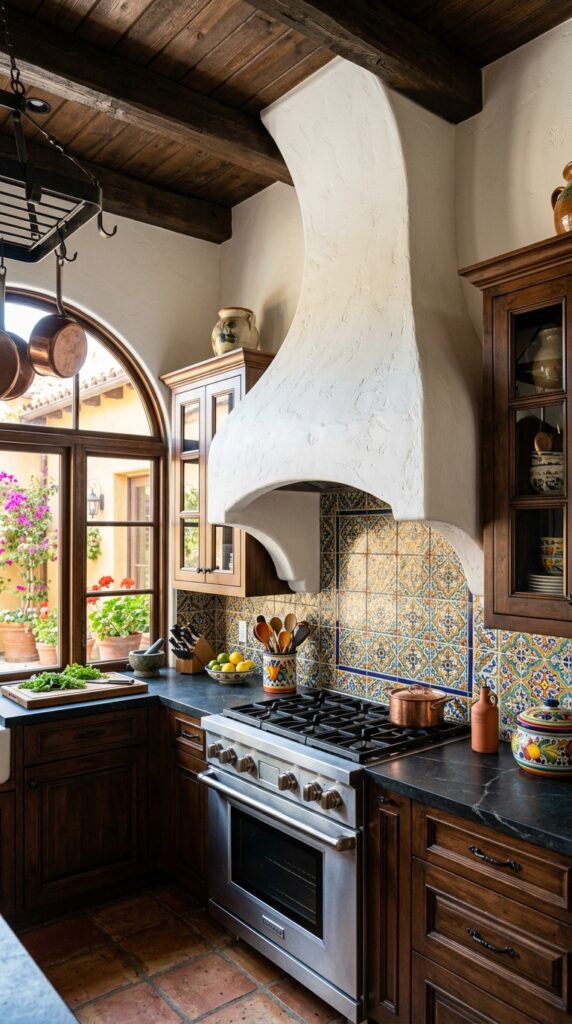
A sweeping, curved silhouette finished in stucco softens the hard angles typical of most kitchens. This design mimics the traditional hearths found in Mediterranean or Southwestern architecture, creating a sense of history and permanence. The subtle texture of the stucco adds depth without requiring complex woodworking on the exterior.
Why We Love It:
- Softens the Room: The curved, sloped lines break up the rigid vertical and horizontal lines of standard cabinetry.
- Old-World Charm: It brings an authentic, handcrafted feel to the space.
- Seamless Finish: Stucco hides imperfections in the framing much better than smooth paint or wood veneer.
How to Get the Look:
The framing is the most complex part of this build. You will need to cut curved side profiles out of plywood or MDF using a jigsaw, then attach horizontal supports between them. Wrap the curved face in a flexible material like bending plywood or even scored drywall. Apply a bonding agent, followed by a layer of ready-mixed stucco or heavily textured joint compound, using a trowel to create that signature sweeping texture.
3. The Reclaimed Pallet Wood Box
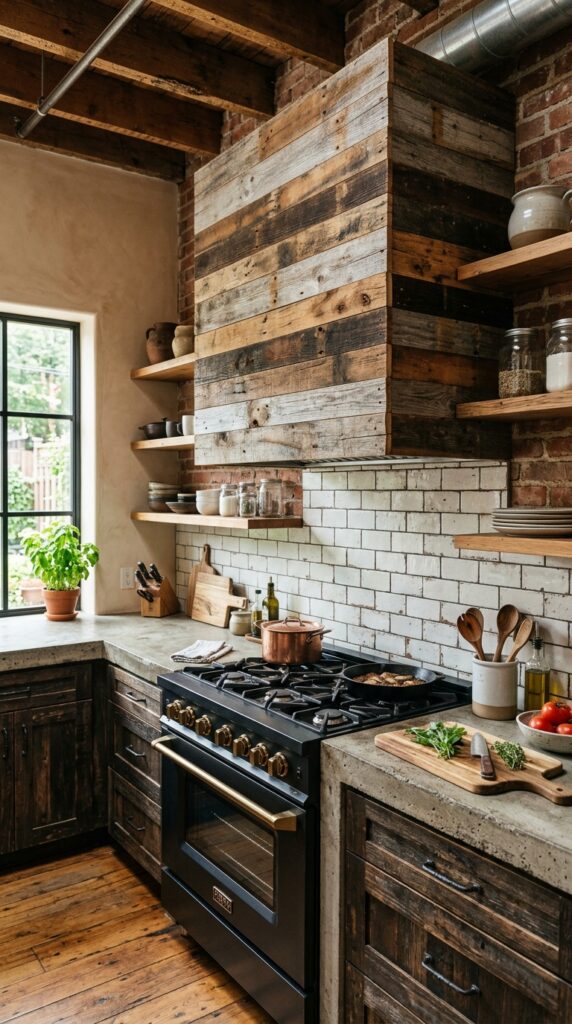
Using pallet wood is the ultimate upcycling project. This design injects raw, unapologetic texture and a heavily weathered aesthetic into the room. Because the wood is inherently imperfect, it’s an incredibly forgiving material to work with, making it a stress-free project for beginners who want a high-impact, rugged look.
Why We Love It:
- Eco-Friendly & Cheap: Pallets can often be found for free, making this one of the most budget-friendly options available.
- Unbeatable Texture: The varied tones and rough grain provide a deeply rustic, cabin-like feel.
- Forgiving Assembly: Gaps, uneven cuts, and mismatched boards only add to the charm, meaning your carpentry doesn’t need to be flawless.
How to Get the Look:
Source clean, safe pallets (look for the “HT” stamp indicating they are heat-treated, not chemically treated). Dismantle the pallets and pull the nails. Build a basic plywood frame around your vent insert, paint the frame black (so the wood underneath doesn’t show through any gaps), and simply nail your pallet boards horizontally across the frame. Seal it with a matte, water-based polyurethane to make it easy to dust.
4. The Sleek Black Stainless Wrap
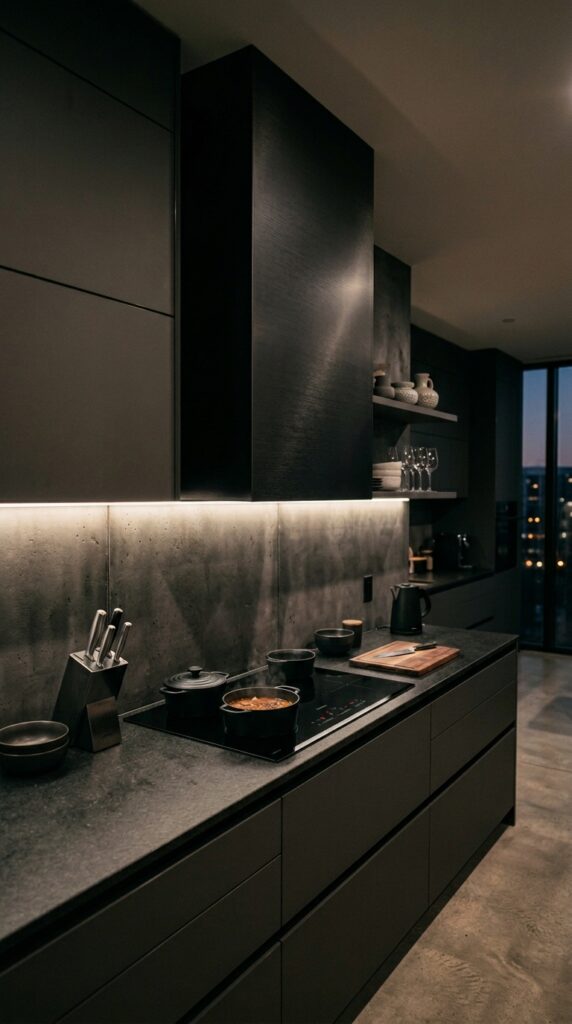
If you want a highly modern, sophisticated look without the expense of custom metal fabrication, wrapping your hood in a specialized metallic vinyl is a genius workaround. This creates a moody, industrial-chic focal point that perfectly mimics the look of high-end black stainless appliances, tying your cooking space together with a sleek, continuous finish.
Why We Love It:
- Appliance Matching: It allows you to perfectly coordinate an inexpensive vent insert with your premium black stainless appliances.
- Modern Edge: It provides a cool, contemporary aesthetic that wood or paint simply can’t achieve.
- Wipeable Surface: High-quality metallic vinyl is durable and incredibly easy to degrease and clean.
How to Get the Look:
Build a perfectly smooth enclosure using MDF, ensuring every screw hole is filled and sanded perfectly flat—any bump will show through the vinyl. Thoroughly clean the MDF to remove all sawdust. Purchase a roll of architectural-grade black stainless steel vinyl wrap (often used for cars or appliances) and carefully apply it using a squeegee and a heat gun to stretch it smoothly over the corners and edges.
5. The Antique Mirror Paneling
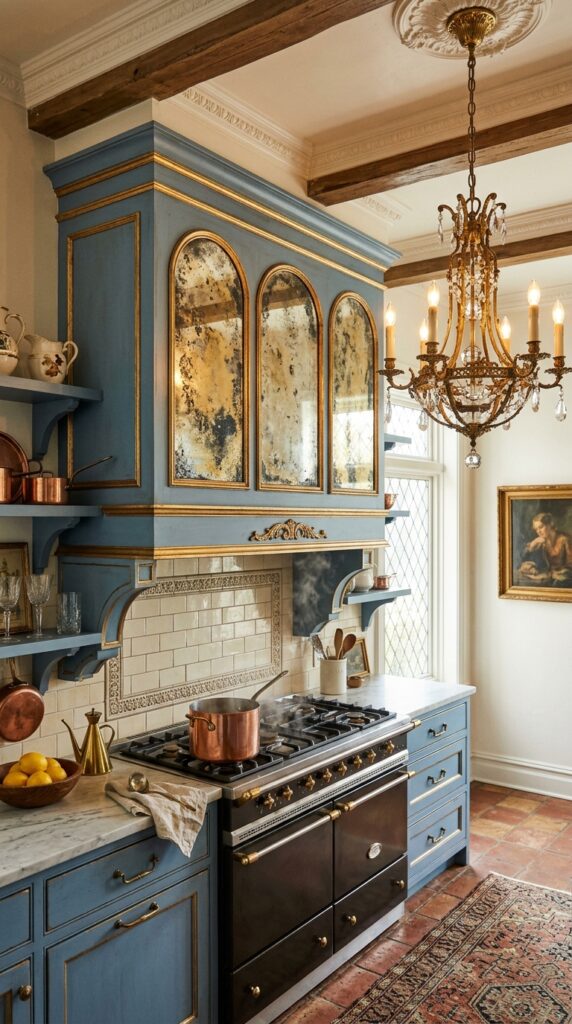
Incorporating antiqued mirrors into your vent hood cover adds an unexpected touch of glamour and history. The reflective surface bounces light around the room, making the kitchen feel larger and brighter, while the cloudy, distressed finish of the antique mirror prevents it from looking like a modern bathroom vanity, keeping the vibe elegant and slightly mysterious.
Why We Love It:
- Expands the Space: The reflection creates an illusion of depth, perfect for smaller or darker kitchens.
- Vintage Glamour: It introduces an element of Parisian or vintage Hollywood elegance.
- Breaks up Heavy Wood: If you have a lot of dark cabinetry, the mirrored panels provide a much-needed visual break.
How to Get the Look:
Build a wooden hood cover with recessed shaker-style panels on the front face. Instead of leaving the recessed panels as plain wood, order custom-cut pieces of antiqued mirror glass from a local glazier (or buy standard mirrors and antique them yourself using muriatic acid and bleach spray). Secure the mirrors into the recesses using mirror mastic adhesive, and frame them out with delicate wood trim.
6. The Painted Geometric Stencil
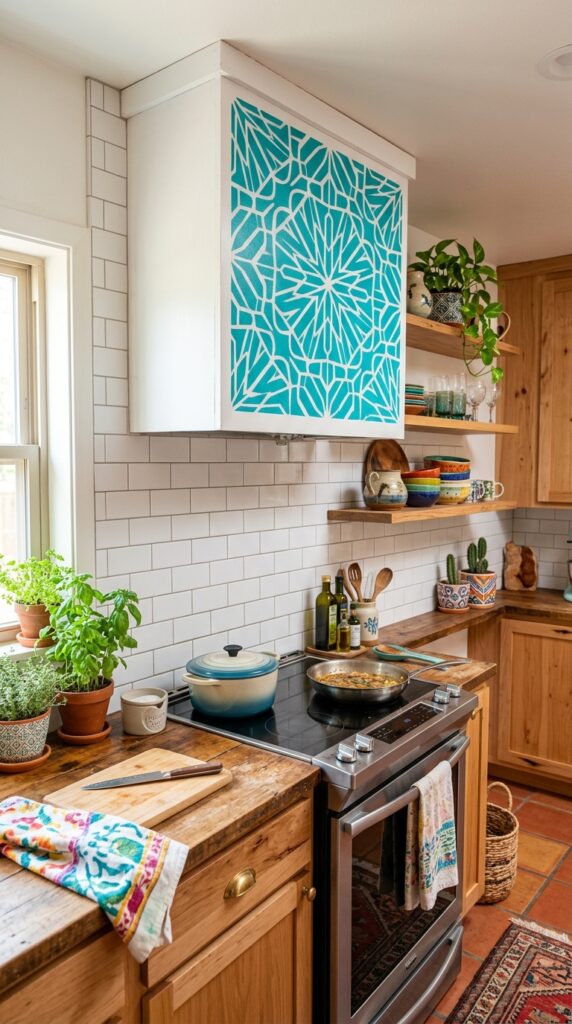
A painted stencil transforms a plain, budget-friendly plywood box into a custom piece of art. This approach gives you total control over the pattern and color palette, allowing you to inject a massive dose of personality, whether you prefer subtle tone-on-tone Moroccan motifs or loud, contrasting bohemian geometries.
Why We Love It:
- Endlessly Customizable: You can choose any color and any pattern to perfectly match your kitchen’s vibe.
- Budget-Friendly Art: It requires nothing more than a can of paint, a stencil, and a sponge brush.
- Easily Updated: If your tastes change, you can simply sand it down, prime it, and paint a new design.
How to Get the Look:
Construct a smooth MDF or plywood box frame and paint it your desired base color. Once fully cured, tape your chosen geometric wall stencil to the front face. Use a dense foam roller or a stippling brush with very little paint (to prevent bleeding under the stencil) and apply your contrasting color. Seal the entire hood with a clear, wipeable polycrylic topcoat to protect your design from cooking grease.
7. The Woven Rattan Panel Insert
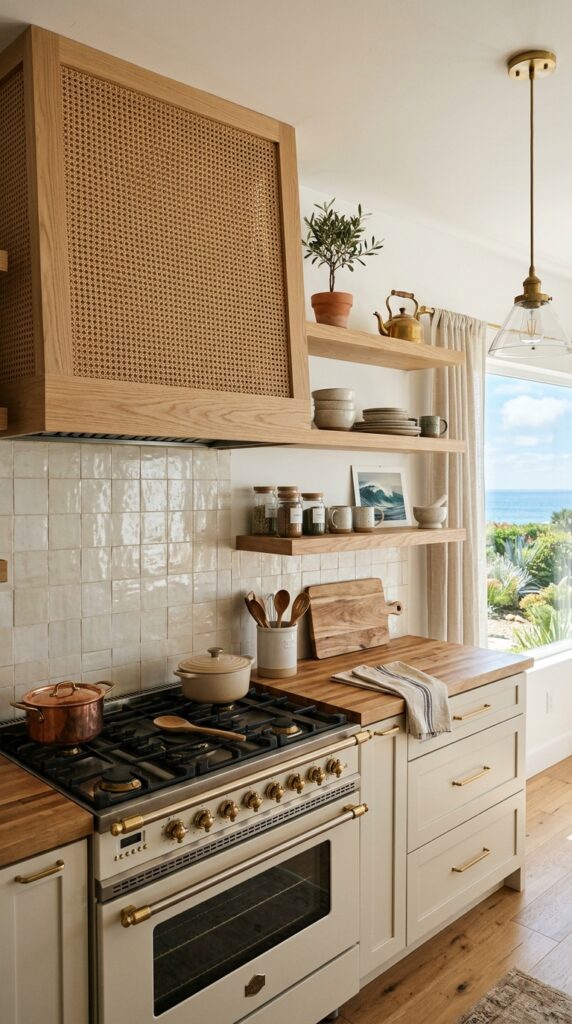
Integrating woven rattan or cane webbing into your hood design brings a light, breezy, and textural element to the kitchen. This material nods to both mid-century modern design and relaxed coastal aesthetics. The porous nature of the cane also creates a visually lighter structure compared to a solid block of wood or metal.
Why We Love It:
- Organic Texture: It introduces a soft, natural woven element that warms up cold tile and stone surfaces.
- Visually Lightweight: The cane webbing keeps the hood from feeling too heavy or imposing.
- On-Trend: Cane and rattan are incredibly popular right now, making the kitchen feel current and styled.
How to Get the Look:
Build a wooden frame with a large, open rectangular cutout on the front face (similar to a picture frame). Purchase a roll of cane webbing, soak it in warm water for about 30 minutes to make it pliable, and use a staple gun to pull it taut and secure it to the inside back of the face frame. As it dries, the cane will shrink and pull drum-tight. Attach the face frame to your main hood structure.
8. The Classic Shaker Silhouette
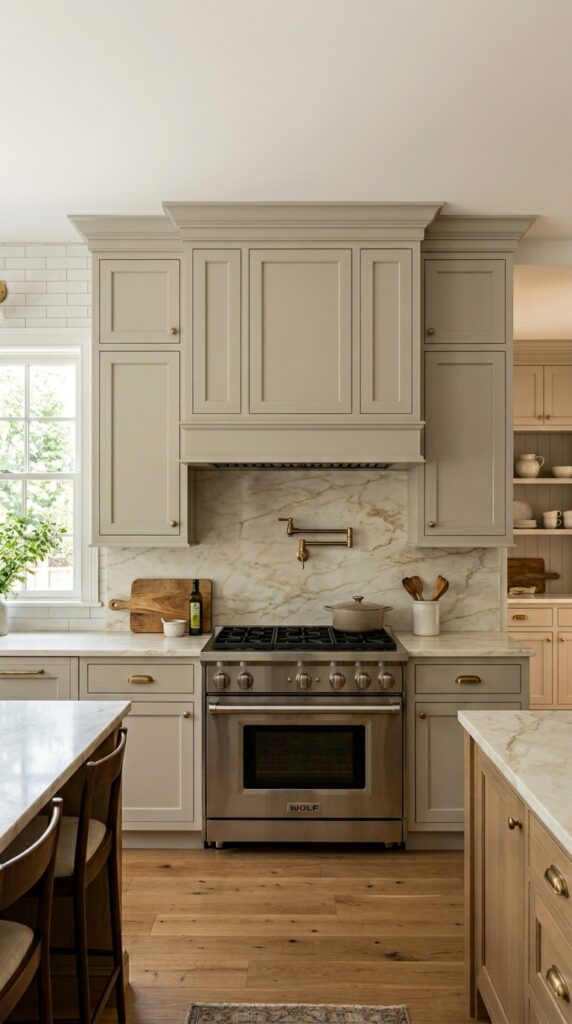
Sometimes, the best design is the one that blends in seamlessly. The classic Shaker silhouette uses recessed flat panels surrounded by a simple frame, mirroring the most popular style of kitchen cabinetry. By matching your hood to your doors, you create a cohesive, built-in look that feels incredibly high-end and intentional.
Why We Love It:
- Perfect Cohesion: It makes the ventilation system look like a natural extension of your cabinetry.
- Timeless Design: Shaker style is virtually immune to changing trends.
- Clean and Tailored: The simple lines provide architectural interest without visual clutter.
How to Get the Look:
Build the base box using sturdy plywood. To create the Shaker look, you will cut strips of 1/4-inch or 1/2-inch thick MDF or smooth wood (usually 2 to 3 inches wide) to act as the “stiles” (vertical pieces) and “rails” (horizontal pieces). Glue and brad-nail these strips directly onto the flat face and sides of your box to create the recessed panel effect. Fill the seams, caulk the inner edges, and paint to match your cabinets.