Taking on a DIY project in the kitchen can feel intimidating, especially when it involves something as prominent as the vent hood. But upgrading your ventilation cover doesn’t have to mean days of complex carpentry, expensive tools, or professional-level skills.
If you want a massive visual upgrade with minimal stress, these 7 easy DIY vent hood cover ideas are perfect for beginners. They focus on simple cuts, accessible materials, and clever shortcuts to give you a custom look without the headache.
1. The Pre-Fab Cabinet Door Cover
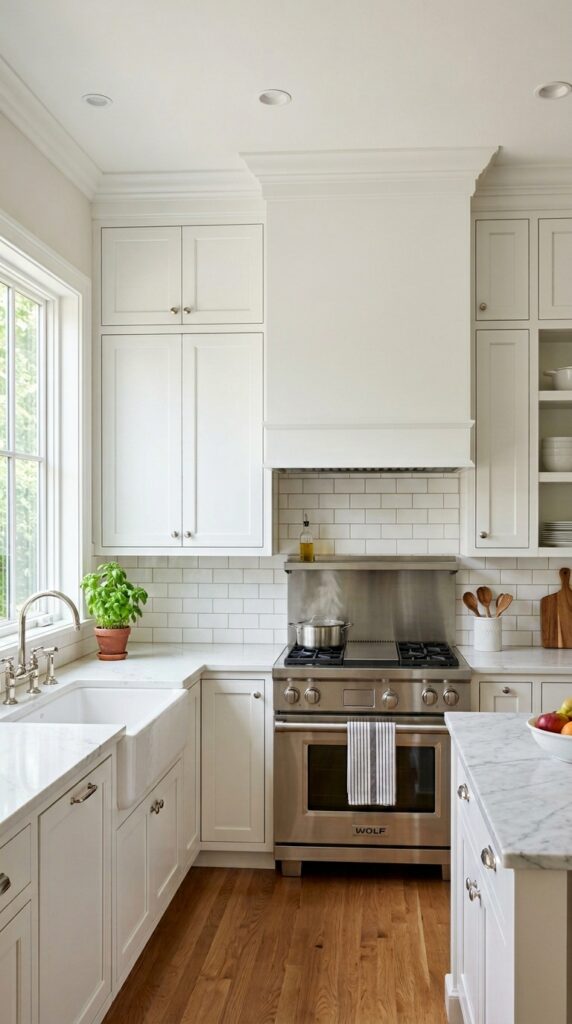
Repurposing standard cabinet doors is the ultimate “work smarter, not harder” hack. By using pre-made doors from your local hardware store (or matching ones ordered directly from your cabinet manufacturer), you completely bypass the need to build intricate frames or route custom panels from scratch. It guarantees a flawless, professional finish with a fraction of the effort.
Why We Love It:
- Perfect Match: Ordering doors from your cabinet supplier ensures the paint color and style match your kitchen flawlessly.
- Saves Hours of Carpentry: The most detailed part of the build (the door panels) is already done for you.
- Built-In Aesthetic: It makes the vent hood look like a natural, intentional extension of your upper cabinets.
How to Get the Look:
Measure the clearance needed for your vent insert and build a very basic, bare-bones skeleton frame out of 2×2 or 2×4 lumber. Instead of cutting sheet wood to cover the frame, simply secure the pre-fabricated cabinet doors to the front and sides using wood glue and finishing nails. Fill any tiny gaps at the seams with paintable caulk or matching wood filler.
2. The Simple Peel-and-Stick Tile Wrap
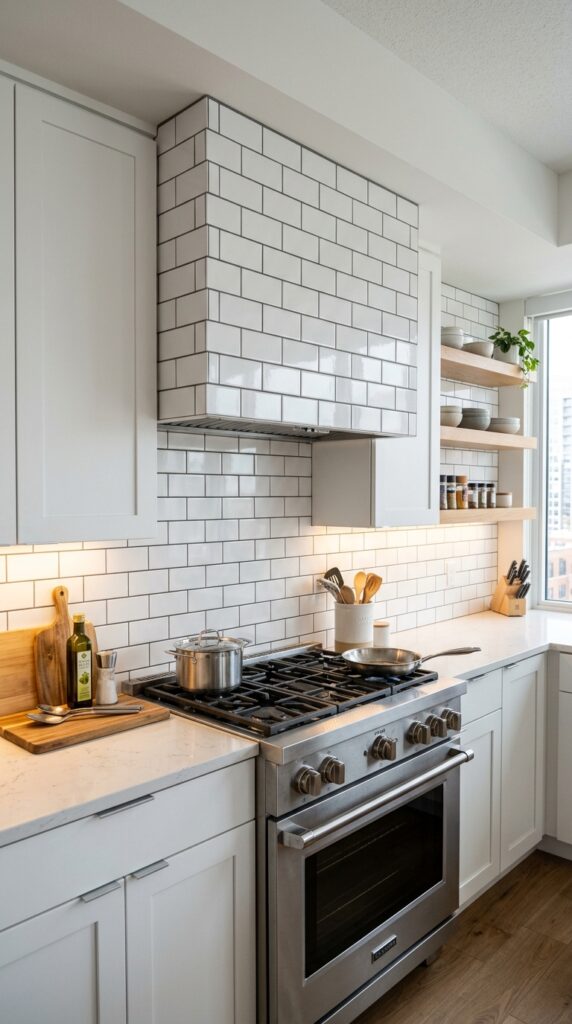
If you want the high-end look of a tiled hood without dealing with messy mortar, tricky grout lines, or renting a wet saw, peel-and-stick tiles are your best friend. This project requires zero power tools and can completely transform a boring, flat hood in a single afternoon. It is the perfect weekend project for a quick kitchen refresh.
Why We Love It:
- No Power Tools Required: All you need is a utility knife, a straight edge, and a measuring tape.
- Highly Affordable: Peel-and-stick tile is incredibly budget-friendly compared to real ceramic or glass.
- Mess-Free: You skip the dust of cutting tile and the mess of mixing adhesives.
How to Get the Look:
This technique requires a smooth, flat surface. If you already have a plain MDF or wood hood cover, you’re ready to go. If not, build a very basic, lightweight plywood box to slip over your vent insert. Prime the wood so the adhesive has a good surface to grip. Peel the backing off your tiles, stick them directly onto the smooth wood, and use a utility knife to trim the edges perfectly flush.
3. The Easy Faux Shiplap Shell
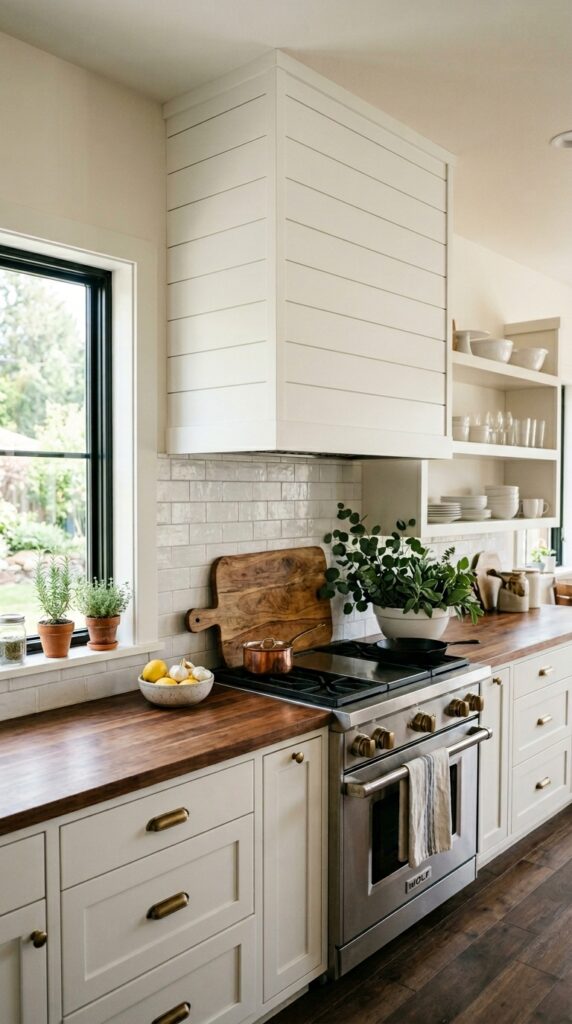
Real solid-wood shiplap can be heavy, expensive, and sometimes tricky to work with. Creating a “faux” shiplap look, however, is incredibly easy, lightweight, and cheap. By using thin plywood underlayment cut into strips, you achieve that coveted, highly textured farmhouse look for a fraction of the cost and effort.
Why We Love It:
- Extremely Budget-Friendly: A single sheet of thin plywood costs very little and yields enough strips for a whole hood.
- Lightweight: Thin wood strips are easy to handle and won’t add unnecessary weight to your wall.
- Forgiving: The charm of shiplap is in its rustic nature, so your cuts don’t have to be microscopic in their precision.
How to Get the Look:
Purchase a sheet of 1/4-inch plywood underlayment. (Pro-tip: Most big-box hardware stores will rip the wood into 6-inch wide strips for you right in the store!). Build a lightweight frame over your vent. Nail the strips horizontally to the frame, using a nickel or a spacer to create the signature horizontal “gap” between the boards. Finish the corners with simple outside-corner trim to hide the rough edges, then paint.
4. The Straight Plywood Modern Box
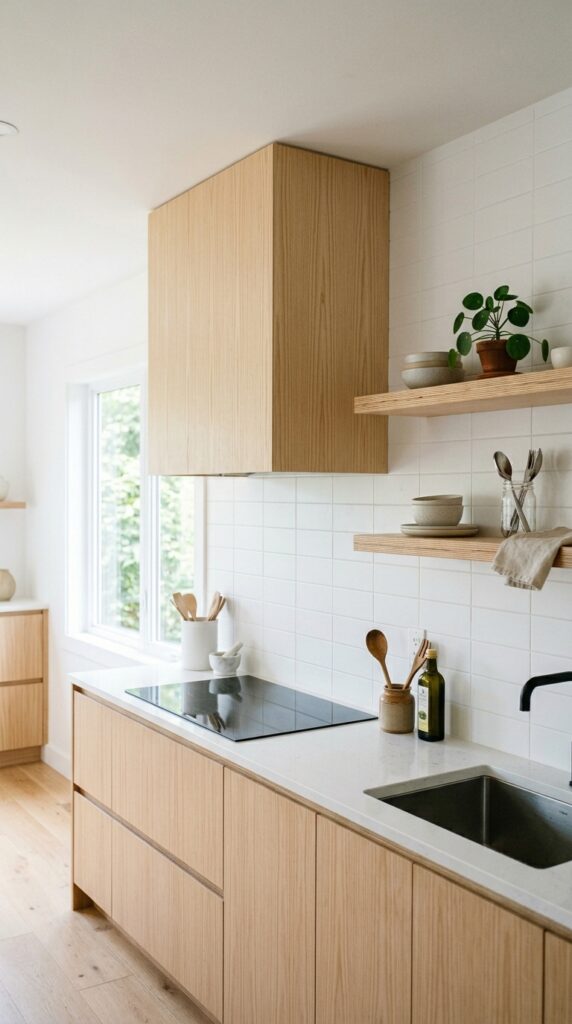
Sometimes, the easiest solution is also the most stylish. A simple, straight-sided box made of high-quality plywood offers a clean, minimalist aesthetic that looks intentional and chic. Because there are no complicated angles, tapers, or intricate moldings, it is one of the most straightforward builds a beginner can tackle.
Why We Love It:
- Only Straight Cuts: No complicated math or difficult mitered angles are required.
- Highly Modern Aesthetic: It provides a sleek, uncluttered look that is very popular in contemporary design.
- Celebrates Natural Materials: Leaving the wood unpainted brings gorgeous, natural warmth into the kitchen.
How to Get the Look:
Measure your vent insert and build a simple, three-sided rectangular box out of 1/2-inch or 3/4-inch cabinet-grade plywood (like birch or white oak). To make it look like a solid block of wood rather than plywood, use iron-on edge banding to cover the exposed, layered plywood edges. Secure the box to the wall studs over your vent, and seal it with a clear, water-based polyurethane to protect it from grease.
5. The Chunky Wood Bottom Trim
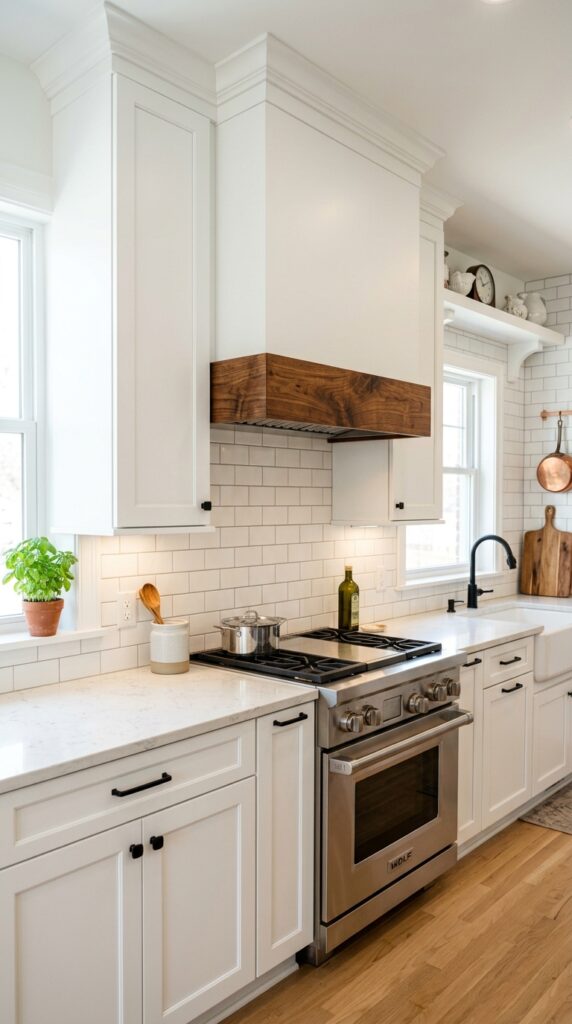
If building an entire floor-to-ceiling enclosure feels too daunting, try focusing just on the base. Adding a chunky, stained wood trim to the bottom edge of a basic, flat-painted cover instantly grounds the design. It is a brilliant shortcut that adds a touch of high-end, custom warmth without requiring you to build a massive structure.
Why We Love It:
- Low Material Cost: You only need a single, nice piece of hardwood to complete the look.
- Instant Upgrade: It turns a plain, boring box into a thoughtful, customized design feature.
- Balanced Warmth: It adds just the right amount of natural wood texture without darkening the whole kitchen.
How to Get the Look:
If you already have a basic box cover, purchase a nice piece of 1×4 or 1×6 hardwood trim (like oak, maple, or walnut). Miter the corners (cut them at 45-degree angles) so the wood wraps cleanly around the bottom perimeter of the hood cover. Stain and seal the wood off-site, let it dry completely, and then attach it to the bottom of the hood using wood glue and brad nails.
6. The Removable Wallpaper Makeover
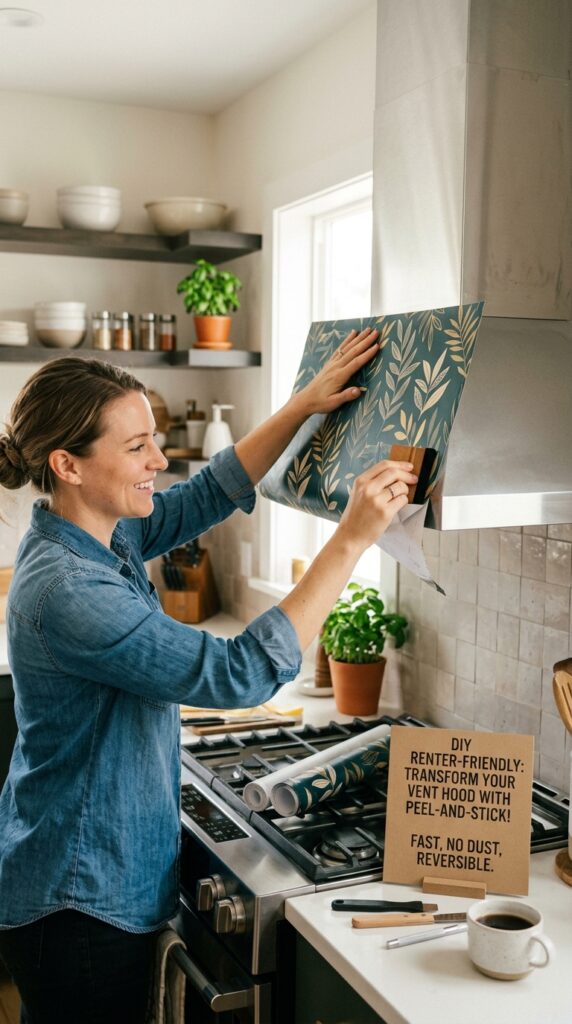
Peel-and-stick wallpaper isn’t just for accent walls and drawer liners. Wrapping a plain, flat vent hood cover in a heavy-duty vinyl wallpaper is a brilliant, tool-free way to inject massive personality into your kitchen. It is incredibly fast, creates zero dust, and is completely reversible, making it the ultimate project for renters or serial decorators.
Why We Love It:
- Zero Sawdust: You don’t need to cut a single piece of wood to change the exterior aesthetic.
- Endless Pattern Options: You can introduce complex florals or bold geometries that would be impossible to paint by hand.
- Completely Reversible: When you get tired of the pattern, simply peel it off and start fresh.
How to Get the Look:
This works best on a completely smooth, flat-panel hood cover made of painted MDF or finished wood. Thoroughly degrease and clean the surface to ensure the wallpaper adhesive will stick. Apply a high-quality, heat-and-moisture-resistant peel-and-stick vinyl wallpaper slowly, using a plastic smoothing tool to push out any air bubbles. Use a sharp utility knife to trim the edges perfectly flush.
7. The Simple Slat-Wood Front
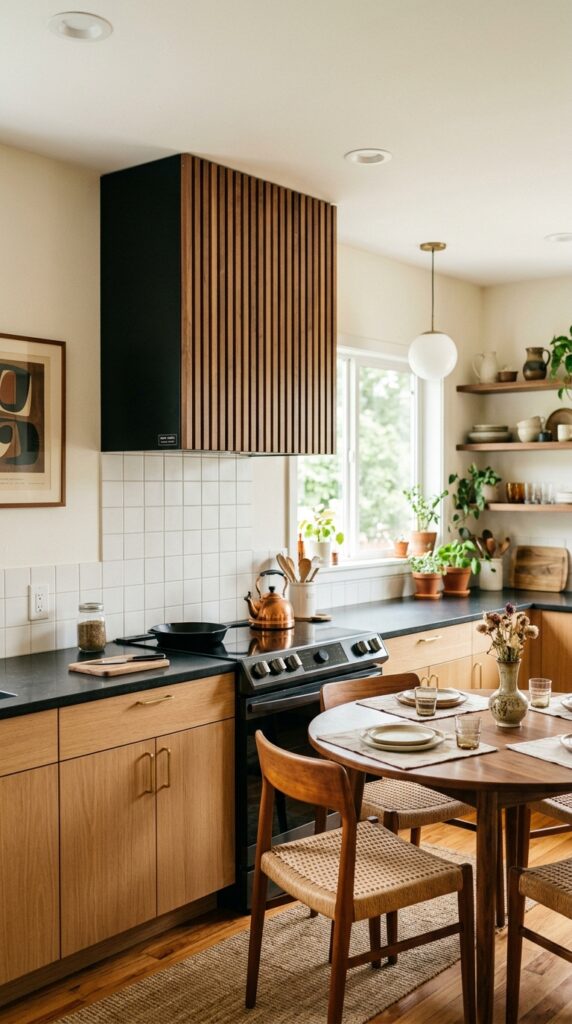
Slat wood accent walls are incredibly popular, and scaling this trend down for a vent hood cover is surprisingly easy. By applying pre-cut, thin wood strips to a dark background, you create high-end architectural texture with minimal carpentry skills. It looks incredibly complex but is actually just an exercise in repetitive, straight nailing.
Why We Love It:
- High-End Modern Look: The rhythmic vertical lines look expensive and architecturally designed.
- Hides Imperfections: Because the eye is drawn to the slats, the backing box doesn’t have to be built flawlessly.
- Utilizes Inexpensive Trim: You can use cheap pine stop molding or lattice strips to keep costs very low.
How to Get the Look:
Build a basic, flat plywood box. Paint the entire outside of the box a dark color, like matte black or deep charcoal, to create “shadows” between the slats. Purchase pre-cut lattice molding or thin pine trim. Cut all your slats to the exact same length, stain them, and use a brad nailer to attach them vertically to the front of your box. Use a spare piece of wood as a spacer between each slat to guarantee your gaps remain perfectly even.