Let’s be real — most of us don’t have a spare room just sitting around waiting to be transformed into a full-blown home office. For many, “office space” means a corner of the living room, a nook under the stairs, or that awkward spot beside the window that’s almost big enough for a desk.
But that doesn’t mean you can’t create something beautiful, efficient, and inspiring. In fact, small home offices often end up feeling cozier and more personalized than large, empty ones. The trick lies in smart design, thoughtful storage, and a bit of creativity.
Here are 11 small home office ideas that prove size doesn’t matter — it’s how you use it.
1. Turn a Corner Into a Workspace
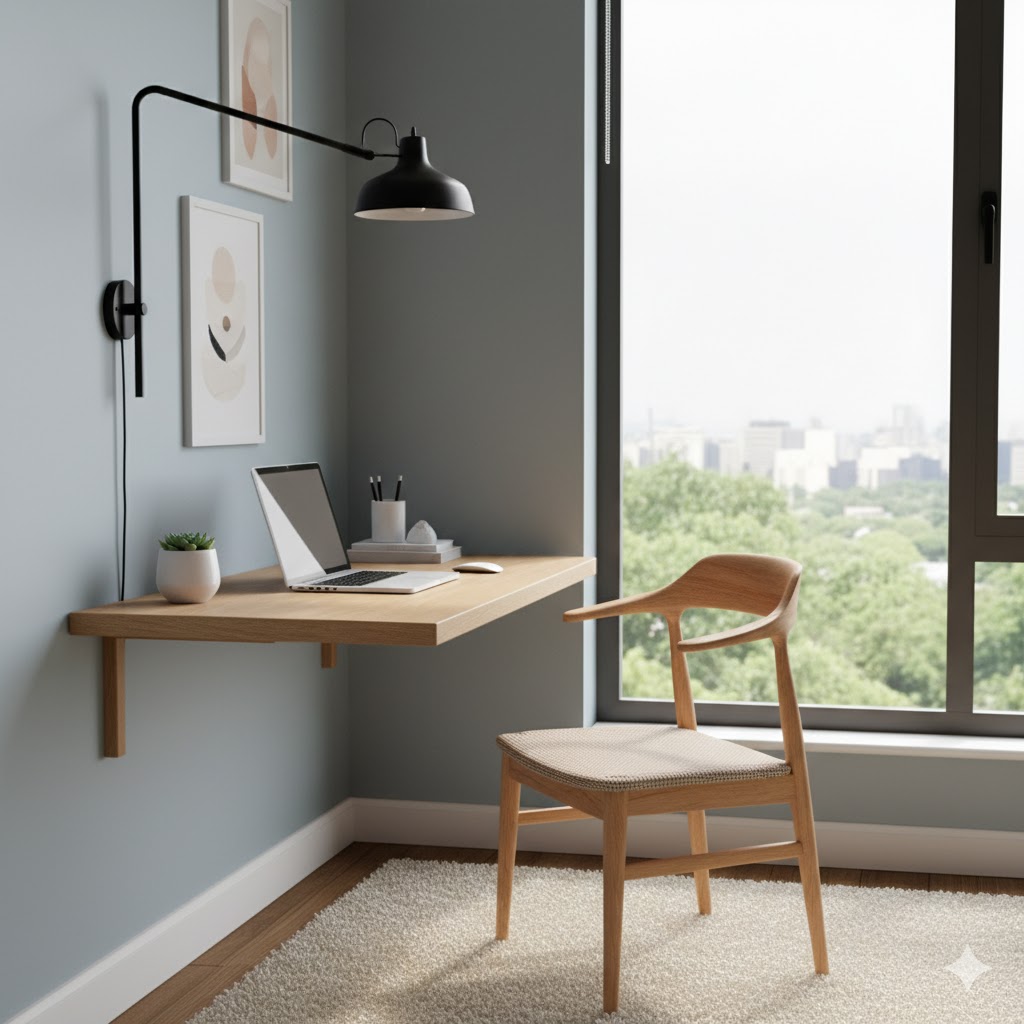
If you’ve got an unused corner, you’ve got an office. A corner desk or an L-shaped surface can instantly carve out a workspace that feels separate yet integrated with the rest of the room.
Keep it light — think pale wood or white finishes to avoid feeling boxed in. A wall-mounted lamp instead of a bulky desk lamp frees up space, and floating shelves above can hold your books or plants.
Corners have a way of feeling intimate, and when designed thoughtfully, they make surprisingly productive work zones.
2. Float Your Desk
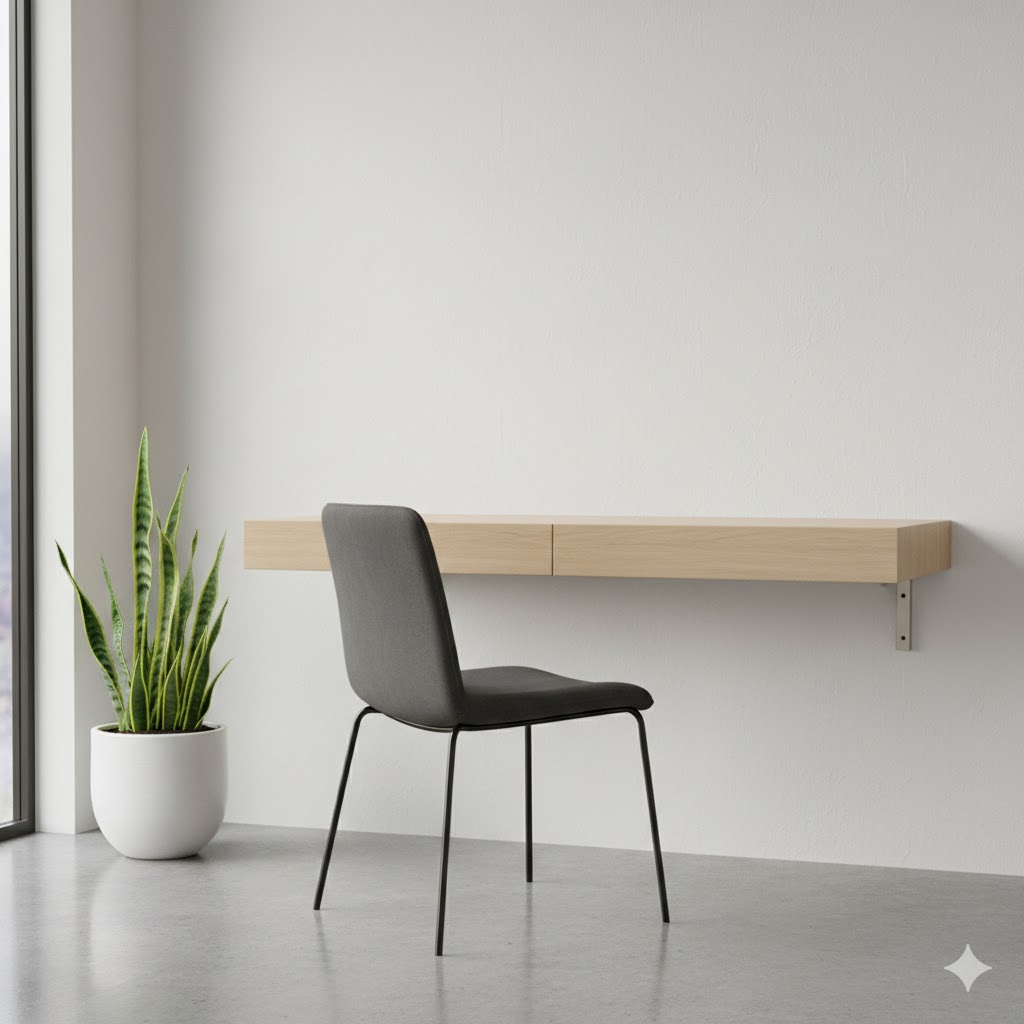
Floating desks are a small-space hero. They take up no floor space, look sleek, and give your office an airy, uncluttered vibe.
You can even install one in unexpected places — under a window, along a hallway, or behind a sofa. If you’re handy, you could DIY a custom floating slab of wood that fits your exact wall width.
Add a narrow drawer or a single shelf underneath to store essentials, and you’ve got yourself a modern, efficient workspace that barely interrupts the room.
3. Use Vertical Space Wisely
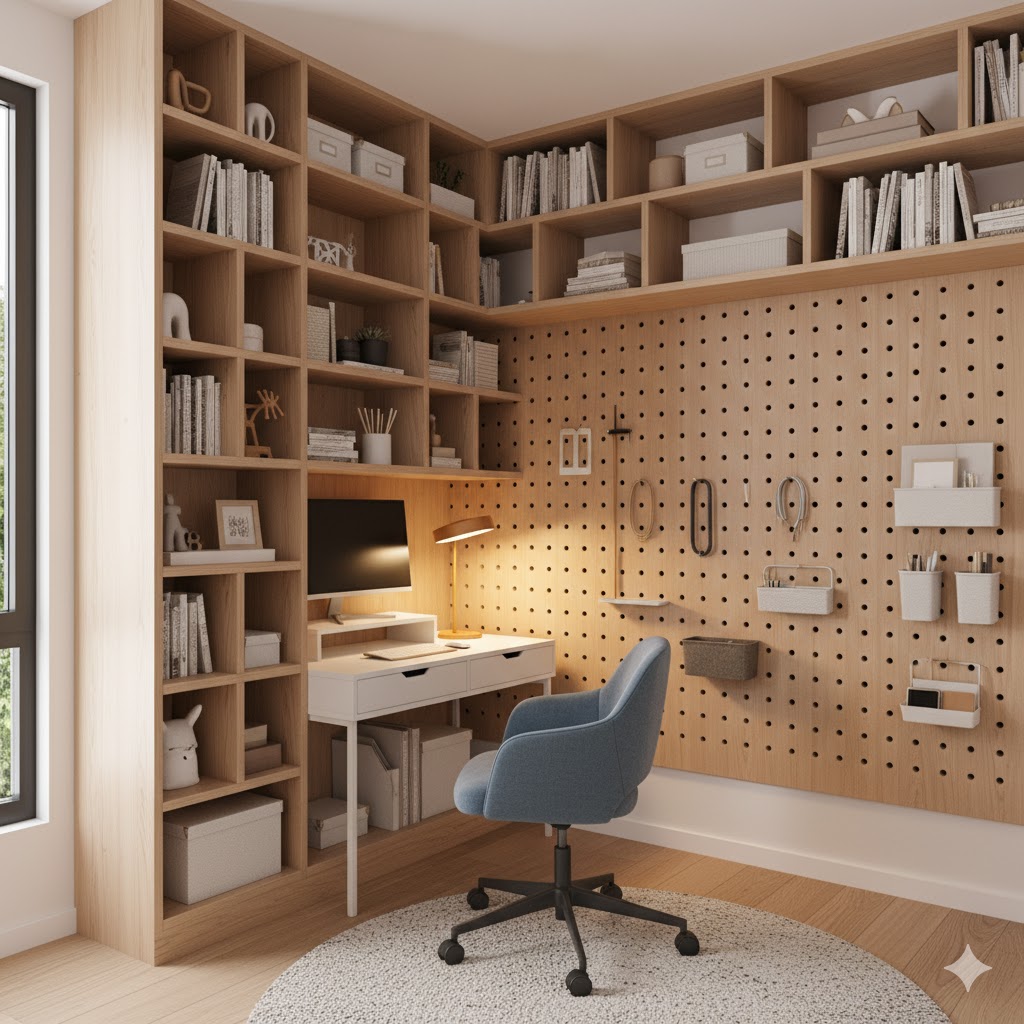
When floor space is limited, go up. Install floating shelves, use tall bookcases, or mount storage on the wall above your desk. Even a vertical pegboard system can hold supplies, tools, or decorative touches.
Keeping everything within reach but off your work surface gives the illusion of space and keeps you organized. Plus, vertical design draws the eye upward — making the entire area feel taller and more open.
Pro tip: keep the top shelf for decor, the middle for daily essentials, and the bottom for practical items you grab often.
4. Fold It Away When You’re Done
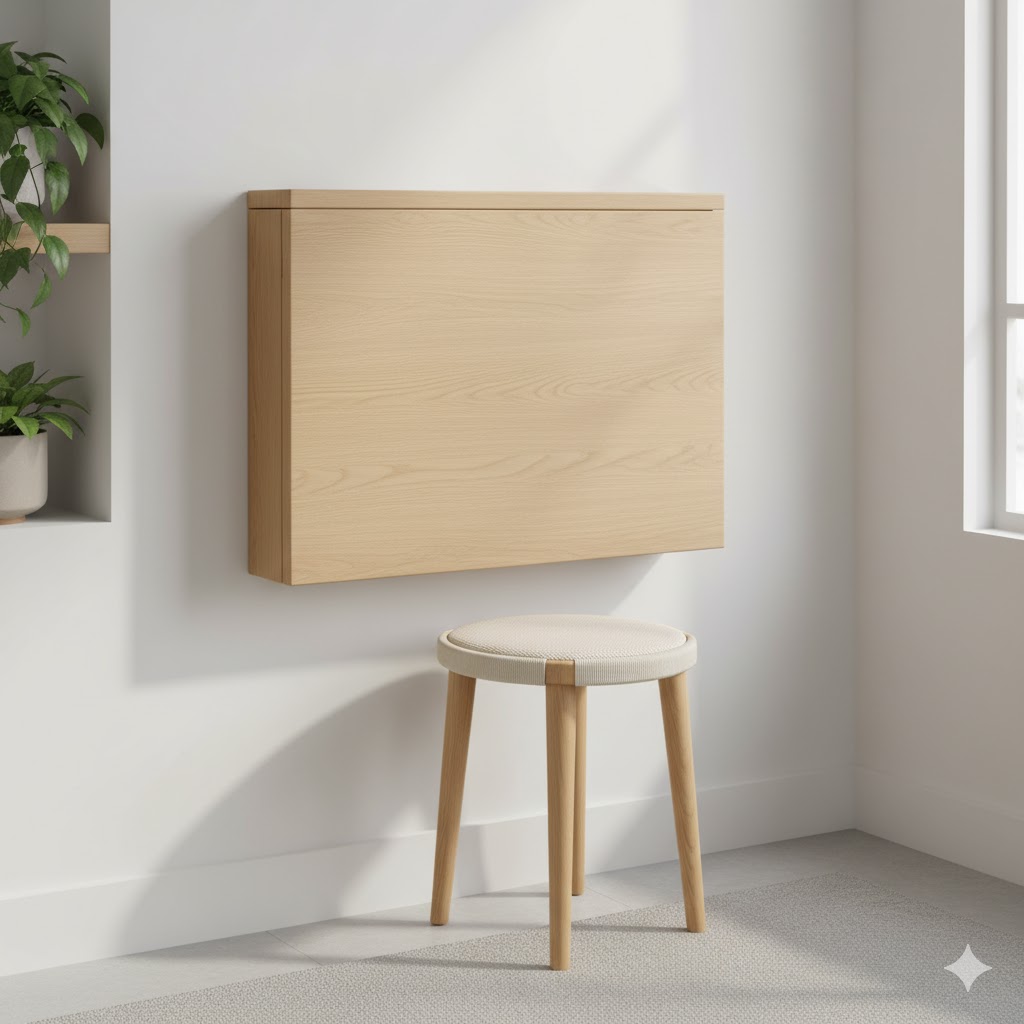
Not everyone wants their workspace to be visible 24/7 — especially in small apartments. A fold-down wall desk or Murphy-style workstation can completely disappear when you’re finished working.
Some designs even come with built-in shelving, so when folded up, it looks like a slim cabinet or part of your wall decor.
If you’re tight on space and crave that “out of sight, out of mind” effect, this is a dream solution. Just make sure to keep cords and devices tidy for quick fold-ups.
5. Tuck Your Office Into a Closet
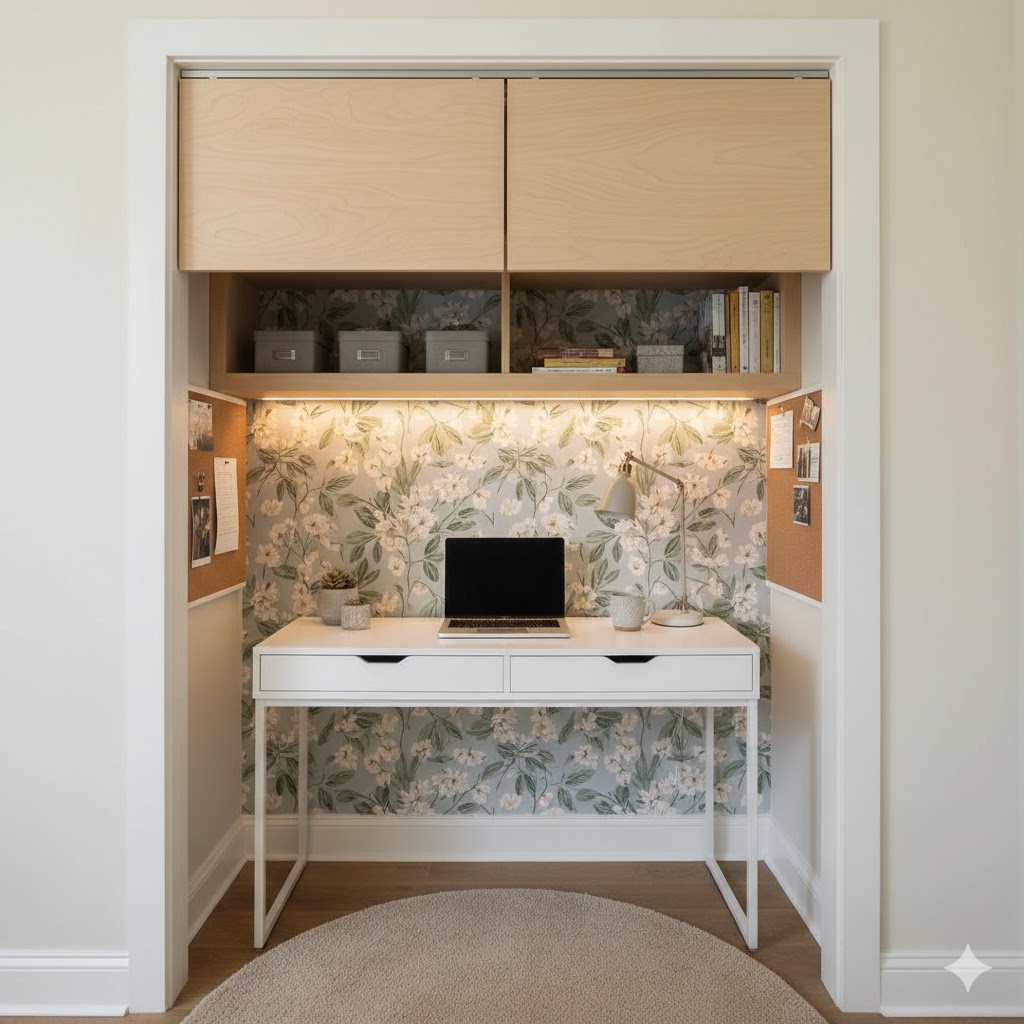
Closet offices — or “cloffices” — are the ultimate space-saving secret. Remove the doors, slide in a small desk or a custom countertop, and add floating shelves or lighting overhead.
To keep it stylish, consider painting or wallpapering the interior to define it as a separate zone. When the day’s done, you can even close the doors again if you’d rather not see your setup.
Cloffices work especially well for renters or shared spaces where visual simplicity matters.
6. Choose Furniture That Works Harder
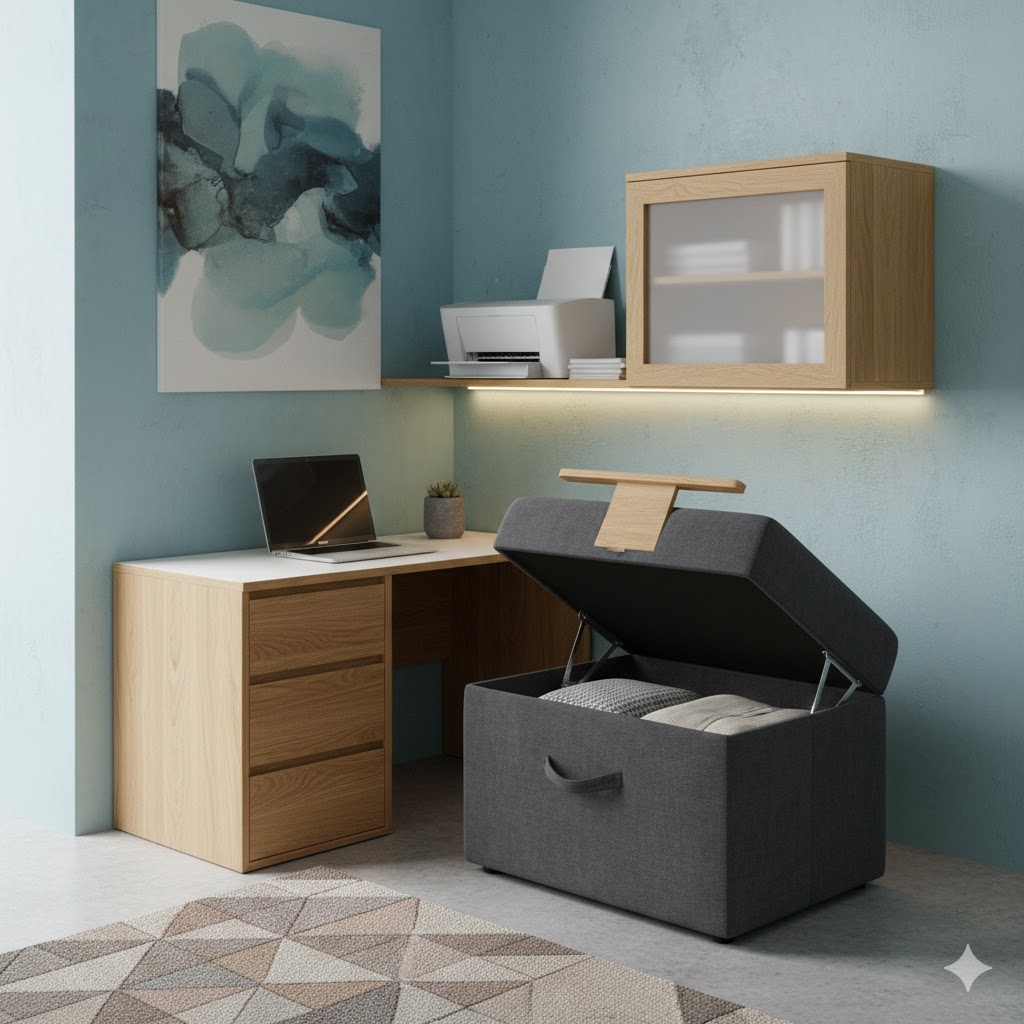
In a small home office, every piece of furniture should earn its place. Choose a desk with built-in drawers, an ottoman that stores cables, or a chair that tucks fully underneath when not in use.
You can even get creative — a narrow console table can double as a writing desk, or a wall-mounted dining shelf can transform into a laptop station.
Multifunctional design isn’t just practical — it’s elegant in its simplicity.
7. Keep Colors Light and Consistent
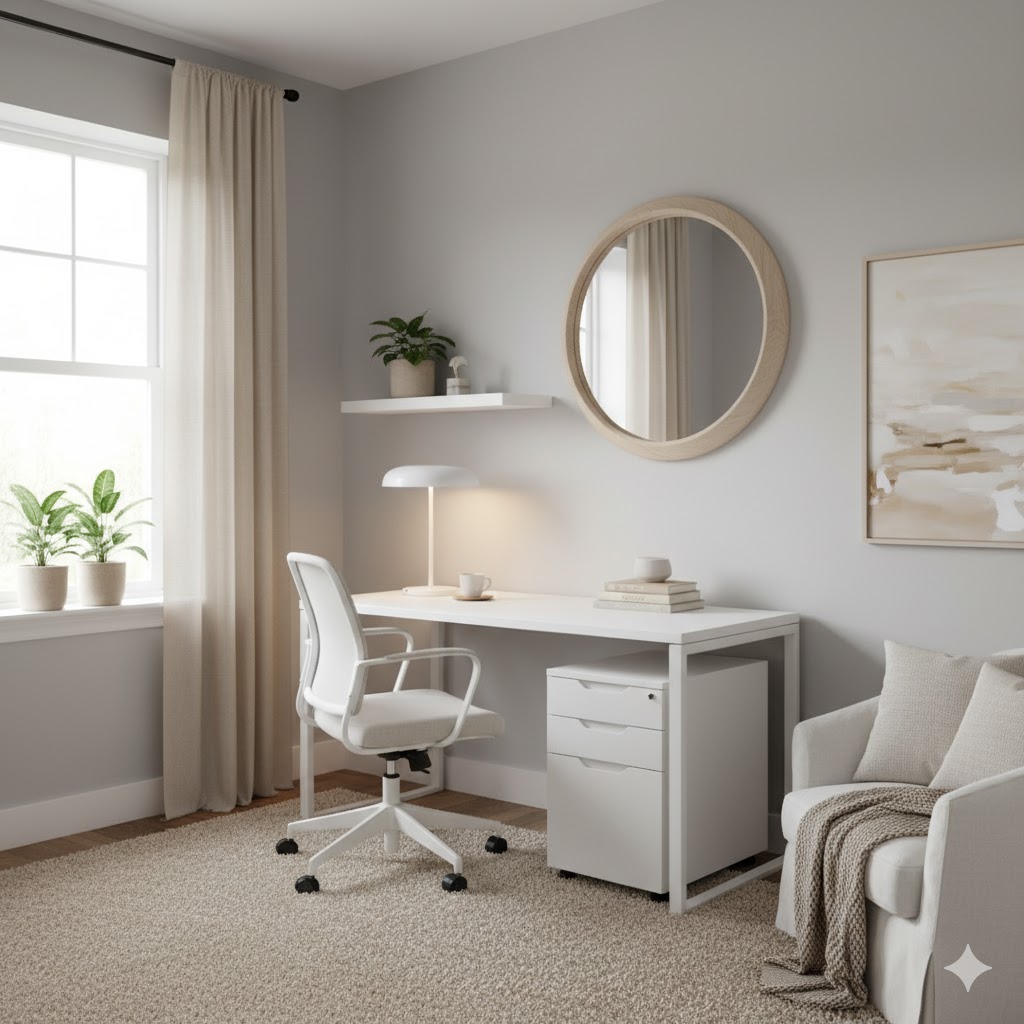
Light colors reflect light, making small rooms feel more spacious. Soft whites, gentle grays, beige, or muted pastels are all perfect for opening things up visually.
That said, don’t be afraid of warmth. You can mix textures — like rattan, linen, and natural wood — to keep things from feeling sterile.
Consistency is key: if your walls and furniture share a similar tone, the room feels seamless rather than chopped up into pieces.
8. Let the Light In
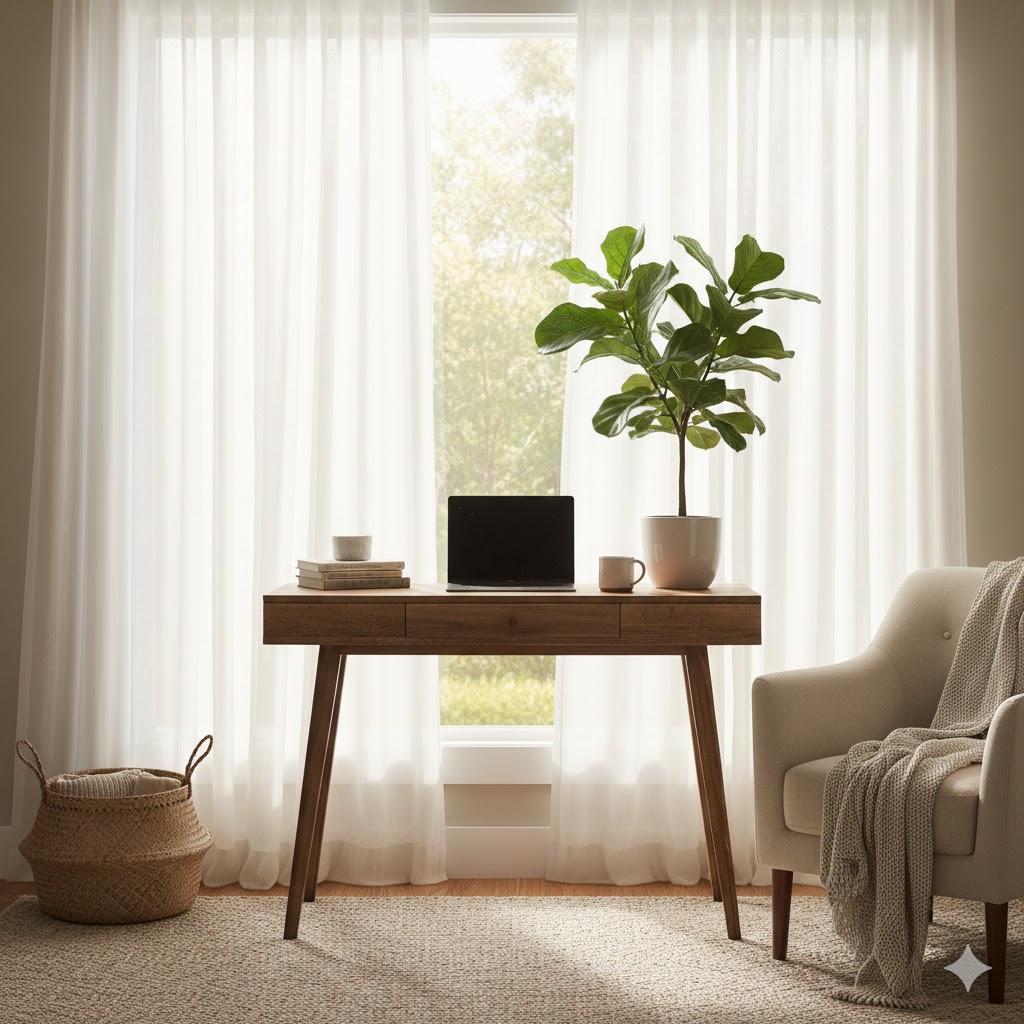
Natural light can make even the smallest workspace feel expansive. Position your desk near a window whenever possible, and use sheer curtains to diffuse the light.
If you’re short on windows, invest in warm LED lighting that mimics daylight — it helps maintain energy and mood throughout the day.
Bonus: mirrors placed opposite windows can double the brightness and make your small office sparkle with extra life.
9. Define the Space with Rugs or Partitions
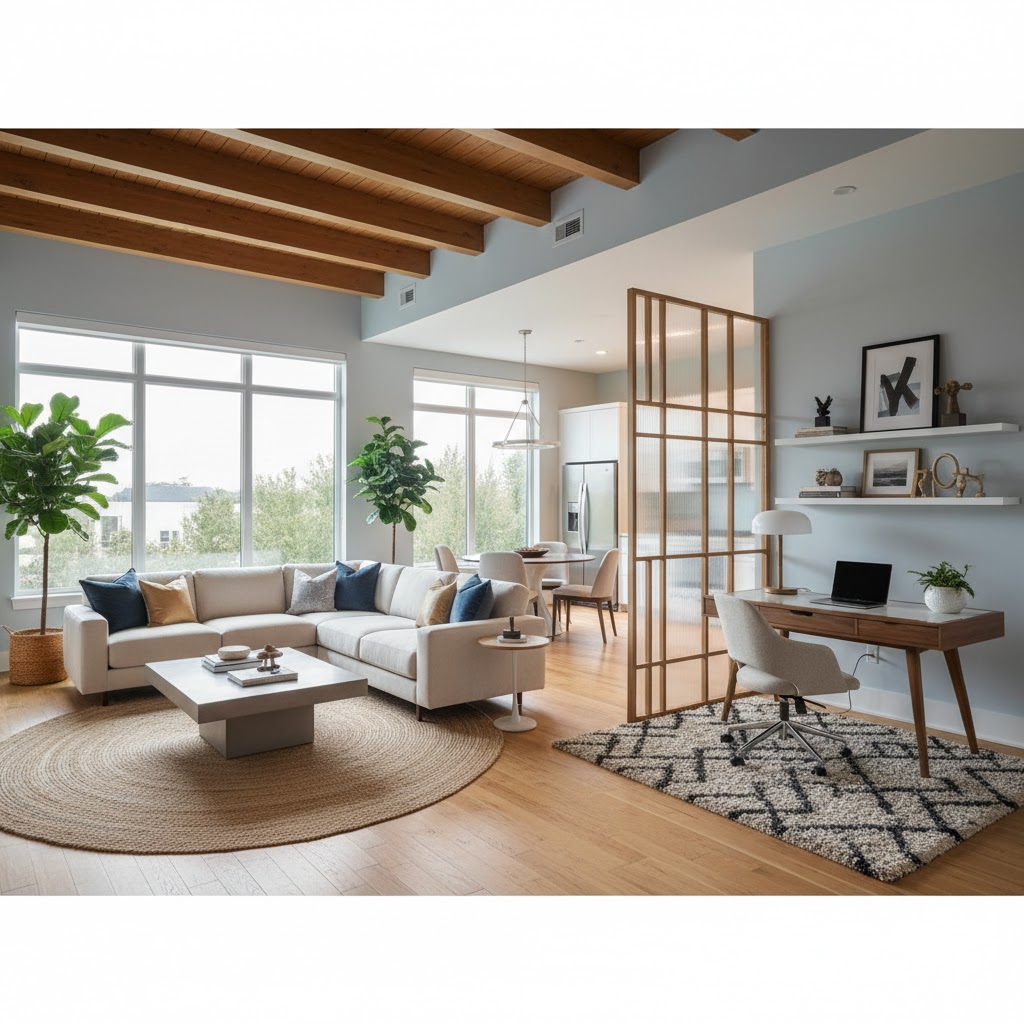
In a multi-purpose room, defining your workspace visually helps you “enter” and “exit” work mode without physically moving walls.
Use an area rug to frame your desk area or a lightweight screen to separate it from the rest of the space. This simple division creates a psychological boundary that’s surprisingly effective for focus.
Rugs also add warmth and a soft layer of sound absorption — perfect for Zoom calls in echo-prone spaces.
10. Keep It Clutter-Free
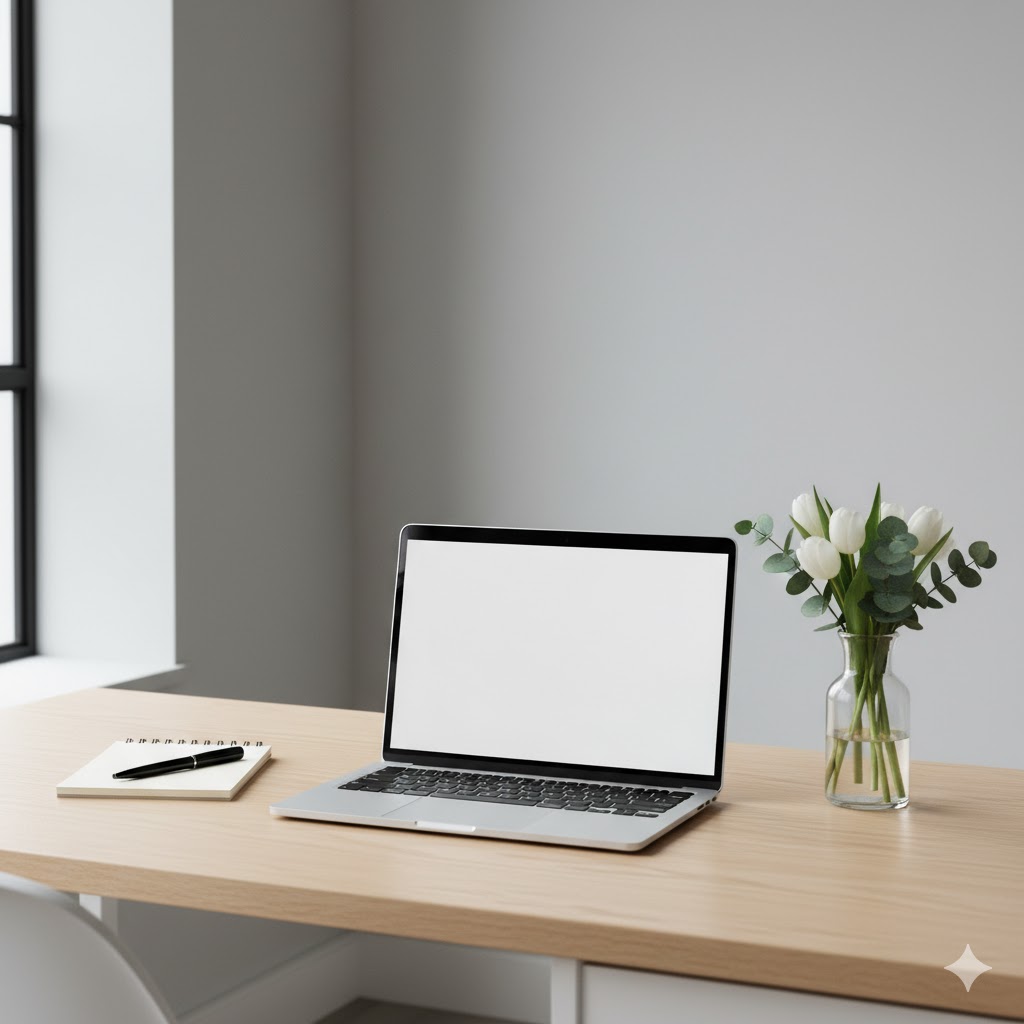
Clutter is the fastest way to make a small room feel suffocating. Keep only the essentials on your desk and store everything else in hidden compartments, baskets, or boxes.
Try ending each day with a quick “reset” — clearing surfaces, tucking away notebooks, and resetting your workspace for tomorrow.
A clean workspace feels bigger, calmer, and somehow — more professional. It’s amazing how much mental space clears up when your physical space does too.
11. Add a Personal, Cozy Touch
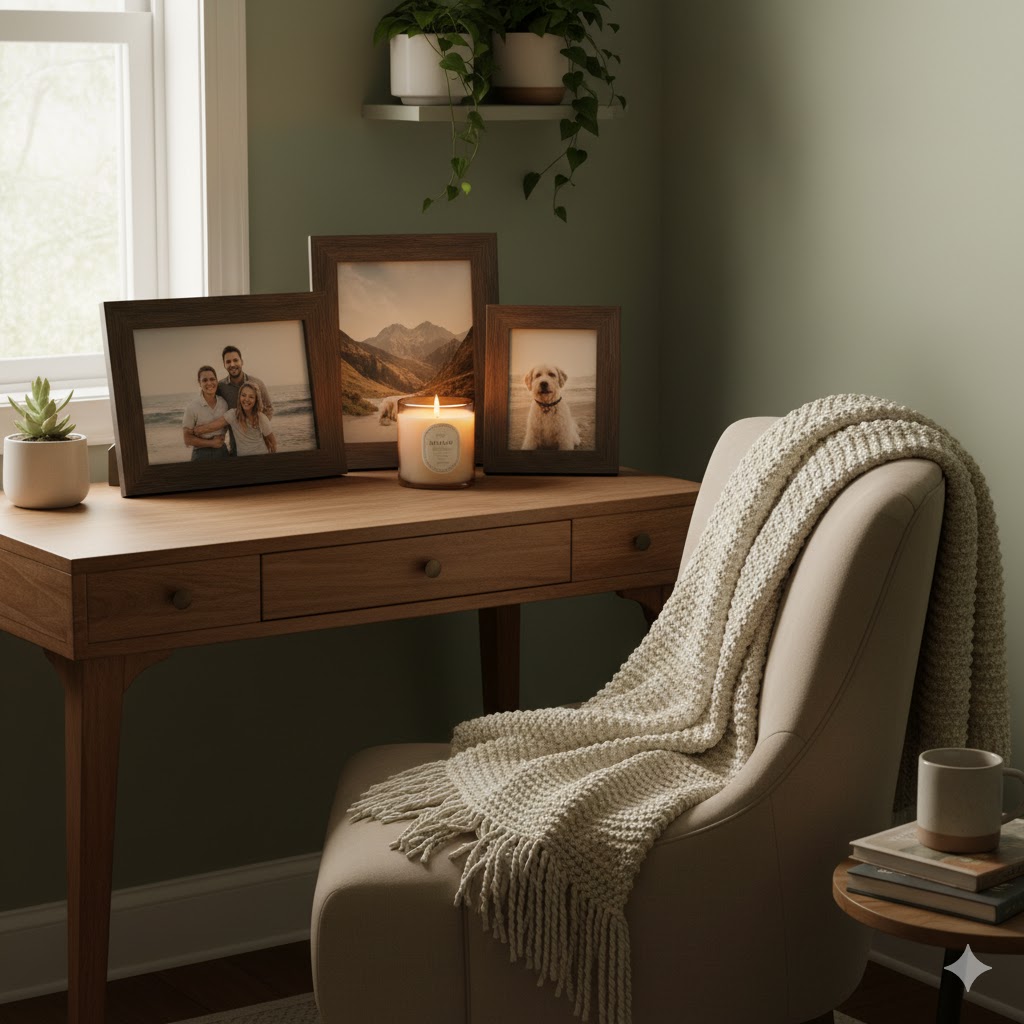
Just because your office is small doesn’t mean it can’t feel warm and inviting. A small plant, a scented candle, or a framed photo can make all the difference.
A textured throw draped over your chair, or even a small rug underfoot, adds comfort without taking up precious space.
Elegance doesn’t have to be large-scale — it’s found in the details. A touch of softness turns your workspace into a spot you’ll actually enjoy spending time in.
Conclusion
Small doesn’t mean cramped — it means intentional. Every inch in a small home office counts, and when used smartly, it can feel both efficient and beautiful.
Start simple: clear a corner, hang a shelf, find a small but stylish desk, and let your creativity do the rest. With good lighting, vertical storage, and a calming color palette, your tiny nook can rival even the biggest, most expensive setups.
In the end, what matters most is that your workspace feels like you. Whether it’s tucked in a closet or floating on a wall, the right design can turn your smallest corner into your most productive sanctuary.