A vent hood is a kitchen necessity, but let’s be honest, those stock metal units are rarely a design feature. If you’re tired of staring at a stark, uninspiring range hood, it’s time to take matters into your own hands. Covering that utilitarian appliance can dramatically transform your kitchen, adding character, warmth, and a focal point that reflects your personal style.
The best part? You don’t need a massive budget or expert carpentry skills to achieve a custom, high-end look. From simple wooden enclosures to dramatic metal statements, these 10 DIY vent hood cover ideas will inspire you to reimagine your kitchen’s potential.
We’ve organized these ideas by difficulty and material, ensuring there’s a project for every skill level.
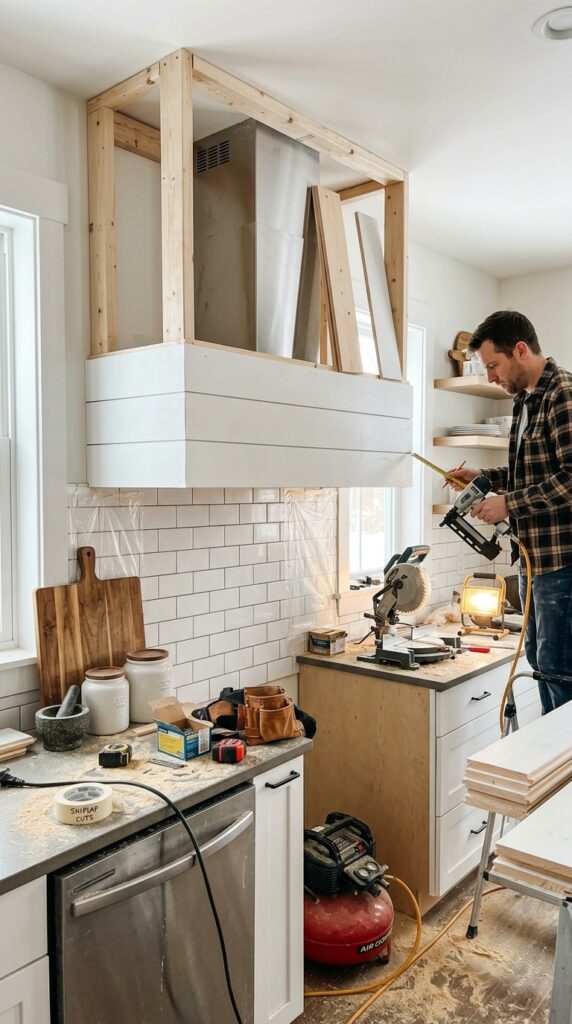
1. The Shiplap Stunner
This is perhaps the most popular DIY vent hood cover, and for good reason. It brings instant farmhouse charm, texture, and a sense of history to any kitchen. This project is surprisingly approachable, making it a great option for a first-time DIYer.
Why We Love It:
- Timeless Appeal: Shiplap is a classic design element that doesn’t feel dated.
- Textural Element: The horizontal lines of the shiplap break up flat surfaces and add visual interest.
- Easy to Customize: You can paint or stain the shiplap to match your cabinetry or create a bold accent wall.
How to Get the Look:
The key to a great shiplap cover is precise cutting and spacing. Start by building a simple wooden frame that fits snugly around your existing hood. Measure and cut your shiplap planks (you can buy pre-cut planks or mill them yourself from wider lumber). Nail the planks to your frame, making sure to use a small spacer (like a nickel) to get that classic, even gap.
Finish the edges with corner trim and a crown molding topper, then paint or stain to your liking.
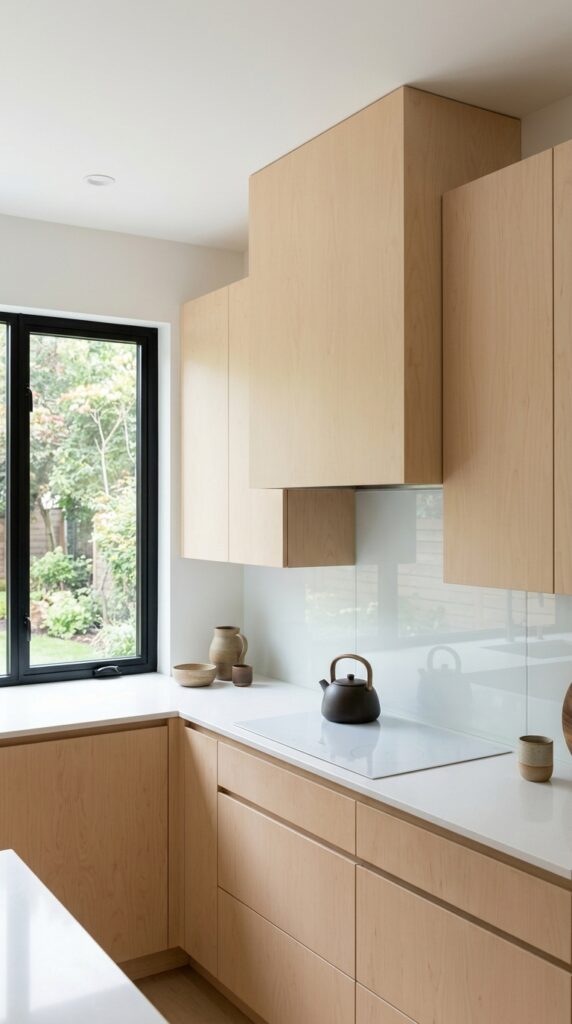
2. The Sleek and Modern Minimalist
For those who prefer clean lines and a clutter-free aesthetic, this minimalist plywood cover is a winner. This style is all about seamless integration, allowing the ventilation system to blend perfectly with the wall and cabinetry.
Why We Love It:
- Seamless Integration: This design makes the hood “disappear,” creating a clean, unencumbered visual flow.
- Cost-Effective: Plywood is an affordable material, and this project requires minimal advanced woodworking.
- Versatile: You can paint the plywood to perfectly match your cabinets or apply a subtle stain for a warmer, Scandinavian feel.
How to Get the Look:
This project is all about precision and sanding. You’ll build a box frame, similar to the shiplap project, but instead of individual planks, you’ll wrap the frame in high-quality cabinet-grade plywood. The biggest challenge here is getting the seams perfectly flush. Use wood filler and spend considerable time sanding the edges until they are perfectly smooth.
Finish with high-quality primer and paint to match your cabinetry. For a more natural look, apply a light stain and a durable polyurethane sealant.
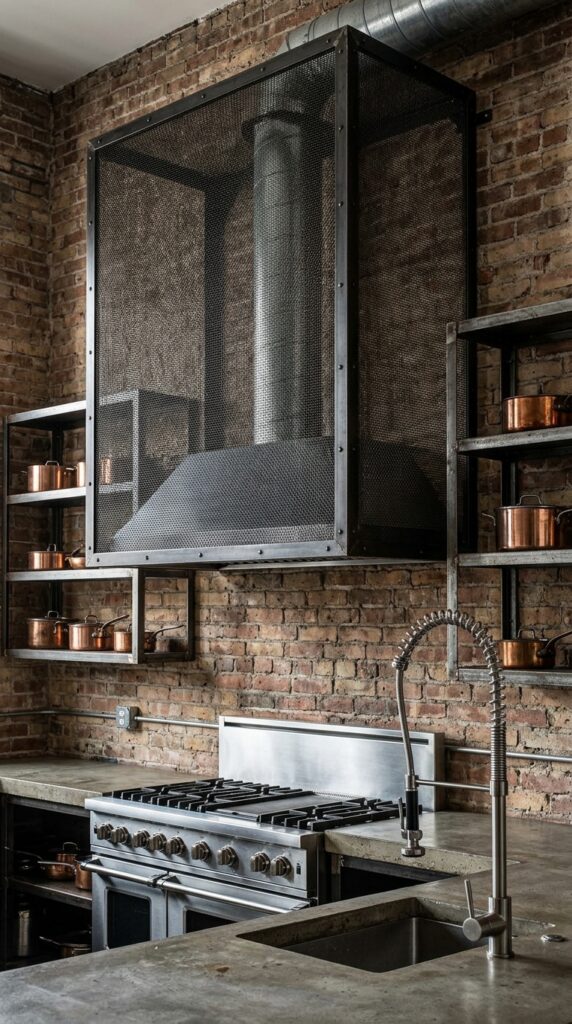
3. The Industrial Wire Mesh Statement
For a bold, industrial, or loft-inspired look, this wire mesh cover is an unexpected but incredibly effective choice. It adds an edgy, textural contrast and a sense of transparency.
Why We Love It:
- Instant Edge: This design adds immediate personality and rugged charm to any kitchen.
- Textural Contrast: The mesh contrasts beautifully with smooth surfaces like stone, tile, or polished cabinets.
- Unique Lighting Opportunity: You can add an LED strip inside the mesh enclosure for a cool, ambient glow.
How to Get the Look:
This project requires a metal frame, which is most easily constructed from aluminum angle iron. You will need to carefully measure and bolt (or weld, if you have the skill) the frame together. Once the frame is built, you can attach the wire mesh using metal clips, rivets, or even strong industrial adhesive.
You can leave the metal raw for a truly industrial look, or paint it a dark, textured color like hammered charcoal for a slightly more polished feel.
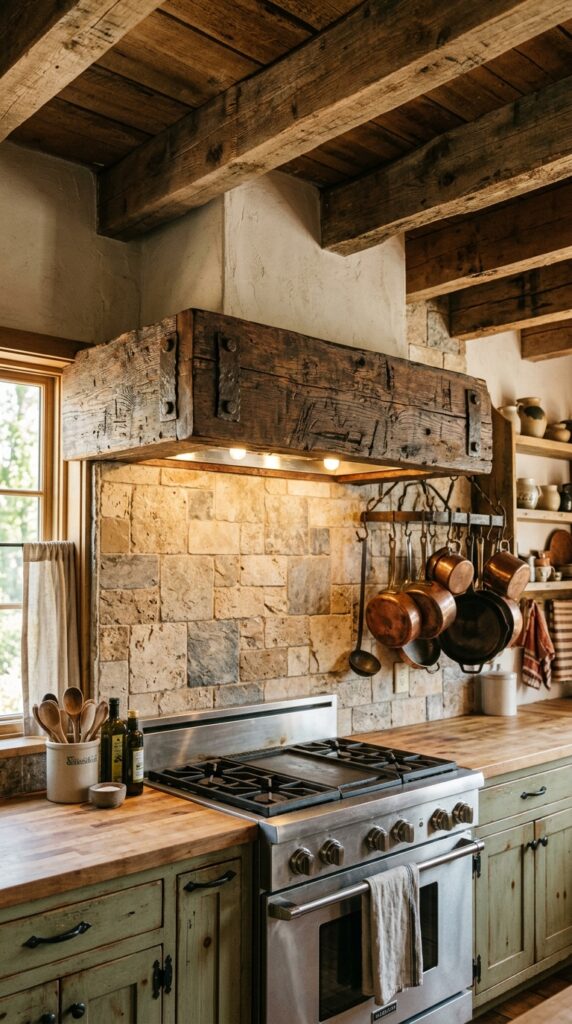
4. The Distressed Rustic Beam Cover
If your kitchen has high ceilings or you crave a more rustic, cabin-like feel, this is the project for you. This design uses a reclaimed wood beam (or a convincing faux beam) to create a powerful, architectural focal point.
Why We Love It:
- Architectural Anchor: This massive, tactile cover creates a stunning sense of scale and grounds the space.
- Warmth and Character: Reclaimed wood (or realistic faux wood) adds incredible history and texture.
- Dramatically Cohesive: This design instantly ties into other rustic elements like exposed beams or wide-plank flooring.
How to Get the Look:
You have two main paths:
- Faux Beam (Easiest): Purchase a high-quality faux wood beam (which is often lightweight polyurethane), cut it to size, and build a simple frame to anchor it above your vent hood. You can then finish the back to wrap around the unit.
- Real Reclaimed Beam: This is a heavy-duty option. You’ll need to carefully anchor a large beam to your wall studs. You’ll then build a thin wood paneling cover underneath it, which can be finished to match, to conceal the ductwork.
For either option, adding decorative, large-scale faux metal hardware and using a dark, distressed stain is essential for that “reclaimed” look.
5. The Elegant Copper Plate Cover
This is a true showstopper. Copper adds instant luxury, warmth, and a sophisticated, artisanal quality that is hard to beat. While it looks expensive, this project can be surprisingly budget-friendly if you use thin copper sheeting.
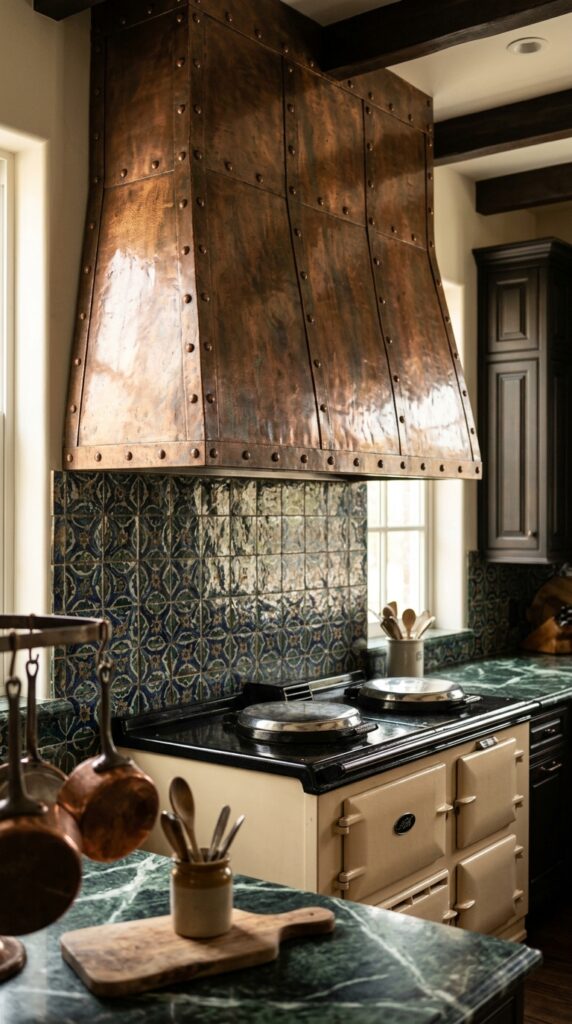
Why We Love It:
- Artisanal Luxury: Copper has a unique, high-end feel that instantly elevates a kitchen.
- Warm and Reflective: The copper reflects light, making the kitchen feel brighter and more inviting.
- Natural Patina: The way copper ages is one of its greatest assets, developing a rich, lived-in character over time.
How to Get the Look:
This project is less about carpentry and more about meticulous metalwork. Start with a smooth plywood box frame. You’ll then cut thin copper sheets (available online or at craft stores) to fit the frame’s panels.
You can secure the copper with specialized adhesives, and add decorative tacks or rivets along the seams for a traditional, hammered look. The most crucial decision is how you want it to look: you can seal the copper with lacquer to maintain its bright, shiny appearance, or let it naturally patina over time for that rich, aged look.
6. The Sophisticated Fluted Design
Fluted panels are a major design trend, and they translate beautifully to a vent hood cover. This design is sophisticated, elegant, and adds incredible texture and architectural interest.
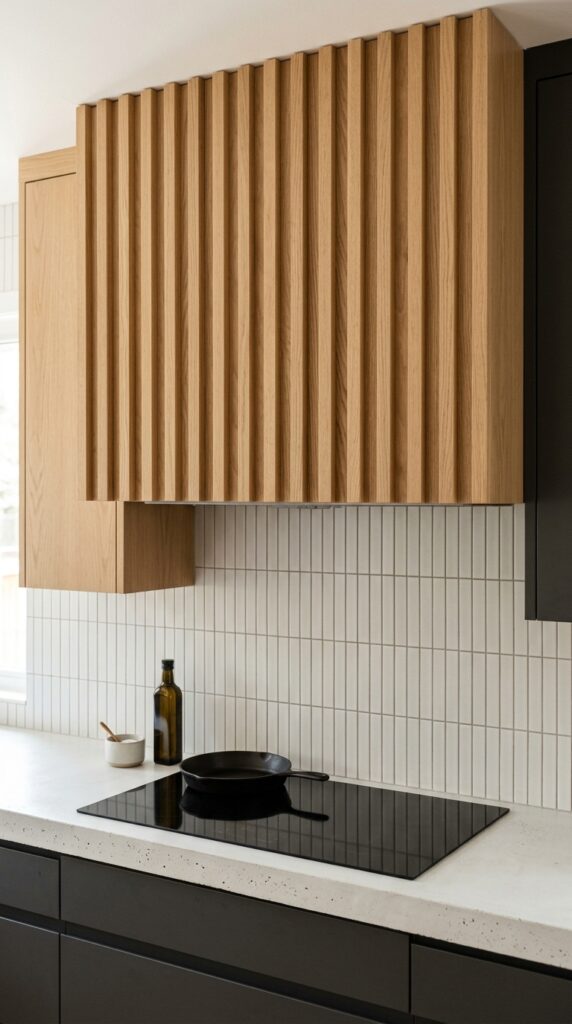
Why We Love It:
- Architectural Texture: The vertical lines of the fluting add height and a sense of tailored elegance.
- Modern but Warm: This style bridges the gap between modern and traditional, depending on the material and finish.
- Surprisingly Easy: You can achieve this look without advanced tools by using pre-made fluted trim or tambour paneling.
How to Get the Look:
You have two options:
- ** tambour Paneling:** Buy flexible, pre-made tambour paneling (often used for appliance garages or columns). Attach it directly to your curved or straight frame.
- Individual Trim Pieces: This is more labor-intensive but allows for a more custom look. Buy half-round or cove molding, and attach individual pieces to your flat plywood frame. This method gives you complete control over the spacing and profile.
Finish with a paint color that contrasts slightly with your cabinets to make the texture pop, or a subtle stain to highlight the wood grain.
7. The Classic Crown Molding Cap
Sometimes, the best solution is to work with the existing form. This project is ideal for those with a relatively good-looking vent hood that just needs a finishing touch. Adding a substantial crown molding to the top of your existing metal hood is one of the easiest and most effective ways to make it look “built-in.”
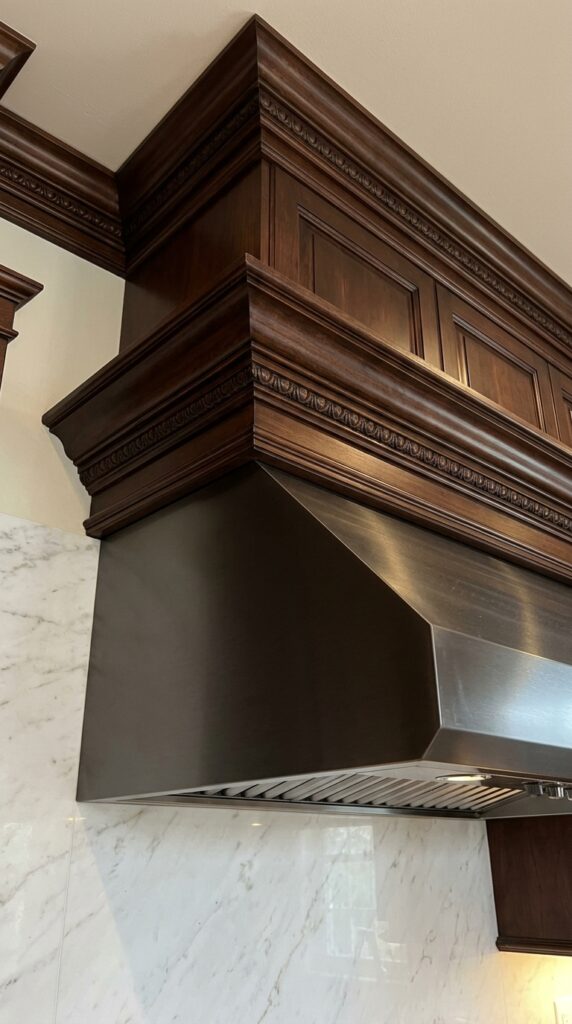
Why We Love It:
- Minimal Effort, Big Impact: This is the easiest project on our list, requiring only cutting and painting a single element.
- Instant Cohesion: It makes the hood look like part of your cabinetry rather than an awkward afterthought.
- Cost-Effective: A single piece of high-quality crown molding is inexpensive.
How to Get the Look:
Measure the top dimensions of your existing vent hood. Cut the crown molding to fit. Secure it either directly to the top edge of the hood (using powerful adhesive and maybe a few small, well-placed screws) or to a small, low-profile frame you build and attach to the wall.
This is a great chance to match the molding and paint color of your existing cabinetry.
8. The Board and Batten Block
For a look that is both timeless and highly customizable, try board and batten. This style is characterized by vertical planks (boards) separated by thinner, protruding strips (battens). It adds instant character and is incredibly easy to customize with paint.
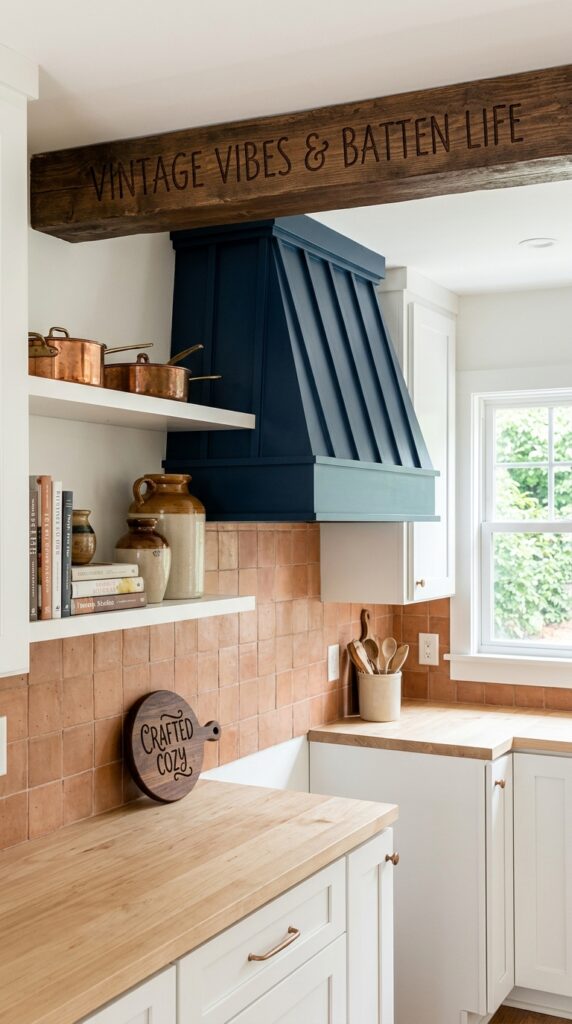
Why We Love It:
- Traditional Appeal: This style has a historic, craftsman feel that brings character to any kitchen.
- Bold Color Potential: The paneling is a perfect canvas for bold, dramatic paint colors.
- Easy to Dimension: It’s simple to scale the project up or down to match your existing ventilation unit.
How to Get the Look:
The process is almost identical to the shiplap project. Build a box frame. Attach your wide boards first. Then, nail the thinner battens directly over the seams of the boards. Finish the top with a simple crown molding or a blocky, solid wood top cap.
9. The Faux-Stone Statement
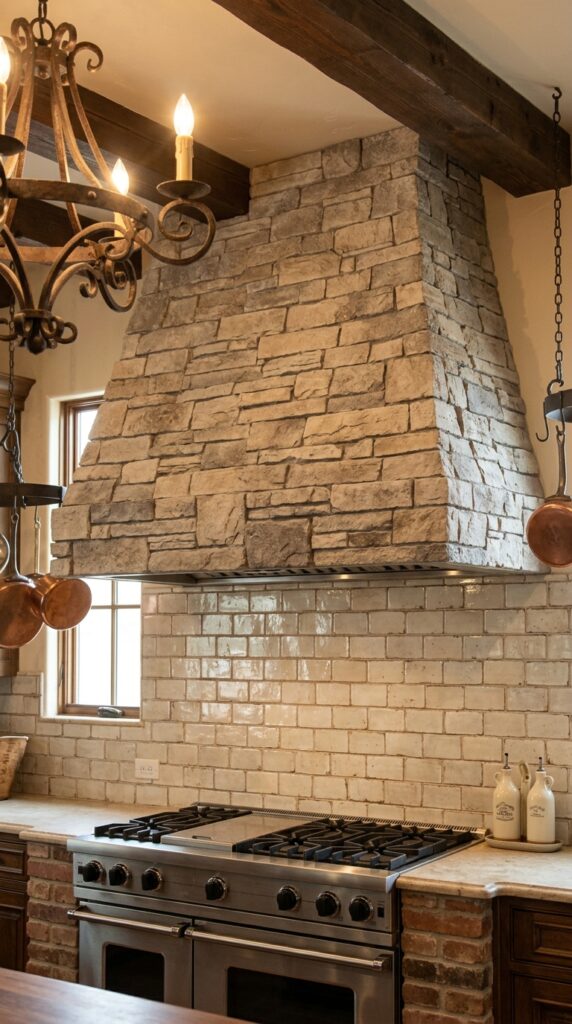
For a dramatic, Mediterranean, or high-end lodge feel, nothing makes an impact like stone. But a solid stone hood is incredibly heavy and expensive. The solution? A lightweight, easy-to-install faux stone cover.
Why We Love It:
- Dramatic Focal Point: This design instantly adds gravitas, texture, and a high-end feel.
- Lightweight and Manageable: Faux stone panels (made from high-density polyurethane) are extremely lightweight and easy to cut with a hand saw.
- Versatile Finishes: These panels come in a massive variety of styles, from slate and stacked stone to brick and limestone.
How to Get the Look:
Build a solid frame. This frame needs to be more robust than for wood projects, as it must support the stone panels. Cut the faux stone panels to size, fitting them snugly around the frame. Most faux stone systems come with specialized adhesive for easy installation. Finish the corners with the manufacturer’s corner pieces for a professional, seamless look.
10. The Corner Nook Integration
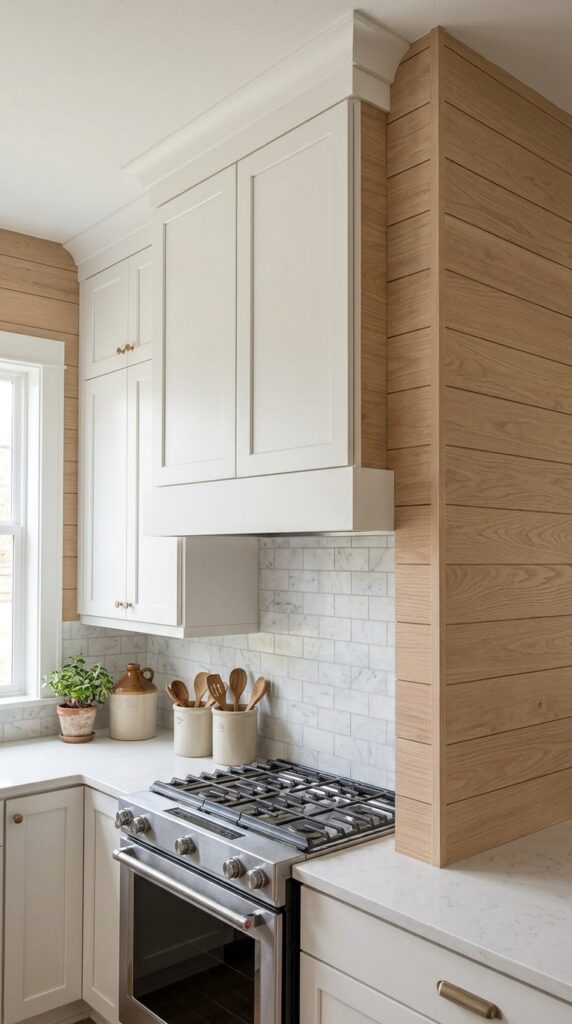
This is a design-forward solution that solves the common problem of an awkwardly placed corner vent hood. By turning the “problem” into a feature, you can create a beautiful, cohesive look that integrates seamlessly with your cabinetry.
Why We Love It:
- Seamless Corner Solution: This design makes awkward corners purposeful and functional.
- Integrated Look: It feels like a planned, architect-designed element, rather than an afterthought.
- Double the Style: This project is a great opportunity to combine two design elements, like cabinetry and shiplap, for a truly custom look.
How to Get the Look:
This project is highly custom and depends heavily on your specific corner configuration. You will need to build a custom frame that fits into your specific corner angles.
The key to a cohesive look is materials. We recommend cladding the front face of the cover with panels that match your cabinet door style and finish. For the side panels, you can either continue the cabinet style or use a contrasting material like shiplap or beadboard to tie into another element in the room.
Ready to Start? A Few Final Tips:
Before you pick up your saw, keep these critical tips in mind:
- Ventilation First: Always, always prioritize the function of your hood. Make sure your design allows for proper airflow and access to filters. Check your ventilation unit’s user manual for clear space requirements.
- Fire Safety is Crucial: Ensure any materials you use (like wood) are properly sealed and kept at a safe distance from heat sources. We recommend using a non-combustible material (like tile, metal, or non-combustible board) directly around the base of the hood.
- Measure Twice, Cut Once: This old adage is especially true when building a custom frame. Measure your vent hood at its widest, deepest, and tallest points, then build your frame with an extra 1/4 to 1/2 inch of space on all sides to allow for easy installation.
- Don’t Skip the Planning: Sketch out your design and a list of all necessary materials before you start buying. This will save you time, money, and frustration.
A vent hood cover is a high-impact, low-risk way to completely transform the feel of your kitchen. Whether you crave rustic warmth, modern minimalism, or industrial edge, one of these projects is sure to be the perfect crowning touch for your cooking space.